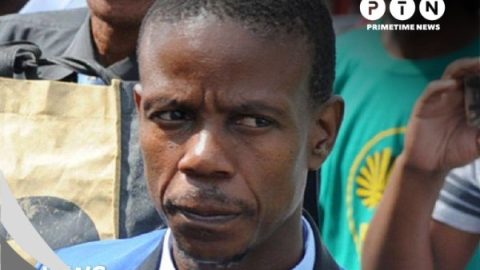


The Presidency’s recent revelation that it spent R2.76 million on car hire for Deputy Minister Kenny Morolong over an 11‑month period has ignited a fresh wave of scrutiny over government travel expenses. At roughly R250 000 per month, the figure raises eyebrows, especially when Minister Khumbudzo Ntshavheni has yet to disclose her own travel costs to Parliament.
How the R2.76 million Figure Was Calculated
The breakdown released by the Presidency shows a stark rise in Morolong’s car‑hire expenses. From July 2024 to March 2025, the cost was R167 141, but it jumped to R2 757 409 between April 2025 and February 2026. In total, the deputy minister’s office accounted for R7.36 million of the R10.5 million spent on travel for both deputy ministers and their staff from July 2024 to February 2026.
Car hire alone represented almost six rand of every ten rand spent during the latter period, underscoring how vehicle rentals dominate the travel budget. While accommodation costs fell from R850 221 to R375 686, flight expenses rose from R292 893 to R528 882, indicating a shift toward more frequent air travel.
Minister Ntshavheni’s Opaque Reporting
ActionSA MP Dr Kgosi Letlape demanded a full audit of travel costs for Minister Ntshavheni and her two deputies after they took office on 3 July 2024. The request covered purpose, destination, transport, accommodation, meals, and the staff accompanying each trip. While Ntshavheni supplied figures for deputies Morolong and Nonceba Mhlauli, she omitted any data on her own journeys, directing part of the query to Parliament’s Joint Standing Committee on Intelligence.
In her response, Ntshavheni argued that trips posted on X (formerly Twitter) were “public in nature” and that the intelligence committee held the full details. She has previously defended secrecy by claiming that 80 % of her travel relates to state‑security work, and that disclosure could jeopardise sensitive operations. This stance mirrors her earlier refusal to release travel costs for the entire Cabinet, a move that ActionSA highlighted as the only instance of non‑disclosure.
Staff Costs and the Wider Travel Footprint
Beyond the deputy ministers, staff expenses also contributed significantly to the overall bill. Morolong’s head of office incurred R141 553 in subsistence and travel between July 2024 and March 2025—over four times the deputy’s own R33 419. Accommodation for that staff member added another R374 318. A receptionist later racked up R70 730 in car hire during the second period.
Non‑deputy staff of Mhlauli’s office were not exempt. A household aide logged R17 050 for “household support” between July 2024 and March 2025, though the report omitted precise dates, destinations, or a per‑trip breakdown.
Political and Public Reactions
The revelations have fueled criticism from opposition parties and civil‑society watchdogs, who argue that such spending should be transparent given the public’s right to know how taxpayer money is used. ActionSA’s tracker of ministers’ international travel estimated that the Cabinet’s travel bill reached almost R450 million over 18 months, but Ntshavheni’s figures were excluded, leaving a gap in the national accounting.
In response to the mounting pressure, the Presidency cited the need to protect national‑security interests. Yet critics contend that the lack of detailed disclosure undermines democratic oversight and fuels suspicion of misuse.
Putting the Issue in a Wider Context
South Africa’s expenditure on official travel has long been a flashpoint for accountability debates. A 2023 audit highlighted that the government spent over R1 billion on overseas trips in a single fiscal year, prompting calls for stricter guidelines. The current controversy over the official travel costs disclosed by the Presidency adds another chapter to this ongoing narrative.
While the Presidency argues that security considerations justify limited disclosure, the public expects a balance between confidentiality and transparency. The debate also raises questions about the efficiency of hiring private vehicles versus using government‑owned fleets, a topic explored in a 2022 parliamentary study that recommended consolidating transport resources to curb unnecessary spending.
As the discussion unfolds, the story of the car‑hire bill intersects with broader governance challenges, from procurement practices to the role of parliamentary oversight committees. Whether the Presidency will adjust its reporting standards remains to be seen, but the pressure for clearer answers is unlikely to subside.
For a reminder that public funds can be stretched thin in unexpected ways, consider the tragedy that claimed four American lives in Athens—a stark illustration of how emergencies abroad can ripple into domestic policy debates. Read more about the Athens gas explosion.