

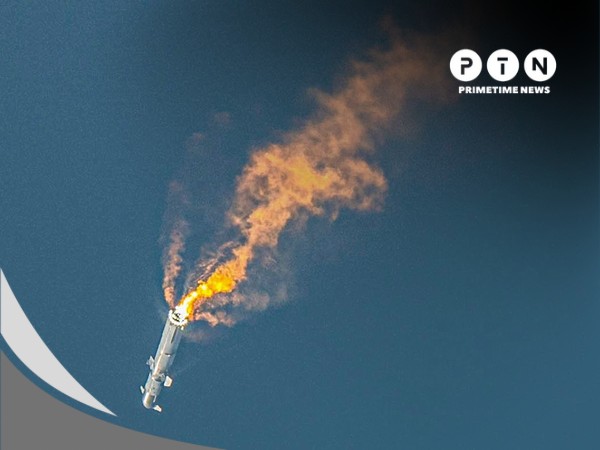
Elon Musk’s private space venture, SpaceX, is on the cusp of a milestone that could reshape the future of heavy‑lift launch vehicles. The company has scheduled the 14th flight of its massive Starship spacecraft for Monday, 28 September, with a 75‑minute launch window that opens at 7:15 a.m. Central Time. Unlike earlier test attempts, this mission is designed to place Starship into a stable Earth orbit for the first time and release a payload of 26 next‑generation Starlink internet satellites.
Why This Flight Matters
Since its debut in 2020, Starship has undergone a rapid evolution. Early flights focused on low‑altitude hop tests and sub‑orbital hops that validated the vehicle’s structural integrity and the performance of its Raptor engines. The latest iteration incorporates upgraded Raptor 2 engines, a refined heat‑shield system, and aerodynamic tweaks that improve both lift‑off thrust and re‑entry stability. Successfully reaching orbit would prove that Starship can transition from a testbed to a fully reusable launch system capable of carrying commercial payloads, lunar landers, and eventually crewed missions to Mars.
Mission Profile and Payload
The upcoming launch will be the longest Starship flight to date, lasting almost ten hours from liftoff to the final deployment of the satellites. After a boost phase powered by the Super Heavy booster, the spacecraft will separate and ignite its own Raptor engines to circularise its trajectory at an altitude of roughly 540 kilometres. Once a stable orbit is achieved, the vehicle will deploy the 26 next‑generation Starlink satellites, which feature higher throughput and improved resistance to space debris.
These satellites are a crucial part of SpaceX’s plan to deliver broadband internet to underserved regions worldwide, including remote parts of Africa. The new batch is expected to increase the overall capacity of the Starlink constellation by about 10 percent, bringing the total number of active satellites closer to the 4,000‑mark that the company targets for global coverage.
Technical Challenges and Reusability Goals
Achieving a stable orbit with Starship is no small feat. The vehicle must survive the intense aerodynamic forces of launch, the vacuum of space, and the thermal stress of re‑entry, all while maintaining precise attitude control for satellite deployment. The upgraded Raptor engines, which burn liquid methane and liquid oxygen, provide a higher specific impulse than their predecessors, giving Starship the extra delta‑v needed for orbital insertion.
Reusability is at the heart of SpaceX’s business model. If the flight succeeds, the company will aim to recover both the Super Heavy booster and the Starship upper stage for rapid refurbishment. This could dramatically lower launch costs, making space more accessible for satellite operators, scientific missions, and eventually human explorers heading to the Moon under NASA’s Artemis program.
Global Context and South African Interest
While the world watches dramatic events such as the Himalayan avalanche that left ten climbers missing in Nepal, the aerospace community is focused on a different kind of high‑stakes endeavour. South Africa’s own space ambitions, including the development of the Southern African Large Telescope (SALT) and the upcoming African Space Agency, stand to benefit from a reliable, low‑cost launch partner. A successful orbital Starship could open the door for African nations to launch scientific payloads and Earth‑observation satellites without relying on traditional, more expensive launch services.
What Comes Next?
If the mission meets its objectives, SpaceX will likely schedule a series of operational flights that carry larger commercial payloads and crewed missions. The company has already secured contracts with NASA for lunar lander deliveries and with private entities for deep‑space tourism. An operational Starship could also support the construction of a lunar gateway, acting as a cargo shuttle between Earth orbit and the Moon’s surface.
Conversely, a setback would not be unexpected. Previous Starship tests have experienced aborts, explosions, and rapid‑descent failures. Each incident, however, provides valuable data that engineers use to refine the design. The iterative approach has become a hallmark of SpaceX’s engineering philosophy, turning failures into stepping stones toward eventual success.
Regardless of the outcome, the 14th flight represents a defining moment for the world’s most powerful rocket. It is a clear signal that SpaceX is moving beyond experimental hops toward a future where fully reusable launch vehicles become the norm, reshaping the economics of space travel for governments, businesses, and scientists alike.