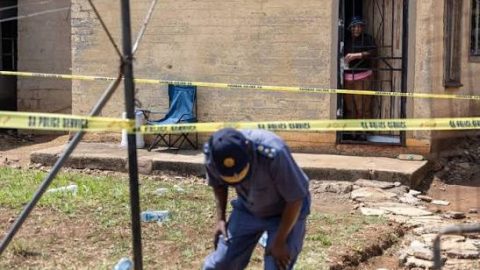


In a grim turn of events, the individual believed to have been involved in the fatal shooting of 23‑year‑old Boitumelo Gift Mashita in Tembisa was discovered lifeless inside his own vehicle in Midrand. The case, now widely referred to as the Tembisa murder case, has added another layer of mystery to an already unsettling series of crimes in the Gauteng province.
The tragic killing of Boitumelo Gift Mashita
On the morning of 28 September 2026, Mashita was on her routine commute to work when she was ambushed on Mapungubwe Street in the Temong area of Tembisa. Around 5:45 a.m., witnesses reported hearing gunfire, and police later confirmed that she had been shot and her personal belongings were taken. The incident was initially recorded as both a murder and a robbery, reflecting the high levels of violent crime that the township, part of the Ekurhuleni Metropolitan Municipality, has struggled with for years. According to the latest SAPS crime statistics, Gauteng recorded a 7% rise in firearm‑related offenses in the first half of 2026, underscoring the broader context in which this tragedy occurred.
Police investigation and the search for the suspect
Following the shooting, the SAPS Tembisa Tracking Team designated Mashita’s estranged husband as a person of interest. Brigadier Brenda Muridili, spokesperson for the Gauteng police, explained that the tracking unit employs a combination of CCTV analysis, mobile phone triangulation, and community intelligence to locate suspects. While the investigation initially yielded no arrests, detectives continued to follow leads, treating the case as a priority due to the victim’s age and the brazen nature of the crime.
During the same period, the province’s economic climate was under scrutiny, with many South Africans monitoring the current rand exchange rates for signs of instability that could affect crime patterns. Analysts have suggested that fluctuations in the rand can indirectly influence crime rates, as economic pressure often fuels illicit activity.
Discovery of the estranged husband’s body in Midrand
Midway through the investigation, Midrand police reported that a vehicle registered to Mashita’s estranged husband was found parked within their precinct. Inside the car, officers discovered the man’s body, prompting an immediate forensic response. Early indications suggested that he may have ingested an unknown substance before his death, but there were no clear signs of foul play at the scene.
The police have scheduled a post‑mortem examination to determine the precise cause of death, and a formal inquest will be opened to explore any potential links to the earlier murder. As noted by the Independent Online, the situation is being treated with the same rigor as other high‑profile cases, with investigators maintaining that “all avenues will be pursued” to uncover the truth the man linked to the Tembisa murder was found dead.
Implications and ongoing inquiries
The dual fatalities have raised concerns among community leaders and crime‑prevention NGOs. While the death of the suspect might appear to close one chapter, authorities stress that it could also complicate the pursuit of justice for Mashita’s family. An inquest, overseen by the magistrate’s court, will examine whether the suspect’s death was self‑inflicted, accidental, or the result of another party’s intervention.
Police have reiterated that no direct connection has yet been established between Mashita’s murder and a series of recent discoveries of women’s bodies in other parts of Ekurhuleni. Nonetheless, investigators are urging anyone with information—no matter how minor—to come forward via the nearest police station, the Crime Stop hotline (08600 10111), or the MySAPS mobile application, which allows users to submit tips anonymously.
As the investigation unfolds, the Tembisa community remains on edge, calling for heightened patrols and faster response times. Local councillor Thabo Mokoena has appealed for additional resources, pointing out that the township’s limited street lighting and high unemployment rates create an environment where violent crime can thrive.
While the outcome of the inquest remains uncertain, the case highlights the complex interplay between personal relationships, economic stressors, and crime in South Africa’s urban centres. Observers will be watching closely to see whether the findings bring closure to a grieving family or reveal deeper systemic issues that demand policy intervention.