
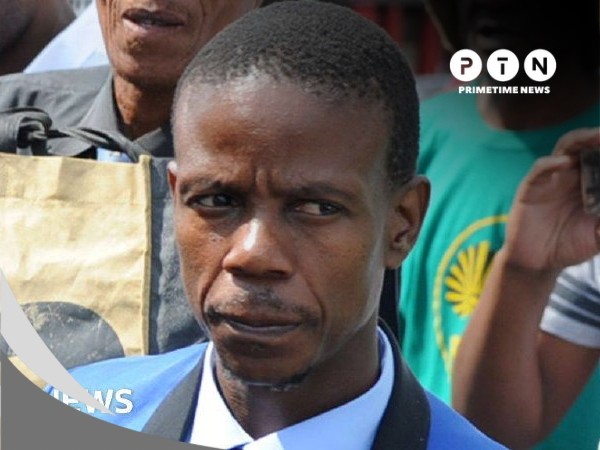
Controversial preacher Paseka “Mboro” Motsoeneng, the head of Incredible Happenings Ministries, has found his business under intense scrutiny following the award of several high‑value contracts by the national water utility Rand Water. The contracts, worth roughly R6.5 million, were granted over a four‑month period that coincided with the festive season, prompting a parliamentary question and an internal investigation by the department of Water and Sanitation.
Background on Pastor Mboro and Incredible Happenings
Pastor Mboro rose to prominence through his charismatic preaching and a series of large‑scale events that blend religious revival with entertainment. His company, Incredible Happenings (Pty) Ltd, markets itself as a specialist in event management, venue hire, and logistical support for conferences, awards ceremonies and training workshops. While the ministry has amassed a sizeable following, critics have repeatedly accused it of leveraging political connections to secure public contracts.
In the 2025/26 financial year, Rand Water engaged Incredible Happenings for four separate events. The first venue hire, valued at R2.3 million, was booked for a corporate gathering on 3 November 2025. A second, smaller contract of R213 000 followed three days later, and a third, substantially larger, contract of R3.8 million was signed on 5 December 2025 for a long‑service awards ceremony. The final payment of R21 000 was made in February 2026 for a training session.
Rand Water Tenders Spark Parliamentary Questions
The series of payments caught the attention of MK P politician Visvin Reddy, who raised the issue in a written parliamentary question to Water and Sanitation Minister Pemmy Majodina. In her response, Majodina confirmed that the contracts had indeed been awarded to Incredible Happenings and that the Integrity and Probity Assurance Business Unit of Rand Water had referred the matter for an independent fact‑finding review on 1 September 2026.
“South Africans are sitting without reliable water while enormous amounts of public money move through the water sector,” Reddy warned, emphasizing the moral urgency of the investigation. He also highlighted a parallel case involving another pastor, Witness Mazanga, who has been linked to contracts worth hundreds of millions of rand from entities such as Joburg City Power. The minister’s office indicated that the review would also explore any possible connection between Mboro’s firm and Mazanga’s alleged network.
Investigations and Calls for Law Enforcement
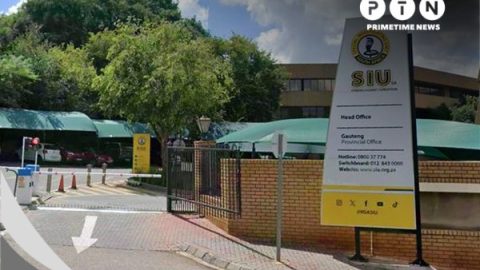
While the internal review is a standard procedural step, opposition members argue that it is insufficient. Reddy urged the Hawks and the Special Investigating Unit (SIU) to take over, stating that public institutions cannot police themselves behind closed doors. “If evidence emerges of corruption, bid manipulation, conflicts of interest, fraud or improper influence, then the matter must be referred to the appropriate independent law‑enforcement and investigative authorities,” he said.
Pastor Mboro declined to comment on the allegations, responding via text that he was “not aware of this” and that he was “under watch 24/7.” His silence has only heightened public curiosity, especially after the illegal street racing incident in Cape Town drew attention to how public safety and governance issues intersect across South Africa.
For a detailed account of the contracts and the parliamentary exchange, readers can consult the original report published by the Sunday Times, which outlines the timeline of payments and the minister’s official reply.
Wider Implications for South Africa’s Water Sector
The controversy arrives at a time when the nation’s water infrastructure is under severe strain. Droughts, aging pipelines, and intermittent supply have left many communities without reliable access to clean water. According to the Department of Water and Sanitation, the sector requires billions of rand in upgrades, yet it also faces allegations of mismanagement and corruption that erode public confidence.
If the investigation uncovers irregularities, it could trigger a broader audit of procurement practices across state‑owned enterprises. The SIU has previously recovered over R2 billion from irregular contracts in other sectors, demonstrating the financial stakes involved. Moreover, a conviction could set a precedent for how religious organisations engage with government procurement, potentially tightening eligibility criteria for non‑profit entities seeking public tenders.
Beyond the financial dimension, the case underscores the ethical dilemma of public officials awarding contracts to entities with strong political or religious affiliations. Transparency International South Africa has repeatedly warned that patronage networks undermine service delivery and fuel public distrust.
What Comes Next?
Rand Water’s independent fact‑finding team is expected to submit its findings to the minister within a few weeks. Should the report confirm any breach of procurement rules, the matter will likely be escalated to the SIU or the Hawks for criminal investigation. Parliament will continue to monitor the situation, with Reddy pledging to raise further questions if the outcomes are unsatisfactory.
In the meantime, citizens and watchdog groups are calling for stricter oversight of all public‑sector contracts, especially those involving high‑profile figures like Pastor Mboro. The outcome of this probe could shape the future of procurement integrity in South Africa’s most essential service – water.