

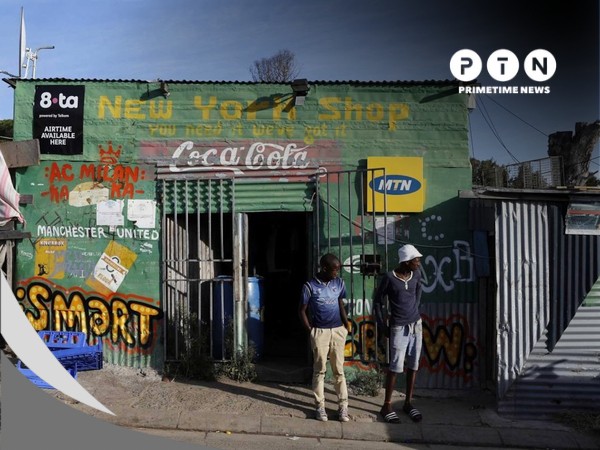
In a high‑profile ceremony in Johannesburg, the Department of Employment and Labour and the Department of Trade, Industry and Competition announced a joint initiative worth R1 billion. The fund, contributed equally by the Unemployment Insurance Fund (UIF) and the National Empowerment Fund (NEF), is designed to inject seed capital into Black‑owned and Black‑managed businesses, with the explicit goal of creating and preserving jobs.
Why the fund matters for South Africa’s economy
Unemployment remains a pressing challenge, with the latest Statistics South Africa data placing the national jobless rate at roughly 33.6%. The government’s response has increasingly focused on small and medium enterprises (SMEs), which historically generate the bulk of new positions. By directing R1 billion toward enterprises that have the potential to scale, the partnership seeks to address the supply‑side constraints that have hampered job creation for years.
How the UIF and NEF combine their strengths
The UIF, best known for providing short‑term relief to workers who lose income due to unemployment, illness, maternity or death, brings a deep understanding of labour market dynamics. Its mandate includes the Labour Activation Programme (LAP), which coordinates training, workplace experience and enterprise support to help the unemployed re‑enter the workforce.
NEF, on the other hand, has a track record of financing Black‑owned ventures across sectors ranging from manufacturing to technology. Since its inception in 1999, NEF has disbursed over R30 billion to more than 5,000 businesses, providing not only capital but also mentorship, technical assistance and market‑linkage services. By pooling the UIF’s labour activation expertise with NEF’s development‑finance know‑how, the new fund is positioned to deliver both financial resources and the support structures needed for sustainable growth.
Target beneficiaries and eligibility criteria
To qualify, enterprises must be at least 51% Black‑owned or Black‑managed and demonstrate a clear plan for scaling operations and hiring additional staff. Priority will be given to micro, small and medium enterprises (MSMEs) that operate in sectors identified as high‑growth, such as renewable energy, agro‑processing, logistics and digital services. Applicants are also required to show evidence of sound governance and a realistic financial projection, ensuring that public money is channeled toward viable projects.
Beyond the cash injection, recipients will gain access to a suite of non‑financial services. NEF will assign experienced business mentors, while the UIF will facilitate connections with training providers under the LAP, helping firms upskill their workforce in line with market demand.
Projected impact and measurement
Employment Minister Nomakhosazana Meth emphasized that the success of the initiative will be judged by tangible outcomes: the number of businesses that secure funding, the increase in their production capacity, and—most critically—the jobs created for South Africans. The LAP aims to enrol 200,000 unemployed individuals by the 2026/27 financial year, contributing to a medium‑term target of 605,000 beneficiaries.
Deputy Minister of Trade, Industry and Competition Zuko Godlimphi highlighted that the fund bridges a historic gap between finance and skills development. By aligning capital with mentorship and training, the programme aspires to nurture enterprises that can survive economic shocks and continue hiring over the long term.
Broader policy context and future outlook
The R1 billion fund dovetails with South Africa’s National Development Plan, which calls for inclusive growth and a reduction of inequality through Black economic empowerment. It also complements other government initiatives, such as the recently announced Manganese Export Corridor project, where private‑sector partnerships are leveraged to unlock export potential and generate jobs.
Analysts note that while the capital amount may appear modest compared with the scale of the unemployment crisis, the strategic focus on MSMEs could yield a multiplier effect. Studies by the International Labour Organization suggest that every R1 million invested in small‑business development can create up to 20 direct jobs, with additional indirect employment generated through supply‑chain linkages.
Looking ahead, the government plans to monitor the fund’s performance through quarterly reports, adjusting eligibility criteria and support mechanisms as needed. If successful, the model could be replicated in other sectors or expanded with additional private‑sector contributions, further amplifying its impact on the nation’s labour market.
In summary, the R1bn fund for Black businesses represents a concerted effort to marry finance with skills development, aiming to transform promising enterprises into engines of job creation and economic transformation.