

Road rage in South Africa has been identified as a growing public safety issue, contributing to the country’s high road fatality rates and broader patterns of violence. Organizations such as the MRC-UNISA Crime, Violence & Injury Lead Programme and the Accident Research Centre at the University of Natal have investigated it as a major threat to safe driving. Incidents have increased over recent years amid traffic congestion, frustration, stress, and a noted culture of road aggression.
Road rage is defined as “an incident in which an angry or impatient motorist or passenger intentionally injures or kills another motorist, passenger or pedestrian, or attempts or threatens to injure or kill another.” Retaliation to perceived aggression—such as gestures, overtaking, or minor incidents—can escalate quickly, sometimes with fatal results. South Africa’s high-pressure lifestyles, combined with relative speeds between trucks and other vehicles, heighten conflict risks.
Trucking Industry Context and Specific Risks
The trucking sector faces unique pressures. Long hours, fatigue, tight schedules, and interactions with varied traffic (including passenger cars and minibus taxis) create conditions ripe for aggression. Sharing the road with trucks is emphasized in road safety materials due to size, speed differentials, and stopping distances.
Specific incidents highlight dangers. In May 2026, a road rage event between two truck drivers was reported on the N10 between Daggaboer and Cradock in the Eastern Cape, with one driver allegedly armed. Other cases involve trucks in altercations, such as a small truck and a public bus on the R300, or broader confrontations spilling into violence.
Xenophobic Violence and Attacks on Foreign Truck Drivers
A significant dimension in the trucking industry involves targeted violence against foreign national truck drivers, often framed around job competition but manifesting as road-related attacks. Since March 2018, more than 200 people—mostly foreign truck drivers—have been killed, according to Road Freight Association research. Perpetrators, sometimes claiming affiliation with groups like the All Truck Drivers Forum (ATDF) or similar, have used gasoline bombs (Molotov cocktails), shootings, stonings, stabbings, and harassment to force foreign drivers out.
Human Rights Watch documented patterns, including attacks on the N3 highway (Durban to Johannesburg), near Mooi River, where dozens of trucks were targeted in short periods (e.g., over 60 trucks hit with gasoline bombs in a three-week span in one reported period). Incidents in Witbank (eMbalenhle), Ermelo, and Durban involved blocking roads, forcing drivers out, looting cargo, and damaging or burning vehicles. Foreign drivers with valid work permits were still targeted.
Groups have blocked highways with trucks during protests, leading to disruptions and risks. In 2026, tensions persisted with the All Truck Drivers Forum and Allied South Africa planning actions against foreign nationals in the sector, resulting in arrests for alleged incitement to violence and reports of clashes with police.
These attacks extend beyond immediate road rage but occur in trucking contexts—on highways, at truck stops, or during forced stops—directly endangering lives through vehicle fires, shootings, and collisions. Many foreign drivers have abandoned trucks, lost jobs, or been injured, disrupting the industry.
Broader Crime Statistics Linking Aggression to Fatalities
South African Police Service (SAPS) data underscores the lethality. In various quarterly crime statistics periods, arguments, misunderstandings, provocation, and road rage-related incidents accounted for significant numbers of murders, attempted murders, and assaults with grievous bodily harm.
While not all are trucking-specific, the industry’s visibility on major routes (N1, N3, N10, etc.) amplifies impact. Firearms escalate situations rapidly; access to weapons turns minor disputes deadly. General road aggression contributes to South Africa’s high fatality toll, with thousands dying annually on roads.
Off-Road Brawls and Escalation
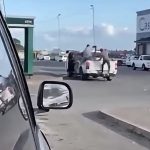
When rage does not cause immediate on-road crashes, it can lead to drivers stopping and brawling. Reports describe fistfights, headlocks, and physical confrontations following cut-offs, mirror damage, or perceived slights—sometimes involving truck and other vehicle drivers. Videos and eyewitness accounts from townships, highways, and urban areas show escalation from verbal arguments to violence.
In trucking, these can involve multiple parties, damage to vehicles, or further road blockages. A culture of recording rather than intervening has been noted in some incidents. Off-road fights still risk lives through injuries, shootings (as in cases where firearms are retrieved), or secondary crashes when vehicles are left unattended.
Contributing Factors and Consequences
Factors include stress, inequality, normalized violence, congestion, and economic pressures in trucking (e.g., competition, long distances). Stimulants for long hauls and fatigue compound risks. Consequences: fatalities, injuries, economic losses from damaged trucks/cargo, insurance claims, supply chain disruptions, and heightened fear among drivers.
Research calls for better data collection (as road rage is not always distinctly recorded), enforcement, and interventions like de-escalation training. Arrive Alive and fleet management resources stress calm responses, avoiding retaliation, and using technology for monitoring.
South Africa’s trucking industry is vital for freight and economy, but road rage—whether impulsive driver conflicts or organized violence—continues to claim lives on highways and in confrontations. Addressing root causes through policing, industry standards, and cultural shifts remains critical to reducing these preventable tragedies. Facts from official reports, human rights documentation, and incident records consistently the human and economic cost.
- Victor Matome Rampedi appears in Thembisa court for murder of Ntombifuthi Nxumalo as case postponed for bail application

- Man admits beating two-year-old to death; toddler had 20 injuries

- Two Abandoned Hand Grenades Recovered in Wilro Park, Roodepoort

- Missing Oudtshoorn Ostrich Farmer Saag Jonker Found Deceased in Vehicle in Olifants River

- South Africa Emergency Incidents: Recent Accidents, Attacks & Road Safety

- South African Gaming Boom: Opportunities for Brands and Talent

- Sascoc deficit hits R26m as Lotto funding vanishes

- Operation Shanela Crackdown: Over 14,000 Arrests in One Week

- Malema Granted Leave to Appeal Conviction in Firearm Case

- Priest Sentenced to Life for Rape of 13-Year-Old Girl

- Anele Mdoda Faces 947 Boycott Calls After Demanding André Esterhuizen Be Banned From Rugby

- Cash-in-Transit Robbery Reported at Ziyabuya Complex in KwaDwesi, Gqeberha