
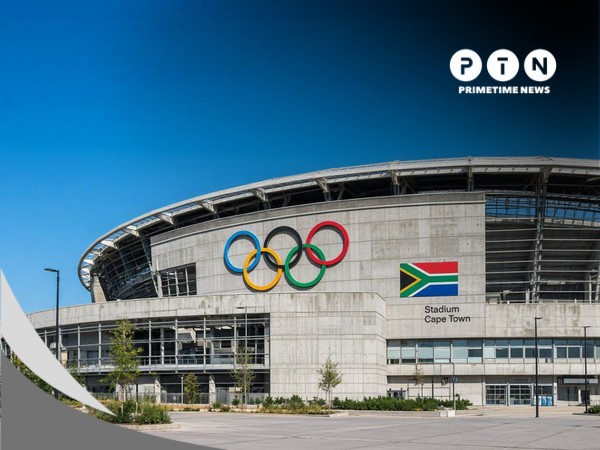
The South African Sports Confederation and Olympic Committee (Sascoc) disclosed a stark financial picture for the year ending 31 March 2026. After a substantial drop in revenue, the body recorded a deficit of R25.67 million, roughly R26 million, while still managing a modest accumulated surplus of R1.76 million from previous years.
Revenue collapse and the missing Lotto cash
According to the audited statements presented at Sascoc’s annual general meeting in Johannesburg, total income fell to R53.78 million – less than half of the R126.6 million recorded in the preceding 12‑month period. The primary driver of this plunge was the abrupt cessation of funding from the National Lotteries Commission (NLC). In 2025 Sascoc received R39.4 million from Lotto, but the NLC’s 12‑month “cooling‑off” rule meant no money arrived for the 2026 financial year.
This policy, designed to prevent over‑reliance on a single sponsor, has been criticised as counter‑productive for Olympic sports that operate on four‑year cycles. The cooling‑off period only ended on 18 March 2026, and a new one is expected to run into early 2028 – precisely when preparations for the Los Angeles 2028 Games will be in full swing.
For a deeper look at the figures, see the Business Day report on the deficit.
Sponsorship and government contributions keep the lights on
With Lotto funding gone, Sascoc leaned heavily on other partners. The largest single source was the Bidvest sponsorship, contributing R19.85 million. This money underwrites the Operation Excellence (OpEx) programme, which supports South African athletes aiming for Olympic and Paralympic qualification.
The Department of Sport, Arts & Culture followed with R12.7 million, while the International Olympic Committee’s top‑tier sponsors supplied R10.98 million. Additional streams included a R3.15 million deal with Mr Price Sport and a R2.67 million travel subsidy earmarked for the Commonwealth Games in Glasgow.
These diversified income streams illustrate why many sport administrators stress the need for a broad sponsor base. As acting president Lwandile Simelane noted, “It is critical that the sector is seen to be doing all it can to be driving sports forward.”
Where the money went: a detailed expense breakdown
Staff costs dominated the outgoings, totalling R22.57 million. Salaries alone accounted for R19.3 million, with six senior executives receiving R11.2 million collectively. The chief executive’s remuneration was R3.19 million, a figure that attracted public scrutiny given the deficit.
Board allowances added another R3.27 million, of which R425,022 went to President Barry Hendricks – who is currently suspended pending a disciplinary hearing over governance and safeguarding allegations.
Investment in athletes remained a priority. The OpEx programme allocated R6.2 million to Olympic and Paralympic hopefuls, complemented by a further R4 million from the IOC’s Olympic Solidarity fund. International competition costs were also significant: R7.4 million for the Region V Youth Games in Namibia, R5.2 million for the African Youth Games in Angola, and R2.54 million for the World Games in China.
Other notable expenses included R5.8 million on advertising, R3.1 million on utilities, R2.44 million on software and subscriptions, R1.74 million on meetings, R1.73 million on legal fees, and R1.6 million on consulting services.
Future funding hopes and strategic priorities
Sascoc has already lodged an application for R57.8 million from the NLC, hoping the next funding round will restore cash flow and allow the body to meet its 2028 targets. If successful, the injection could offset the deficit and fund the critical OpEx programme for athletes gearing up for Los Angeles.
Beyond finances, Simelane highlighted three systemic challenges: inadequate funding, aging infrastructure, and safeguarding concerns. The governing body is under pressure from athletes, media, sponsors and the public to demonstrate transparent governance and effective use of limited resources.
One way to showcase the value of investment is through performance. The recent success of South African squads in the Vodacom URC opening round underscores how targeted support can translate into podium finishes and heightened national pride.
What the deficit means for South African sport
The R26 million shortfall is more than a line‑item; it signals a potential slowdown in talent development if alternative funding does not materialise. Young athletes may face fewer international exposure opportunities, and grassroots programmes could see cuts.
Nevertheless, Sascoc’s ability to retain a modest surplus demonstrates fiscal resilience. By diversifying sponsorship, tightening expense controls, and pursuing new lottery funding, the organisation aims to safeguard South Africa’s sporting future while navigating a challenging fiscal environment.
Stakeholders will be watching closely as the next NLC decision unfolds, hoping that a stable financial base will enable South African athletes to compete at the highest levels in the years ahead.