

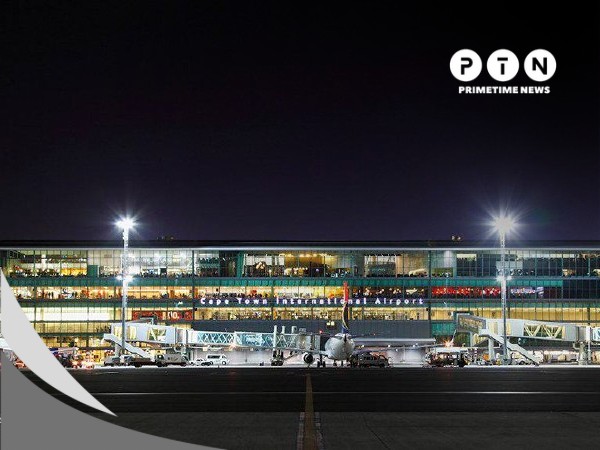
Airports Company South Africa (Acsa) has concluded a three‑month executive search by appointing Siphamandla Mthethwa as its next chief executive officer. The decision, ratified by the cabinet on 23 September, will see Mthethwa assume the role on 1 November 2026, succeeding acting chief Charles Shilowa, who has held the post since the departure of former CEO Mpumi Mpofu on 30 June.
Who is Siphamandla Mthethwa?
Mthethwa is a chartered accountant with a track record in financial leadership across South Africa’s telecom, banking and mining sectors. He first joined Acsa on 1 May 2020, stepping in as chief financial officer at the height of the COVID‑19 lockdown that virtually halted air traffic. During that turbulent period, his financial stewardship helped the state‑owned entity navigate steep revenue losses and preserve essential services.
After a nearly three‑year hiatus, Mthethwa returns to the organisation with an intimate understanding of its balance sheet, operational challenges and strategic ambitions. Board chair Irvin Phenyane praised his ability to steer the company through crisis, noting that his experience will be crucial as Acsa embarks on an ambitious capital‑expenditure drive.
Acsa’s role in South Africa’s aviation landscape
Acsa controls 74.6% of the nation’s airport infrastructure, overseeing nine of the country’s busiest gateways, including OR Tambo International in Gauteng, Cape Town International in the Western Cape, and King Shaka International in KwaZulu‑Natal. These hubs handle the majority of passenger traffic, cargo movements and international connections, making the company a linchpin for tourism, trade and economic growth.
The COVID‑19 pandemic exposed the vulnerability of the sector, with passenger numbers plunging by more than 80% in 2020. Revenue streams from landing fees, retail concessions and parking dried up, forcing Acsa to tap emergency financing and restructure its debt profile. The appointment of a new CEO is therefore seen as a signal that the board is ready to move from survival mode to a growth‑oriented agenda.
Capital‑expenditure programme: R15 billion and beyond
One of Mthethwa’s first tasks will be to execute a board‑approved capital‑expenditure (CapEx) programme that was unveiled in Acsa’s September financial results. The plan earmarks an immediate R15 billion for projects slated between 2027 and 2029, with the possibility of scaling the spend to R37 billion by 2031 if economic conditions permit.
Key initiatives include resurfacing and extending runways at regional airports, installing jet‑fuel pipelines to reduce turnaround times for airlines, and deploying advanced screening technology that can accelerate luggage checks while bolstering security. The upgrades are expected to cut passenger wait times, improve operational efficiency and attract new airline routes, thereby boosting revenue.
These infrastructure investments also align with South Africa’s broader transport strategy, which aims to modernise critical nodes to support the country’s participation in global supply chains. As the world recovers from the pandemic, a modern, secure and efficient airport network will be essential for reviving tourism and facilitating trade.
Leadership transition and governance
The transition follows a period of interim leadership after Mpumi Mpofu’s fixed‑term contract concluded. While Charles Shilowa provided stability as acting CEO, the board sought a permanent leader with both financial acumen and operational insight. Mthethwa’s dual experience as CFO and senior executive in other industries made him a compelling choice.
Acsa’s governance structure places a strong emphasis on accountability to the state and to the travelling public. The cabinet’s endorsement of Mthethwa underscores the political importance of the airport sector, especially as the government looks to stimulate post‑pandemic growth. The appointment also reflects a broader trend in South Africa of placing seasoned financial professionals at the helm of state‑owned enterprises to ensure fiscal discipline.
Looking ahead: challenges and opportunities
While the CapEx plan promises tangible upgrades, Mthethwa will need to manage several challenges. Fuel price volatility, fluctuating exchange rates, and the lingering uncertainty around global travel demand could affect revenue projections. Moreover, the sector faces heightened security expectations, prompting the need for continuous investment in cyber‑defence and passenger screening systems.
On the opportunity side, South Africa’s strategic location makes its airports natural hubs for inter‑continental flights between Africa, Europe and the Middle East. Strengthening runway capacity and modernising terminal facilities could position the country to capture a larger share of transit traffic. In addition, the rollout of digital services—such as biometric boarding passes and real‑time baggage tracking—could enhance the passenger experience and generate new ancillary income streams.
In a broader geopolitical context, secure and efficient air transport corridors are increasingly vital. Recent developments, such as the Iran Hormuz roadmap rejection, illustrate how international tensions can ripple through global logistics, reinforcing the need for resilient airport infrastructure.
For a detailed look at the official announcement, see the ACSA appoints Siphamandla Mthethwa as new CEO report, which outlines the board’s expectations and the timeline for the transition.
As Mthethwa steps into his new role, industry observers will watch closely how his financial expertise translates into operational improvements, and whether Acsa can deliver on its ambitious infrastructure roadmap while navigating a rapidly evolving aviation landscape.