

When a short clip of businessman Lawrence Mudzinganyama confronting a group of women in the ladies’ restroom of Vlamo restaurant at Sandton Gate surfaced online, it quickly ignited a firestorm of condemnation. In the footage, Mudzinganyama can be heard threatening to “put a bullet in all of you”, a clear threat against women that struck a nerve in a country already grappling with high rates of gender‑based violence.
What happened at Vlamo?
The incident unfolded on a busy Saturday evening. According to witnesses, a disagreement between Mudzinganyama and the women escalated, prompting him to step into the restroom and issue the chilling warning. The video, captured on a by‑stander’s phone, was uploaded to social media platforms where it amassed thousands of views within hours.
In a statement released on his personal social media account, Mudzinganyama expressed “deep regret” for the fear and distress his words caused. He admitted that his language was “unacceptable and unjustifiable”, and pledged to cooperate fully with any police investigation. The businessman also said he would enrol in a conflict‑management programme and seek professional guidance to prevent a repeat of such conduct.
Political fallout and the SANRAL probe
The video’s virality prompted immediate reaction from senior government officials. Transport Minister Barbara Creecy ordered the board of the South African National Roads Agency (SANRAL) to launch an inquiry into the appointment of Moriel Infrastructure Group, a company reportedly linked to Mudzinganyama. The investigation will examine whether any irregularities surrounded the firm’s recent contracts and whether Mudzinganyama’s influence played a role.
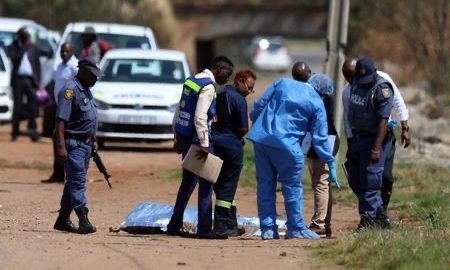
While the SANRAL probe focuses on procurement matters, the broader public outcry reflects deep‑seated concerns about the culture of impunity surrounding threats against women. As the country mourns the recent killing of nine women in Ekurhuleni, the Vlamo episode adds another painful chapter to the national conversation on gender‑based violence.
Context: violence against women in South Africa
South Africa consistently ranks among the world’s most dangerous places for women. According to the 2023 Times Live report cites that more than 1 500 women are murdered each year, and countless others experience assault, intimidation or harassment. The government has introduced the National Strategic Plan on Gender‑Based Violence, but implementation gaps remain.
High‑profile cases, such as the Lesufi push back on the Ekurhuleni murder case, have kept the issue in the national spotlight. The recent Vlamo incident, though different in nature, reinforces the perception that powerful men can still act with impunity, especially when their actions are captured on video and shared widely.
Legal implications and possible outcomes
Under the Criminal Law (Sexual Offences and Related Matters) Amendment Act, threatening violence against a person, regardless of gender, can constitute assault or intimidation, both of which are punishable offences. If police decide to press charges, Mudzinganyama could face a fine, a custodial sentence, or a restraining order, depending on the severity of the prosecution’s case.
Beyond criminal liability, civil actions are also possible. The women involved could sue for damages related to emotional distress, and the restaurant may pursue a claim for reputational harm. Companies linked to Mudzinganyama, such as Moriel Infrastructure Group, could face scrutiny from shareholders and the public, potentially affecting future contracts.
Public reaction and the road ahead
Social media users expressed a mix of outrage, disappointment, and calls for accountability. Hashtags demanding justice for women trended for several days, and several NGOs issued statements urging the authorities to treat the video as evidence of a broader societal problem.
In his apology, Mudzinganyama acknowledged that “an apology cannot erase the fear and distress caused”. He promised to demonstrate accountability through “meaningful, sustained action”. Whether those promises translate into tangible change remains to be seen, but the episode has undeniably added pressure on policymakers to tighten enforcement of gender‑based violence laws.
As South Africa continues to wrestle with a crisis of violence against women, incidents like the Vlamo threat serve as stark reminders that cultural change must be matched by legal and institutional reforms. The public’s reaction suggests that citizens are no longer willing to accept silence or token gestures; they demand concrete steps to protect women and hold perpetrators, regardless of status, fully accountable.