

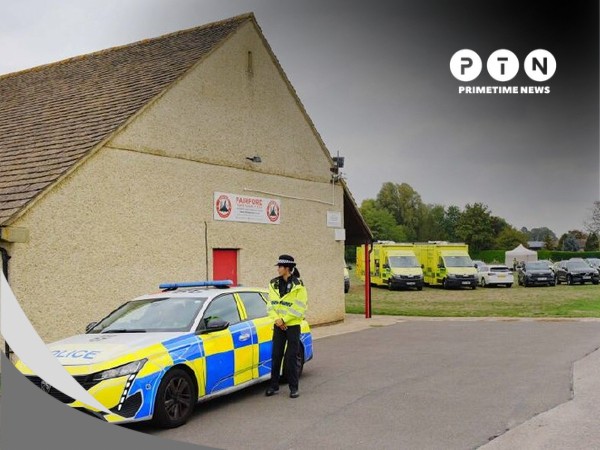
In the early hours of Sunday, counter‑terror police launched a swift operation after a local resident reported three unusual vans travelling toward RAF Fairford in Gloucestershire. The alert set off a cascade of emergency measures, including the deployment of an Army Explosive Ordnance Disposal (EOD) unit, a Hazardous Area Response Team (HART), and the evacuation of 85 homes in the nearby hamlet of Whelford.
What triggered the major incident?
At approximately 00:45 BST, officers from Gloucestershire Police received a call describing three suspicious vehicles moving in the direction of the airbase. The base, RAF Fairford, is a key hub for United States Air Force (USAF) operations in Europe and has been used for bomber deployments since the start of the conflict with Iran in February 2024. Within minutes, a “major incident” declaration was issued, prompting the activation of well‑rehearsed security protocols.
Arrests and the suspected explosives offence
Police detained five men on suspicion of breaching the UK’s Explosives Act and of preparing a terrorist act. While details remain sealed for operational security, authorities confirmed that the suspects were linked to the three vans spotted near the base. The men are being held while forensic teams examine the vehicles for any explosive material or devices.
In a related story, a recent suspect arrested in Limpopo highlights the broader challenge South African law enforcement faces in tackling violent crime, underscoring the importance of swift, coordinated police action across borders.
Emergency response and community impact
Following the arrests, an Army EOD team arrived to sweep the surrounding area for ordnance, while a HART unit set up a security cordon inside the airbase perimeter. Residents of Whelford were instructed to leave their homes and were taken to a leisure centre in Cirencester, roughly ten miles away. Many described the evacuation as orderly; one long‑time villager, Julian Tudsbury, recounted hearing police knock on his door at 07:00 BST and being told to evacuate immediately.
Local authorities worked closely with the Ministry of Defence, the USAF’s 501st Combat Support Wing, and emergency services to ensure the safety of both civilians and military personnel. The USAF spokesperson stressed that “personnel based at RAF Fairford remain vigilant,” but declined to detail specific force‑protection measures.
Political backdrop and UK‑US defence cooperation
RAF Fairford’s heightened activity is directly linked to the UK’s decision, announced in March, to allow US bombers to operate from British soil for “defensive” missions against Iranian missile sites. The move was authorised by then‑Prime Minister Sir Keir Starmer and has since been overseen by Prime Minister Andy Burnham, who receives regular briefings on the situation.
Defence Secretary Wes Streeting reassured the public that the incident was “being dealt with” and thanked the emergency responders for their rapid action. The incident also brings renewed scrutiny to the UK’s counter‑terrorism framework, particularly the Explosives Act of 1875, which still underpins modern legislation on the possession, manufacturing and use of explosive substances.
Implications and next steps
While officials believe the threat has been contained, the investigation remains ongoing. Police have not ruled out the possibility of additional suspects or a broader network, and they continue to interview local witnesses. The incident serves as a reminder of the strategic importance of RAF Fairford, not only as a launch point for US strategic bombers but also as a potential target for hostile actors seeking to disrupt NATO‑US operations.
For readers seeking more context on the UK’s counter‑terrorism response, a recent BBC report outlines how specialist units coordinate with civilian agencies during high‑risk incidents. As the investigation unfolds, authorities have urged anyone with further information to come forward, emphasizing that community cooperation is vital for national security.
The swift containment of the RAF Fairford explosives incident demonstrates the effectiveness of coordinated policing, military expertise, and international partnership in safeguarding critical infrastructure. While the village of Whelford returns to normalcy, the episode will likely shape future security protocols at UK airbases hosting allied forces.