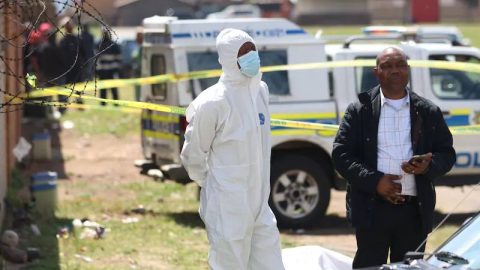

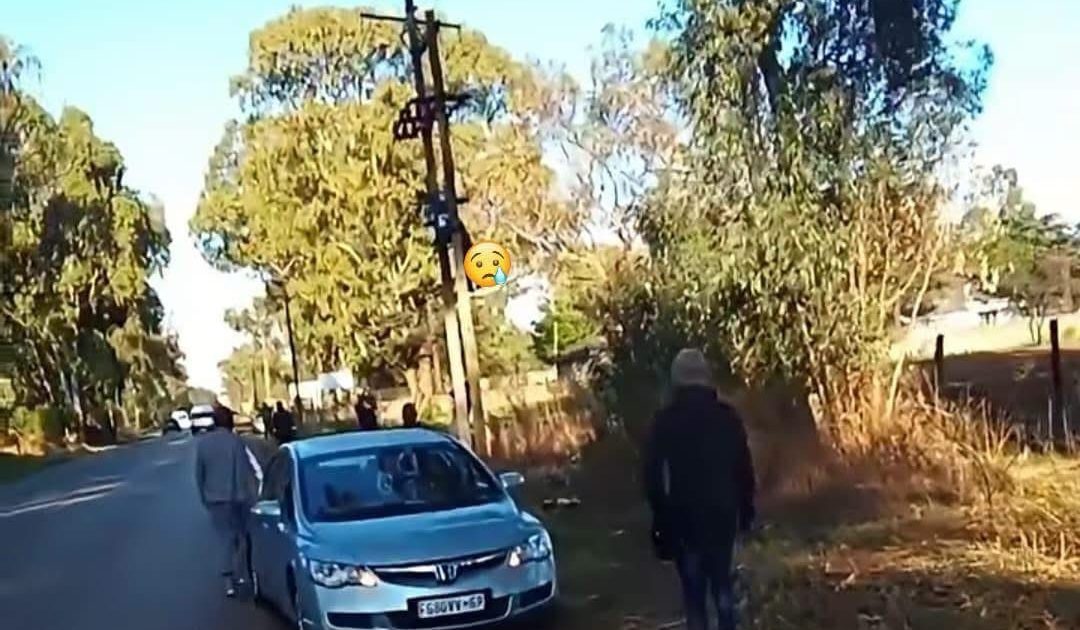
A man was found dead this morning after being electrocuted on an electrical pole in De Deur, a town in the Midvaal area of Gauteng, South Africa. At the time of writing, publicly available information does not include confirmed official statements from the South African Police Service, Eskom, City Power or local municipal authorities giving the man’s identity, the precise time of discovery, the exact sequence of events, or any tools or other items recovered at the scene.
De Deur is located south of Johannesburg and falls within an area served by overhead electrical distribution infrastructure that includes poles and power lines. Electrocution incidents involving such poles in South Africa are most often linked to unauthorised contact with live equipment.
Cable theft and interference with electrical infrastructure constitute a persistent problem across the country, especially in Gauteng. Utility records show multiple fatalities resulting from people attempting to steal cables or components or to make illegal connections. Over a recent two-year period, one major municipal electricity supplier recorded 24 deaths by electrocution connected to such activity. Similar cases have been documented in various locations in which bodies were discovered on or near poles, transformers or substations, frequently with cutting tools, pliers, knives or backpacks present nearby.
In one Johannesburg-area incident a man was found dead at the top of a nine-metre pole while holding a bolt cutter; supply on a single street was interrupted briefly while the body was removed. Other recorded cases include a man found dead inside a mini-substation after cutting live cables, individuals electrocuted while targeting 11 kV lines, and bodies recovered beside severed cables or transformers after outages prompted utility crews to investigate. In many of these cases the deceased were not immediately identified and inquests were opened.
These events commonly trigger localised power interruptions because protective systems trip when cables are cut or short-circuited. The economic cost of cable theft is substantial. Broader estimates that include direct losses to utilities and indirect costs to businesses and communities place the annual impact in the range of several billion rand. One national utility has reported annual losses exceeding R2 billion related to the crime, while a major freight and passenger rail operator has recorded losses of more than R1.6 billion in a single year. More than 20 000 cases are registered nationwide each year. High-risk targets include municipal distribution networks, railway lines and industrial sites.
Copper and aluminium cables retain scrap-metal value that continues to drive the activity. Both organised groups and opportunistic individuals have been linked to the thefts. Attempts typically involve climbing poles or entering substations, often during night-time or early-morning hours. Live high-voltage equipment carries an immediate lethal risk through cardiac arrest, severe burns or falls from height. Utility statements consistently describe such acts as unnecessary and note that they endanger both the individuals involved and surrounding communities through resulting outages and damaged infrastructure.
Police and electricity suppliers have repeatedly stated that cable theft and illegal connections are criminal offences. Members of the public are urged to report suspicious activity near electrical infrastructure. Counter-measures implemented or promoted by utilities include the progressive replacement of conventional cables with aerial bundled conductor systems that have lower scrap value, the covering of underground cable routes with concrete, increased physical security and public-awareness campaigns that emphasise the dangers of contact with live equipment. Illegal connections themselves create additional hazards, including system overloads, fires and the risk of electrocution to bystanders, including children.
In the absence of further official confirmation concerning the De Deur incident, the reported death aligns with an established pattern of fatalities associated with interference with electrical poles and related infrastructure in Gauteng and elsewhere in South Africa. Such cases are customarily investigated through the opening of an inquest docket, examination of the scene by police and utility technicians, and efforts to identify the deceased and establish the precise circumstances. Additional verified details from the police, the relevant municipality or the electricity supplier would be required to establish the specific facts of this morning’s discovery.
WATCH: Video captures man stop taxi to retrieve his cellphone from phone snatcher in Klerksdorp.
Footage recorded in the Klerksdorp central business district shows a young man from Johannesburg recovering his stolen cellphone after stopping a white minibus taxi on OR Tambo Street.
The man, whose cellphone had just been taken, was alerted by pedestrians that the person who stole it had jumped into the vehicle. He flagged down the taxi and brought it to a stop.
The suspect was removed from the taxi. The vehicle then moved forward a short distance before stopping again. In a further development, another occupant of the taxi handed the stolen cellphone back to the victim.
The victim expressed relief and gratitude to those who assisted. In the recording he explained to the person filming, “They saw him get into the taxi… I’m so grateful to you guys.”
The incident took place in the heart of the Klerksdorp CBD and was captured on video by Klerksdorp Record editor Salomé Kotzé. The footage illustrates both the occurrence of street crime in the area and the role of bystander intervention together with the victim’s own determination not to allow the perpetrator to leave with the phone.
Man stops taxi to retrieve his cellphone from phone snatcher pic.twitter.com/gFmo9IMthc
— PrimeTime News (@PrimeTimeNewsZA) September 15, 2026
No further details on police involvement, charges, or the identities of those involved beyond the information above have been established from available reports.
Terrifying CCTV shows moment a female jogger manages to fight off kidnappers.
South Africa recorded 4,638 kidnapping cases between April and June 2026, an increase of 172 cases or 3.9% compared with the same period in 2025, according to the latest South African Police Service (SAPS) quarterly crime statistics.
The figures cover the first quarter of the 2026/27 financial year. Nationally, kidnappings remained elevated after the 2025/26 financial year total of 18,491 cases, which was up from 18,151 in 2024/25.
Gauteng accounted for 2,367 of the April–June 2026 cases, more than half the national total. KwaZulu-Natal recorded 887 cases, the Western Cape 269, Limpopo 172, Free State 161 and the Northern Cape 38.
In the Western Cape, kidnappings rose 31.9% from 204 cases in April–June 2025 to 269. Cape Town reported 184 cases (up from 156), the Cape Winelands 37 (up from 21) and the Overberg 13 (up from 5).
Earlier in 2026, the January–March quarter (fourth quarter of 2025/26) recorded 4,478 national cases, a 2% decrease from 4,571 in the corresponding period of 2025. Gauteng registered 2,452 of those cases, or 54.8% of the national total, equating to an average of 27 per day. That figure was up 38 cases or 1.6% from 2,414 in January–March 2025. Nineteen of the country’s top 30 police stations for kidnappings were located in Gauteng.
KwaZulu-Natal recorded 737 cases in January–March 2026.
SAPS data show the longer-term increase. Reported kidnappings stood at approximately 6,036 in the 2020/21 financial year, rose to 17,061 in 2023/24 and remained high at 16,901 in 2024/25 before reaching 18,491 in 2025/26. Cases increased from roughly 4,692 in 2014/15 to 17,061 in 2023/24, a rise of about 264%.
Quarterly totals in 2025/26 included 4,466 cases in April–June 2025 (up 6.2% year-on-year), approximately 4,772 in July–September 2025 and 4,775 in October–December 2025.
SAPS samples of causative factors, which cover only a subset of cases, show that many kidnappings are linked to other offences. In one analysis of 2023/24 data, 66% of the 17,061 cases were associated with aggravated robbery, including hijackings.
Ransom-related cases form a smaller portion of the total. In January–March 2026 the SAPS sample recorded 216 ransom-related kidnappings nationally, of which Gauteng accounted for 163 or 75.5%. Other factors in that sample included extortion (35 cases) and human trafficking (17 cases).
In April–June 2026, ransom-related cases reached 231 nationally, with Gauteng recording 140. In April–June 2025 the figure was 209.
A Gauteng provincial breakdown for January–March 2026 linked 1,307 cases to carjackings or attempted carjackings, 415 to robberies, 163 to ransom demands, 118 to rape, 17 to extortion and nine to human trafficking.
Disturbing video surfaces of a women in sports attire narrowly avoid getting kidnapped pic.twitter.com/JG5CJk50wa
— PrimeTime News (@PrimeTimeNewsZA) September 15, 2026
All figures are drawn from official SAPS quarterly and annual crime statistics releases.
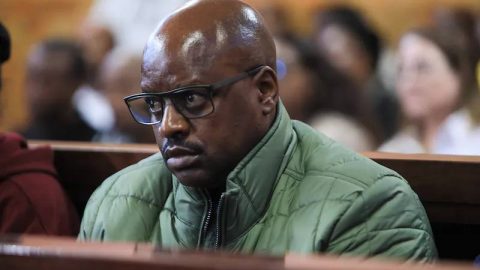
Suspended organised crime sergeant Fannie Nkosi’s case postponed to 15 October while he seeks DPP review of charges
Suspended South African Police Service (SAPS) Organised Crime Unit sergeant Fannie Nkosi’s criminal case has been postponed to 15 October 2026 at the Pretoria North Regional Court. The postponement follows his indication that he intends to approach the Director of Public Prosecutions (DPP) with written representations asking for the charges against him to be reconsidered.
Nkosi faces combined charges that include theft, fraud and defeating the ends of justice. Additional charges on the record include unlawful possession of explosives, multiple counts of failing to safeguard firearms and ammunition, failure to comply with firearm safe regulations, and related offences. The matters stem from two sets of allegations that the National Prosecuting Authority (NPA) has centralised for joint hearing.
The first set of charges arises from a search conducted at Nkosi’s home in Pretoria North on 2 April 2026 by a task team linked to the Madlanga Commission of Inquiry. Police recovered firearms, ammunition, a stun grenade, official SAPS dockets linked to serious and violent crimes (including cash-in-transit heists and hijackings), other state-issued items, and more than R50 000 in cash found concealed under a mattress. Nkosi was arrested the same day and has remained in custody since then.
The second set of charges relates to events in Thohoyandou, Limpopo, in November 2022. According to the state, a suspect was arrested for possession of dagga, unlicensed firearms and explosives. Nkosi is alleged to have collected the original case docket under the pretext of being sent by SAPS head office. He is further alleged to have later returned, identified himself as a colonel from head office, removed the confiscated dagga from police custody, and booked the exhibit at head office. One of the exhibit bags was later found to have been tampered with. These allegations form the basis of charges of theft, fraud and defeating or obstructing the course of justice.
Nkosi, who was suspended from the SAPS Organised Crime Unit prior to his arrest, has been denied bail on more than one occasion. The Pretoria North Magistrate’s Court refused bail in April 2026, finding that he had not shown that his release would be in the interests of justice. An appeal to the Pretoria High Court was dismissed in June 2026. He remains in custody.
The cases were previously transferred from the district court to the regional court after the NPA obtained a centralisation certificate so that the Pretoria and Limpopo matters could be heard together. In August 2026 the matter was postponed to mid-September to allow the state to disclose the contents of the dockets to the defence. At the September 2026 appearance the defence confirmed that the docket contents had been received and that full consultation with Nkosi had taken place.
Nkosi’s legal representative informed the court that instructions had been received to submit written representations to the Office of the Director of Public Prosecutions asking that the charges be reconsidered. The defence indicated that drafting of the representations had begun and that they hoped to submit them within approximately two weeks. The court postponed the matter to 15 October 2026 to allow that process to run its course. The postponement does not constitute a finding of guilt or an indication that the charges have been withdrawn.
Nkosi has previously denied the allegations against him and described the state’s case as weak. The NPA has proceeded with the centralised prosecution. The next court appearance is scheduled for 15 October 2026 at the Pretoria North Regional Court, at which stage the outcome of the representations to the DPP is expected to be addressed.