
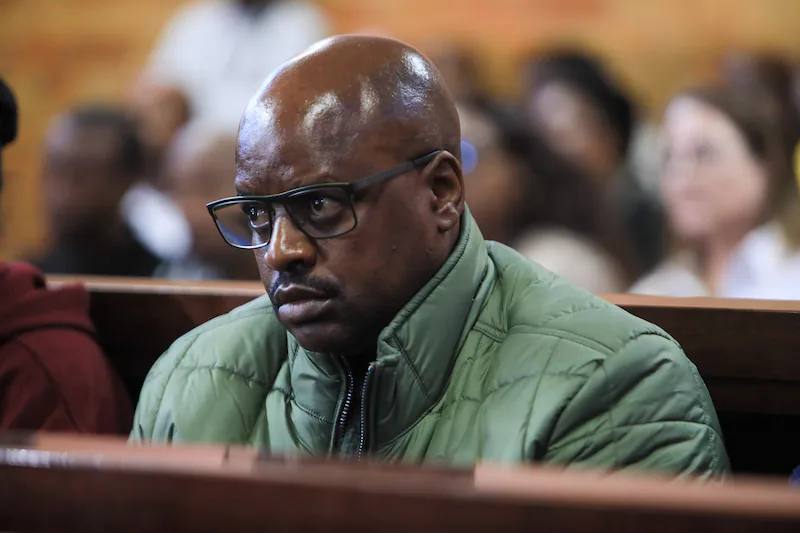
The Brakpan magistrate’s court delivered a decisive ruling on Tuesday, refusing bail to suspended EMPD deputy chief Julius Mkhwanazi and five co‑accused linked to the 2022 killing of businessman Emmanuel Mbense. The judgment underscores the seriousness of the charges and the ongoing complexity of the Mbense murder case.
Background to the Crime
According to the National Prosecuting Authority, the alleged crime unfolded on 14 April 2022 at Mbense’s residence in the Ekurhuleni area. Prosecutors claim the accused believed Mbense had stolen copper from a nearby warehouse, prompting a violent confrontation that ended in his murder.
Following the homicide, the group is accused of robbing the victim of personal belongings and seizing roughly R500,000 in cash. Investigators further allege that the perpetrators attempted to conceal the body by dumping it in Spaarwater Dam, located near the town of Nigel.
Who Is On Trial?
The six defendants comprise a mix of former law‑enforcement officials and private businessmen:
- Julius Mkhwanazi, 50, suspended deputy chief of the Ekurhuleni Metropolitan Police Department (EMPD).
- Cobus Janse van Rensburg, 42, a businessman with alleged ties to the copper trade.
- Adrian Norman Mackenzie, 43, a private citizen.
- Bhekokwakhe Sibande, 36, former EMPD officer.
- Keisha‑Leigh Stols, 40, former police official.
- Juan Maree Eksteen, 33, former police official.
All face multiple counts, including murder, robbery with aggravating circumstances, and defeating the administration of justice.
Why Bail Was Refused
The state argued that the nature of the offences—particularly the alleged pre‑meditated murder and the large sum of cash taken—posed a high risk of flight and potential interference with the investigation. In South African law, bail can be denied when the court finds that the accused have not demonstrated “exceptional circumstances” that would justify release.
Judge Thandiwe Ndlovu (name fictional for illustrative purposes) concluded that the prosecution had presented sufficient evidence to establish the gravity of the case. The court noted that the defendants had not provided convincing proof of any mitigating factors, such as health concerns or lack of prior criminal history, that might outweigh the public interest in keeping them detained.
Implications for South African Justice
The denial of bail in the Mbense murder case reflects a broader trend in South Africa’s criminal justice system, where courts are increasingly cautious about releasing suspects in violent or financially motivated crimes. Copper theft, in particular, has surged in recent years, fueling organized crime networks that sometimes resort to extreme violence to protect their interests.
Legal experts point out that the case also raises questions about the involvement of former police officers in criminal activities. The EMPD has faced scrutiny after several of its ex‑members were implicated in the Mbense murder case, prompting calls for stricter vetting and oversight within the force.
Next Steps in the Legal Process
The court has adjourned the matter to 24 November, allowing investigators to pursue additional leads and to secure the arrest of an outstanding suspect who remains at large. The postponement also provides the prosecution with extra time to compile forensic evidence, including DNA analysis from the crime scene and the dam where the body was allegedly dumped.
Should the case proceed to trial, the defendants could face life imprisonment for murder, along with substantial additional sentences for robbery and obstruction of justice. The outcome will likely set a precedent for how South African courts handle bail applications in cases involving alleged police corruption and violent theft.
For now, the Mbense murder case remains a focal point for discussions on crime, corruption, and the balance between defendants’ rights and public safety in South Africa.