

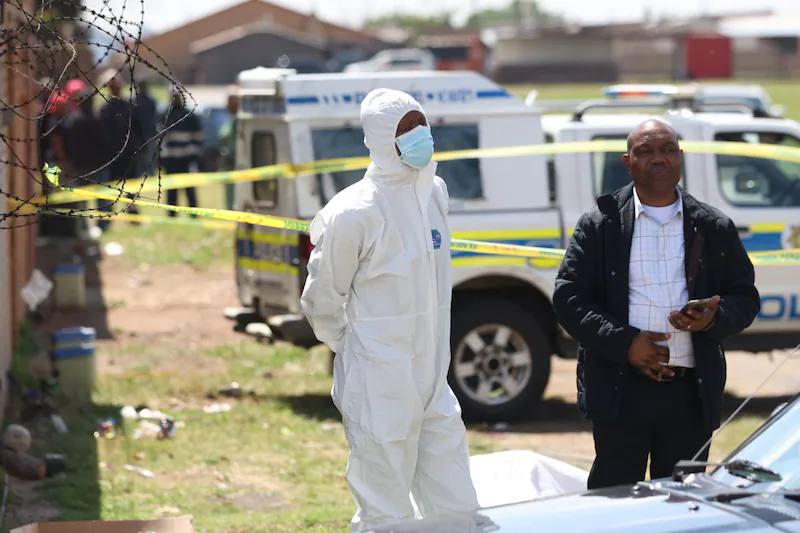
On paper the Ekurhuleni metropolitan municipality appears to be experiencing a dip in violent crime, yet the discovery of several women’s bodies since July has left residents questioning the reality behind the numbers. The unsettling pattern has prompted police to launch a specialised task force and ignited a debate over how crime data is collected and interpreted in South Africa.
Series of Female Victims Raises Alarm
Since July, seven women between the ages of 32 and 38 have been found dead across the metro. The first case involved a 37‑year‑old woman discovered naked and bound with cable ties near the R21 highway. Her boyfriend was arrested and remains in custody. In August another woman, aged 32, was located partially clothed in the same vicinity. The third victim, believed to be in her late twenties, was recovered from a river in Clayville on 7 September, and police have confirmed her death is linked to the ongoing investigation.
Later that month a decomposed body was found, followed by the disappearance of 38‑year‑old Elizabeth “Tsontso” Moselakgomo, an avid runner from Kempton Park. Her remains were recovered behind a hotel in Rhodesfield, still dressed in her running gear. The latest discoveries include a body near Olifantsfontein and another along the Blesbokspruit River in Kwa‑Thema, Springs. The geographic spread and the similar victim profile have led specialist crime investigator Mike Bolhuis to suggest the possibility of a serial offender or a coordinated criminal syndicate.
Official Statistics Show Decline, but Local Hotspots Tell a Different Story
South African Police Service (SAPS) data for the April‑June 2026 quarter indicates a 22 % drop in kidnappings in Ekurhuleni, falling from 778 to 608 cases, and a 13.4 % reduction in murders, from 470 to 407. The preceding quarter (January‑March 2026) also recorded declines, with kidnappings slipping from 647 to 634 and murders from 420 to 355.
However, these district‑wide figures mask sharp increases in specific police precincts. Kempton Park, the epicentre of the current murder investigation, recorded 76 kidnappings in the April‑June period—a 58 % rise from the same quarter last year and the highest number for any station nationwide. Adjacent areas such as Ivory Park also saw kidnapping numbers rise, while Vosloorus experienced a modest decrease.
Analysts like Bolhuis argue that reliance on official crime statistics can be misleading because many incidents go unreported or are misclassified. “The data we have is incomplete; it often fails to capture the full picture of what’s happening on the ground,” he explained.
Why the Numbers May Not Reflect Reality
South Africa’s crime‑reporting framework suffers from several systemic challenges. Victims of gender‑based violence, for example, frequently hesitate to approach law enforcement due to fear of retaliation or mistrust of the justice system. Moreover, crimes such as human trafficking, illegal prostitution, and gang‑related activities are notoriously under‑reported, creating blind spots in national databases.
Experts recommend that investigations incorporate digital forensics, including analysis of social‑media activity, mobile‑phone metadata, CCTV footage, DNA testing, and other forensic tools to build a more comprehensive timeline of events. Early consideration of a serial‑killer hypothesis is also advised, rather than waiting for a critical mass of victims before shifting investigative focus.
Impact on Women’s Daily Lives
The spate of murders has forced many women in the affected suburbs to alter their routines. Running, a once‑common leisure activity, is now approached with caution, and many residents avoid walking alone after dark. Bolhuis summed up the sentiment succinctly: “Realistically, you should never walk alone in South Africa, especially in isolated areas.”
Political leaders have echoed these concerns. Democratic Alliance mayoral candidate for Ekurhuleni, Khathutshelo Rasilingwane, warned that the victims are not just statistics but mothers, sisters, and community members whose lives were violently cut short. She called for increased police visibility, better coordination between SAPS, municipal authorities, and other law‑enforcement agencies, and highlighted the issue of 300 EMPD vehicles idling in workshops instead of patrolling the streets.
Rasilingwane stressed that safety should not be an individual burden: “Women should not have to reshape their lives because law enforcement has failed to provide a secure environment.”
The Way Forward: A Multidisciplinary Task Force
In response to the mounting pressure, SAPS has assembled a multidisciplinary task team that includes investigators from specialised units and the investigative psychology unit. The team’s mandate is to determine whether the deaths are linked, identify any patterns of behaviour, and establish a clear investigative pathway.
Additionally, a 72‑hour activation plan has been put in place to ensure rapid response to any new developments. Community outreach programmes are also being considered to provide psychosocial support to families affected by the tragedies, particularly children who are at risk of long‑term trauma.
While the official crime statistics for Ekurhuleni suggest a positive trend, the stark contrast between those numbers and the lived experience of residents—especially women—highlights a deeper, systemic issue in how crime is measured and addressed. As investigations continue, the hope is that a more nuanced understanding of “Ekurhuleni crime” will emerge, leading to targeted interventions that restore safety and confidence in the community.