
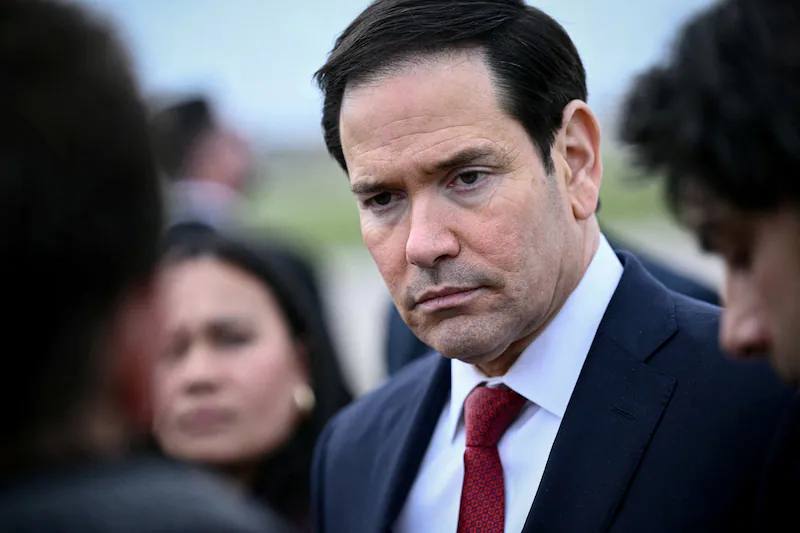
The United States, through Secretary of State Marco Rubio, unveiled a new visa‑restriction programme aimed at certain South African officials. The move, announced on Tuesday, adds another layer to the cooling of relations that have been strained since President Donald Trump took office.
What the new policy targets
According to the State Department, the restrictions will apply to foreign nationals who are directly involved in, or who have facilitated, the creation or enforcement of legislation that permits land expropriation without compensation, promotes race‑based discrimination, or encourages imminent violence against minority ethnic or racial groups in South Africa. The wording mirrors earlier US statements that have criticised South Africa’s land‑reform agenda and its handling of racial issues.
Rubio emphasized that the South African government has not sufficiently responded to previously raised concerns, prompting the United States to take this diplomatic step. No individual names were disclosed in the announcement.
Background: US‑South Africa ties under Trump
Relations between Washington and Pretoria have deteriorated over a series of disputes. In 2018, President Trump publicly accused South Africa of enacting policies that allegedly harmed the white population, a claim that was widely dismissed by South African officials as unfounded. The administration also cut certain aid programmes, expelled South Africa’s ambassador in 2019, and even floated the idea of offering sanctuary to white Afrikaners fearing persecution.
Beyond the rhetoric on racial matters, the Trump administration took issue with South Africa’s proposed land‑reform bill, which would allow the state to seize private farmland without paying market value. The United States, along with other Western nations, warned that such a policy could undermine property rights and deter foreign investment. South Africa, for its part, argues that the measure is a corrective step addressing historic dispossession dating back to colonial and apartheid eras.Another flashpoint has been South Africa’s legal challenge against Israel at the International Court of Justice (ICJ) over the Gaza conflict. Washington, a staunch ally of Israel, criticised Pretoria’s move as politicising a humanitarian dispute, further souring diplomatic goodwill.
South Africa’s response and the broader debate
The South African embassy in Washington did not immediately comment on the visa ban, but officials in Pretoria have repeatedly denied any systemic persecution of white citizens. President Cyril Ramaphosa has called for an international effort to counter what he describes as “misinformation” about a supposed white genocide, insisting that the nation’s post‑apartheid constitution guarantees equality for all races.
Land reform remains a deeply divisive issue within South Africa. While the African National Congress (ANC) government argues that expropriation without compensation is necessary to redress centuries of inequality, opposition parties and business groups warn that the policy could destabilise the agricultural sector, which contributes roughly 2.5% to the country’s GDP and employs hundreds of thousands of workers.
Human rights organisations have also weighed in. Some NGOs claim that the land‑reform bill could lead to forced evictions and heightened tensions between landless communities and current owners, many of whom are white farmers. Others argue that the policy, if implemented transparently, could promote a more equitable distribution of land without necessarily violating human rights.
Potential implications of the visa ban
Visa restrictions are a relatively low‑cost tool for the United States to signal disapproval, but they can have outsized diplomatic repercussions. Affected officials may find it harder to travel for trade missions, attend international conferences, or engage in bilateral negotiations, thereby limiting South Africa’s ability to advocate for its interests abroad.
Economically, the ban could compound existing investor wariness. South Africa already faces capital outflows linked to concerns over property rights, and the added diplomatic friction may deter new foreign direct investment, particularly in the agricultural and mining sectors.
On the diplomatic front, the move may push South Africa to seek stronger ties with non‑Western partners. Over the past few years, Pretoria has deepened relationships with China, Russia, and several Gulf states, seeking alternative sources of investment and political support.
Looking ahead
Both governments appear entrenched. The United States, under the current administration, has signalled a willingness to use visa policy as leverage on a range of foreign‑policy issues, from human rights to trade. South Africa, meanwhile, is under domestic pressure to deliver on land‑reform promises before the next national election, scheduled for 2024.
Observers suggest that a diplomatic breakthrough will require a nuanced approach that balances South Africa’s historical redress agenda with international expectations for rule‑of‑law and property rights. Until such a compromise emerges, the visa restriction policy is likely to remain a contentious point in US‑South Africa relations.
In the meantime, the announcement serves as a reminder that immigration tools can be wielded as political instruments, shaping not only who can cross borders but also influencing the broader narrative between nations.