

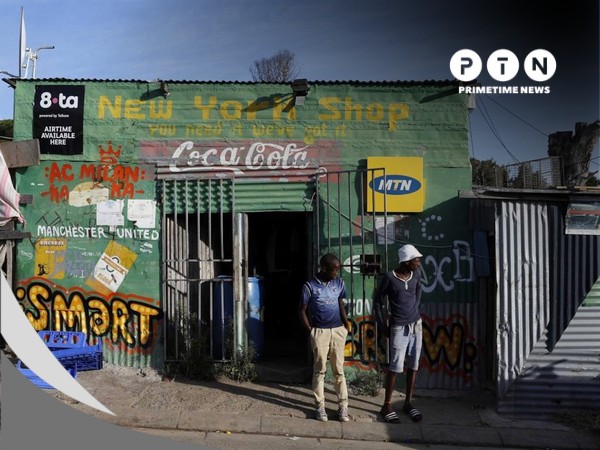
South Africa’s informal retail sector, best known for its ubiquitous spaza shops, is now under scrutiny after a research paper estimated that roughly R6.3 billion may have been siphoned offshore via unregistered financial routes. The findings have reignited debate over the country’s ability to curb money‑laundering, tax evasion and the financing of extremist groups operating in the region.
How the estimate was derived
The study – titled The Nature of Stealthy Remittance in South Africa (Insights from SADC immigrants operating in Tshwane’s informal economy) – focused on migrant‑run businesses in the capital’s townships. By cross‑referencing data from the Department of Small Business Development, the South African Revenue Service (SARS) and on‑the‑ground surveys, researchers concluded that foreign‑owned spaza shops generate a substantial cash flow that is largely invisible to formal regulators.
Official registers show about 87,000 spaza shops nationwide, with 32,824 (≈38%) listed as owned by non‑South African citizens. However, field observations suggest the true proportion of unregistered foreign‑run outlets could be between 50 % and 70 %, meaning a large share of the sector operates outside the tax net.
Using estimates of average monthly turnover for these stores and accounting for the prevalence of cash‑only transactions, the authors arrived at the R6.3 billion figure. The money, they argue, is moved abroad through a combination of unregistered SIM cards, informal cash‑carrying networks and “hawala‑style” remittance systems that leave no electronic trail.
Why the leak matters for national security
Unmonitored capital flows weaken South Africa’s anti‑money‑laundering (AML) and counter‑terrorism financing (CTF) frameworks. The country’s placement on the Financial Action Task Force (FATF) grey list in 2024 was largely driven by such vulnerabilities. According to the FATF, a grey‑list designation signals that a jurisdiction has strategic deficiencies that could be exploited by criminal or terrorist actors.
The report alleges that portions of the offshore money have reached extremist cells linked to the Islamic State in Kenya, Somalia, Nigeria and Mozambique. While the exact pathways remain opaque, the claim aligns with the Financial Intelligence Centre’s 2022 assessment that up to 70 % of cross‑border remittances in the region move through informal, cash‑based channels, making detection extremely difficult.
In response, the government has intensified oversight of the banking sector. The South African Reserve Bank’s Prudential Authority recently levied a R28 million penalty on Capitec Bank for failures in customer due diligence and terrorist‑property reporting, underscoring the regulator’s focus on tightening AML safeguards.
Tax implications and the informal economy challenge
SARS has identified the spaza shop sector – estimated at around R200 billion in turnover – as a priority for expanding the tax base. Yet only about 30 % of shops are registered taxpayers, leaving an estimated 70 % operating in the shadows. The cash‑heavy nature of these businesses, combined with limited point‑of‑sale technology, hampers the creation of audit trails that tax officials rely on.
Parliament’s Standing Committee on Finance has repeatedly warned that billions of rand may be leaving the country without ever being taxed, depriving the national fiscus of resources needed for health, education and infrastructure. While political rhetoric often singles out foreign‑owned outlets, SARS maintains that enforcement actions are nationality‑agnostic; the real obstacle is the structural informality of the sector.
Beyond lost revenue, the informal remittance ecosystem creates a parallel financial system that can be hijacked by criminal networks. Community‑based money‑moving arrangements, popular mobile‑money apps and unregistered SIM cards enable rapid, low‑cost transfers that bypass traditional banking safeguards.
Regulatory response and future outlook
The 2025 SARB risk‑assessment report highlighted that South Africa’s banking sector remains exposed to high‑risk AML/CTF activities, especially among larger domestic institutions. The report cited suspicious transaction reports, weak customer‑identification procedures and inadequate risk‑management frameworks as key gaps.
In addition to the Capitec fine, the Reserve Bank recently sanctioned Sasfin Bank with a civil damages claim of roughly R4.87 billion after a SARS investigation uncovered a syndicate that colluded with bank staff to funnel foreign‑exchange proceeds offshore. These high‑profile penalties signal a shift toward stricter compliance enforcement.
Nevertheless, experts argue that without broader formalisation of the informal economy, regulatory bodies will continue to chase a moving target. Initiatives such as expanding digital payment adoption, incentivising registration of spaza shops and improving data‑sharing between the SARB, SARS and the Financial Intelligence Centre are cited as essential steps.
International context and the way forward
South Africa is not alone in grappling with informal remittance channels. Across the Southern African Development Community (SADC), similar cash‑based networks facilitate both legitimate family support and illicit financing. A recent report on the R63 bn offshore transfers underscores the regional scale of the challenge.
Addressing the issue will require a coordinated approach that balances the need for financial inclusion with robust AML/CTF controls. Policymakers are exploring options such as mandatory registration of all retail outlets, mandatory use of electronic cash registers, and tighter monitoring of mobile‑money providers.
Until such measures are fully implemented, the risk that spaza shops offshore funds to support extremist networks is likely to persist, keeping South Africa under the watchful eye of international watchdogs.