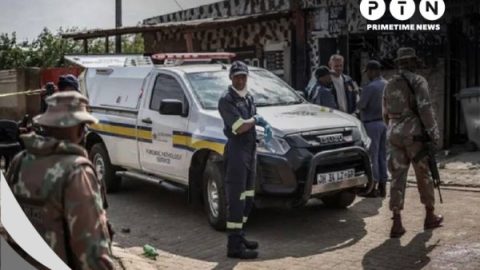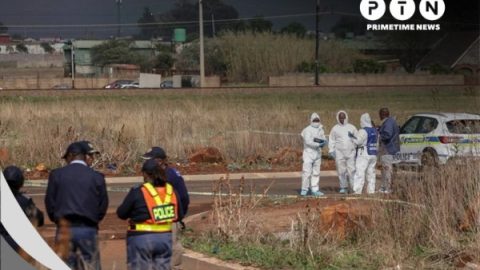

On 27 September 2026, a private security patrol vehicle traveling along Rhokana Road in Springs stumbled upon the lifeless form of a woman in an open field beside a railway line. The grim find marked the 11th female victim uncovered in the Ekurhuleni municipality since mid‑July, intensifying what police now describe as a possible Ekurhuleni serial killer investigation.
How the discovery unfolded
The security team, on routine patrol, immediately reported the scene to Gauteng police. Within minutes, a multi‑disciplinary response was underway. Brigadier Brenda Muridili, spokesperson for the Gauteng Provincial Police, confirmed that Crime Scene Management, Forensic Services, Detectives, Crime Intelligence and Investigative Psychology units were dispatched to secure the area, collect evidence and begin a forensic examination.
Witnesses say the victim was partially clothed and appeared to have suffered multiple injuries, including bruising and stab wounds. While the identity of the woman remains unconfirmed, forensic analysts are already processing DNA, clothing fibres and any trace evidence that could link her to the earlier victims.
Geographic spread of the victims
Since July, bodies have surfaced across a wide swath of Ekurhuleni, from Kempton Park and Dawn Park to Kwa‑Thema, Thembisa and now Springs. The locations are varied—some found on roadside verges, others in vacant lots or near transport corridors—yet many share disturbing similarities: female, semi‑naked, and bearing signs of violent assault.
One notable exception is the ninth victim, Jabulile Ntimba, whose death investigators tied to a local dispute rather than the broader pattern. Three suspects—one male and two females—were arrested in Dawn Park in connection with that case, underscoring that not every homicide in the area can be automatically linked to a single perpetrator.
Recent arrests and lingering questions
Just days before the 11th body was recovered, police apprehended a suspect believed to be connected to the 10th victim, whose remains were found in a Tembisa cemetery after reports of a woman’s screams. The arrest, however, has not quelled public anxiety. Detectives are still working to determine whether forensic evidence—such as matching DNA profiles or similar weapon marks—can definitively tie the suspect to the earlier killings.
Complicating matters, a separate suspect fled to Limpopo after being linked to another murder, prompting a cross‑provincial manhunt that ended in his capture. These developments illustrate both the challenges of coordinating investigations across municipal boundaries and the determination of law‑enforcement agencies to pursue every lead.
In a related development, the recent arrest in Boughton demonstrated the province’s willingness to act swiftly when suspects are identified, raising hopes that a breakthrough in the serial‑killer probe could soon follow.
Community reaction and the gender‑based violence crisis
The string of murders has amplified public outcry over South Africa’s entrenched gender‑based violence (GBV) epidemic. Community leaders, NGOs and ordinary citizens are demanding more resources, faster forensic turnaround times, and stronger protective measures for women.
Provincial officials have pledged additional funding for forensic labs and have urged residents to report suspicious activity, no matter how minor it may seem. The police have also launched an outreach campaign, asking families of missing women to come forward with any information that could aid identification.
Experts note that the pattern of victims—often young, economically vulnerable women—mirrors broader GBV trends in the country, where one woman is murdered every 12 hours on average. The current investigation, therefore, is not only a criminal case but also a litmus test for how effectively South Africa can address systemic violence against women.
What the evidence suggests so far
Criminal profilers involved in the case have highlighted several recurring elements: the choice of isolated fields near transport routes, the partial removal of clothing, and the presence of defensive injuries. These hallmarks could indicate a single offender with a specific modus operandi, but police caution that definitive conclusions cannot be drawn until DNA matches or other forensic links are confirmed.
According to Briefly News’ detailed coverage, investigators are also reviewing CCTV footage from nearby train stations and commercial premises, hoping to spot a recurring vehicle or suspect.
As the forensic teams continue their meticulous work, families of earlier victims remain in limbo, awaiting identification and closure. The hope among many is that the accumulation of evidence from all eleven cases will finally reveal a clear pattern, enabling prosecutors to secure a conviction that could bring an end to the terror gripping Ekurhuleni.
While the investigation remains ongoing, the community’s vigilance, combined with the police’s expanded resources, offers a glimmer of optimism. The next few weeks will be critical in determining whether the string of murders can be conclusively linked to a single perpetrator, and whether justice can be swiftly delivered for the women whose lives were brutally cut short.