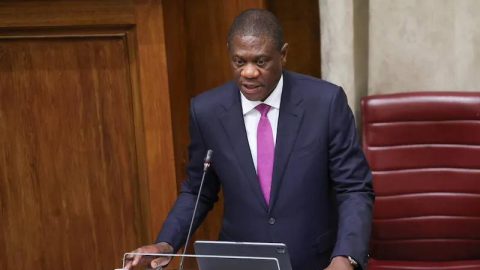

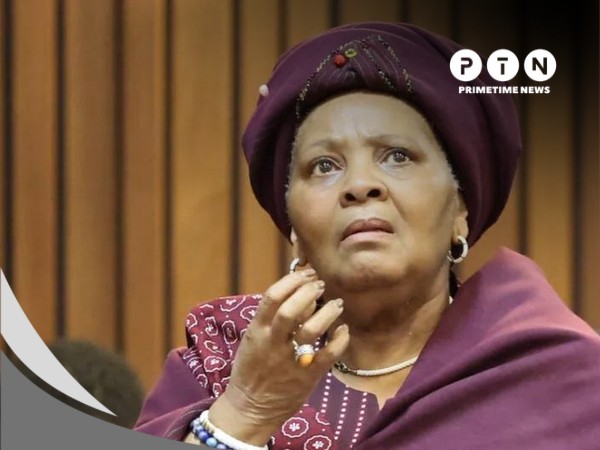
Former defence and veterans minister Nosiviwe Mapisa‑Nqakula took the stand before the Gauteng High Court in Pretoria on Thursday and delivered a startling revelation: the state witness, logistics contractor Nombasa Ntsondwa‑Ndhlovu, had been present in her indumba – a traditional healing space – in 2015, a full year before the two women first met officially.
Background to the corruption case
Mapisa‑Nqakula, who served as South Africa’s defence minister from 2016 to 2019, is currently facing a total of thirteen criminal counts – twelve for corruption and one for money‑laundering. Prosecutors allege that she demanded R4.5 million in bribes from Ntsondwa‑Ndhlovu, a logistics contractor for the South African National Defence Force (SANDF). The money was supposedly exchanged for the award and preservation of lucrative government tenders, with R2.1 million allegedly paid in cash.
The trial has been closely watched because it involves high‑level defence procurement, an area historically plagued by irregularities. The SANDF’s tender process, which includes contracts for everything from vehicle fleets to weaponry, has been under scrutiny since the 2010s, prompting reforms that aim to increase transparency.
Mapisa‑Nqakula’s testimony about the indumba
During her direct examination, the former minister recounted a personal tragedy that set the stage for the indumba incident. In early 2015 her son died while she was on a posting overseas. She returned to South Africa to grieve, and the household was overwhelmed with visitors. Complicating matters, her other son suffered an epileptic seizure triggered by the stress of the situation.
As a practising traditional healer, Mapisa‑Nqakula explained that specific customs must be observed when a family member passes away. She summoned senior healer Gogo Stella and other respected practitioners to her indumba to perform prayers and a cultural report of her son’s death.
It was during this solemn ceremony that she noticed a figure standing at the doorway, back turned to the participants. “I asked who that person was while we were praying. If the person was a traditional healer, they should step inside,” she testified. When the individual did not respond, she instructed the person to either join the ritual or leave the premises.
Mapisa‑Nqakula maintained that she never learned the identity of the silent observer until her arrest in 2024, when a confidante disclosed that the person was Ntsondwa‑Ndhlovu.
Contrasting accounts from the state witness
Ntsondwa‑Ndhlovu’s own testimony paints a different picture. She told the court that her first encounter with Mapisa‑Nqakula occurred in 2016 at a hotel near OR Tambo International Airport. According to the witness, she sought the meeting to probe alleged bribe demands made on Mapisa‑Nqakula’s behalf by former defence secretary Sam Gulube. Ntsondwa‑Ndhlovu claimed that Mapisa‑Nqakula admitted to soliciting the funds and that both parties agreed to use coded language for future payments.
The former minister rejected this narrative, insisting that their relationship was rooted solely in a shared interest in traditional healing. She added that from 2016 until their parting in 2019, Ntsondwa‑Ndhlovu never referenced the 2015 indumba episode or her son’s death. “There was not a single day where she reminded me or said, ‘Do you remember the loss of your son?’” Mapisa‑Nqakula said.
Ntsondwa‑Ndhlovu also asserted that she visited Mapisa‑Nqakula’s home as part of an official SANDF delegation, suggesting that the alleged indumba encounter could have been a routine inspection rather than a secretive meeting.
Cultural sensitivities and courtroom drama
Mapisa‑Nqakula accused the witness of exploiting deeply personal cultural details for strategic gain. She highlighted that the court was told about the practice of clapping when her dlozi – an ancestral spirit – manifested during the ceremony, a detail she described as “cruel” to expose publicly.
“Don’t say something that will end up hurting another person,” she warned the court. “There are small things a person could lie about, but she didn’t have to lie about this. The whole country already knew my son was epileptic.” Her remarks underscore how South African courts must balance legal proceedings with respect for indigenous customs.
South Africa’s constitution recognises traditional leadership and healing practices, yet the integration of such customs into formal legal settings remains a delicate matter. Legal scholars note that while cultural evidence can be admissible, it must not prejudice the rights of the accused or the witness.
Wider context and related developments
The trial continues to attract national attention, not only because of the alleged financial improprieties but also due to the personal narratives intertwined with cultural heritage. As the proceedings unfold, observers are also watching other high‑profile cases involving state officials.
In other international news, US personnel shot in Eswatini during an anti‑smuggling raid have drawn attention to regional security challenges, highlighting the complex environment in which South Africa’s defence ministry operates.
For a detailed account of Mapisa‑Nqakula’s courtroom statements, see the coverage by TimesLIVE.
The outcome of the case could set a precedent for how allegations of corruption intersect with traditional practices in South Africa’s highest courts, and whether cultural contexts will be given greater weight in future prosecutions.