

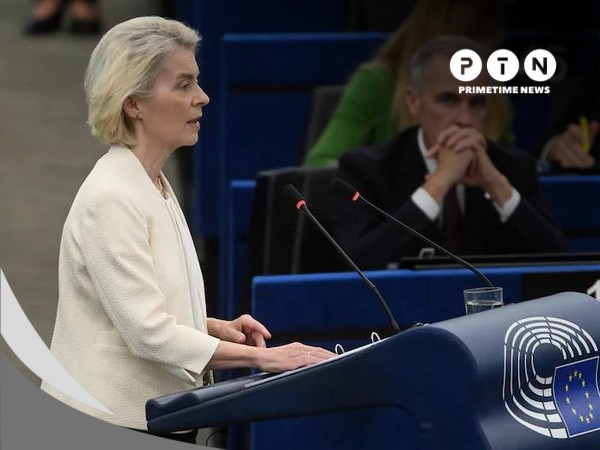
European Commission President Ursula von der Leyen announced a bold initiative: offering Canada the status of the European Union’s first associate member. The proposal, unveiled during her annual State of the EU address, signals a strategic pivot for both sides as trade tensions with the United States intensify.
Why the EU Is Targeting Canada
Canada already enjoys a robust trading relationship with Europe under the Comprehensive Economic and Trade Agreement (CETA). Von der Leyen argued that a deeper “Alliance for the Future” could expand cooperation beyond tariffs, encompassing advanced manufacturing, artificial intelligence, quantum computing, and critical minerals. The EU sees Canada as a like‑minded democracy that shares its values on human rights, climate action and rule‑of‑law, making it a natural partner in an increasingly multipolar world.
Canada’s Strategic Calculus
For Ottawa, the prospect of associate membership is a way to diversify away from a trade system that is over‑dependent on the United States – roughly 70 % of Canadian exports head south. Prime Minister Mark Carney has repeatedly called for a “unique alliance” with Europe that would give Canadians the right to live and work across the bloc without visas, while preserving national sovereignty.
Canada’s ambassador‑designate to the EU, Jonathan Wilkinson, confirmed that Ottawa had already broached the idea of associate status in talks with Brussels before von der Leyen’s speech. “We are not seeking full EU membership, which would require surrendering key sovereign powers,” Wilkinson explained. “Instead we want to get as close as possible to the bloc in a way that strengthens, not diminishes, our sovereignty.”
Washington’s Reaction
U.S. President Donald Trump responded with a warning that any perceived “hostile act” toward the United States could trigger heavier tariffs on European goods. Speaking in Charlotte, North Carolina, he dismissed the notion of Canada joining the EU as “laughable” and threatened to cut off certain trade channels if European leaders pursued the plan.
Trump’s administration also signed an order restricting U.S. government purchases of Canadian products, framing it as retaliation for Canada’s “Buy Canadian” procurement policy. The White House claimed the policy was “unreasonable and discriminatory” toward American firms, a move that has further strained the historically close North‑American partnership.
What Associate Membership Could Look Like
Because no country has ever held associate status with the EU, the legal framework is untested. Existing treaties such as CETA would likely serve as a foundation, but new provisions would be needed to grant Canadians visa‑free movement, joint participation in defence procurement programmes, and access to EU research funding.
Canada already participates in the EU’s €150 billion Safe Defence Programme, giving its defence firms a seat at the table for joint procurement projects. Extending this cooperation could pave the way for shared development of next‑generation weapons, cybersecurity tools, and renewable‑energy technologies.
European Parliament member Tobias Cremer urged policymakers to move beyond “love letters” and create a concrete, “meat‑on‑the‑bone” agreement. He envisions a partnership that is more than a trade pact – a strategic alliance that could position the EU as a hub for middle powers seeking collective leverage against great‑power pressure.
Next Steps and Potential Roadblocks
The upcoming Canada‑EU summit in October will be the first opportunity for leaders to flesh out the details. Wilkinson said the focus will be on the substance of the relationship rather than the label, noting that the “shape” of any new arrangement will become clearer after the summit.
All EU member states must unanimously approve any change to the bloc’s composition, a process that could take years. Past discussions about associate status for Ukraine or post‑Brexit Britain never progressed to a formal vote, underscoring the political complexity of the proposal.
Meanwhile, the United States is unlikely to back down. If the EU proceeds, Washington may impose sector‑specific tariffs or limit cooperation on technology standards, echoing the President’s earlier threats. Canadian officials, however, argue that aligning with Europe could give Ottawa a stronger bargaining position in future U.S. negotiations.
Broader Geopolitical Implications
The move reflects a broader shift in global alliances. As the EU seeks to assert its own strategic autonomy, partnering with a stable, democratic nation like Canada could reinforce its role as a global norm‑setter. For Canada, deeper EU ties could act as a counterbalance to U.S. pressure, providing alternative markets for its agricultural, energy and tech exports.
Analysts also point to the Arctic as a key area of mutual interest. Both the EU and Canada have stakes in sustainable resource development and security in the high north, and a formalized partnership could streamline joint research and emergency‑response capabilities.
In a related development, the EU’s chief’s ambition was highlighted in an EU chief’s proposal to make Canada the bloc’s first associate member, underscoring the strategic depth of the initiative.
While the idea remains in the realm of diplomatic negotiation, its potential to reshape trade, defence and geopolitical dynamics makes it a story worth following. As both sides weigh the benefits against the inevitable pushback from Washington, the next few months could set a new precedent for how middle powers collaborate in a fragmented international order.
For a completely unrelated but still intriguing development, see the rumor about the Kempton Park murder suspect that was recently debunked by local police.