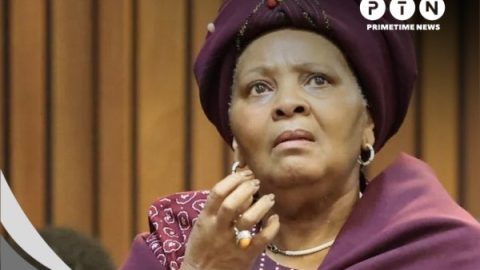


The ongoing Zuma Sambudla expulsion has drawn attention to internal disputes within the revived MK party, as the former president’s daughter argues that her removal is not a consequence of her father’s legacy.
Zuma Sambudla expulsion sparks legal challenge
The MK party, named after the historic African National Congress militia, was relaunched in recent years as a platform for former ANC members seeking an alternative political voice. Its leadership structure mirrors that of many South African parties, with a national executive committee, provincial branches, and a constitution that governs membership and disciplinary processes.
Since its reformation, the party has positioned itself as a progressive force, championing land reform, youth empowerment, and anti‑corruption measures. The recent Zuma Sambudla expulsion has underscored the challenges of maintaining cohesion amid rapid growth. However, the internal dynamics have been marked by competing factions, each vying for influence over policy direction and candidate selection.
Within this contested environment, the Zuma Sambudla expulsion became a focal point for broader debates about the role of political lineage in contemporary South African politics.
Duduzile Zuma‑Sambudla, the daughter of former president Jacob Zuma, is a well‑known figure in the country’s political discourse. Although she has kept a relatively low profile compared to her father, her public statements and occasional remarks on policy have placed her in the spotlight of party politics.
Her association with the MK party stemmed from a desire to contribute to a platform that emphasized grassroots activism and social justice, ideals that align with her own expressed priorities.
In June, the party announced the suspension and subsequent expulsion of both Duduzile and former spokesperson Nhlamulo Ndhlela. The decision was presented as a measure to preserve party discipline following alleged breaches of internal regulations.
Both parties immediately rejected the characterization of their actions as violations. They contend that the process lacked transparency, that they were not afforded a fair hearing, and that the decision was influenced by internal power struggles rather than any concrete misconduct.
Importantly, Duduzile has publicly stated that she does not attribute the expulsion to her father’s political legacy. She emphasizes that the decision should be examined on its own merits, separate from any familial connections.
Her stance reflects a broader sentiment among some party members who wish to distance personal grievances from institutional processes. By refusing to frame the issue as a dynastic retaliation, she aims to focus attention on procedural fairness and the rights of party affiliates.
Nhlamulo Ndhlela, who served as MK’s spokesperson during a period of heightened media activity, echoed similar concerns. He highlighted that the party’s constitution outlines specific steps for disciplinary action, and that those steps were not adequately followed in their case.
The two former members have announced their intention to approach the high court to contest the expulsions. Their legal strategy will likely involve filing a notice of motion, seeking an interdict to halt the enforcement of the expulsion, and requesting a judicial review of the party’s disciplinary procedures. The Zuma Sambudla expulsion is expected to feature prominently in the court’s assessment of procedural fairness.
In South Africa, the judiciary has historically played a pivotal role in adjudicating disputes that intersect with political party governance. Courts have the authority to review whether internal party actions comply with constitutional principles, including the right to fair administrative action.
If the high court grants an interim relief, the MK party would be required to suspend the enforcement of the expulsions pending a full hearing. This could open the door for negotiations, mediation, or a re‑examination of the evidence that led to the original decision.
The legal challenge also raises questions about the balance of power within political parties. While parties enjoy autonomy in managing their affairs, that autonomy is not unlimited and must conform to broader legal standards.
Analysts suggest that the outcome of this case could set a precedent for how other parties handle internal dissent, especially when high‑profile individuals are involved.
From a historical perspective, the MK party’s origins are rooted in resistance against apartheid, and its revival carries symbolic weight. The party’s leadership has sought to honor that legacy while navigating the complexities of contemporary South African politics.
The internal dispute surrounding the expulsions underscores the tension between preserving party unity and respecting individual rights. It also reflects the challenges that new or re‑emerging parties face in establishing robust governance frameworks.
Within the MK party, reactions have been mixed. Some members have expressed support for the disciplinary action, citing the need for strict adherence to party rules. Others have questioned the motives behind the expulsions, suggesting that internal factions may be using disciplinary measures as a tool to consolidate power.
Party officials who have refrained from commenting publicly note that the internal processes are confidential and that any statements would be premature. Nonetheless, the public discourse indicates that the issue has captured the attention of both supporters and critics of the party.
Public opinion in South Africa remains divided on the relevance of familial connections in politics. While some argue that political families bring experience and continuity, others contend that they perpetuate patronage networks that hinder democratic renewal.
The case also illustrates the broader challenges facing South Africa’s political landscape, where emerging parties must navigate a terrain dominated by established actors while striving for internal cohesion.
Should the high court rule in favour of the expelled members, the decision could reinforce the principle that party disciplinary actions must be procedurally sound and transparent. Conversely, a ruling that upholds the expulsions may affirm the party’s authority to enforce its internal regulations.
In either scenario, the dispute highlights the importance of clear, codified processes for handling membership grievances, especially as parties seek to professionalise their structures.
Observers will be watching closely as the case proceeds, noting that the outcome may influence how political parties across South Africa manage internal conflicts, particularly those involving high‑profile individuals.
The timeline of events suggests that the legal challenge will likely be filed within weeks, with an initial hearing scheduled for the upcoming month. Both parties have retained experienced legal counsel familiar with constitutional and administrative law.
As the high court prepares to hear arguments, the MK party faces a period of introspection. It must balance the imperative to maintain discipline with the need to uphold democratic principles that underpin its renewed mission.
Ultimately, the Zuma Sambudla expulsion episode serves as a case study in the interplay between personal reputation, party governance, and the role of the judiciary in safeguarding procedural fairness within political organisations.
The broader implications for South African politics may extend beyond the immediate parties involved, offering insights into how emerging political movements can build resilient, transparent structures that command public trust.
Learn more about our newsroom on our About page.