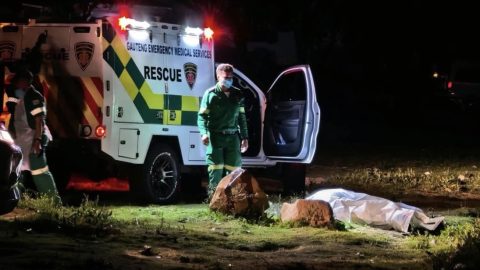

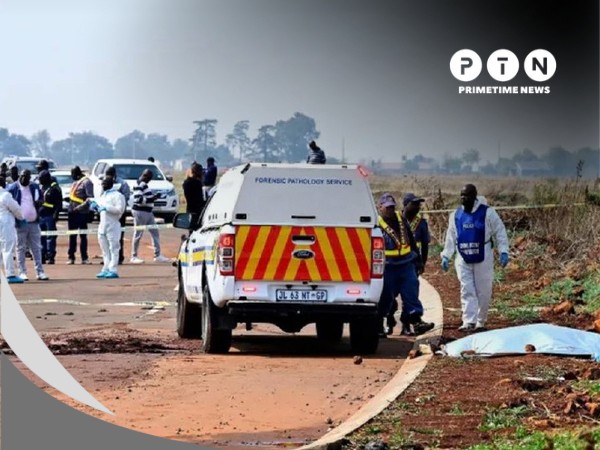
Since mid‑July, the Ekurhuleni region has been haunted by a string of brutal murders that have claimed the lives of at least ten women. The most recent discovery, the body of Jabulile Ntimba, was found half‑clothed with a fatal throat wound in Dawn Park, Boksburg, on 17 September. Police now suspect that a volatile romantic relationship may have triggered this ninth killing, adding a new dimension to the ongoing investigation into the Kempton Park killings.
What investigators have uncovered so far
Deputy National Police Commissioner Lieutenant General Tebello Mosikili addressed the media on Monday, indicating that the team handling Ntimba’s case has identified patterns consistent with a love‑triangle scenario. While he declined to reveal specific details, he emphasized that the motive appears to stem from a “rocky relationship” rather than a random act of violence.
Police have also confirmed that they are still assessing whether the series of murders are linked or if a lone serial offender is at work. “We are still connecting the dots,” Mosikili said, underscoring that no definitive conclusion has been reached yet.
Chronology of the victims
The first victim, Busisiwe Mahlangu, was discovered in Kempton Park on 15 July. Since then, a succession of women—most in their twenties—have been found in remote spots across Ekurhuleni, including a body wrapped in a duvet discovered in a Soweto dam on 24 September. That particular case raised the tally to ten victims, prompting police to intensify their outreach to the public for information.
Each victim has been discovered in a state of partial undress, often with a sheet or blanket covering the body, suggesting the perpetrator may have attempted to conceal the crime scene after the act. Acting Gauteng Police Commissioner Major General Fred Kekana noted that forensic evidence points to the victims being killed elsewhere before being dumped in public spaces, a tactic that complicates the investigative trail.
Police response and community involvement
In response to mounting public pressure, Acting Police Minister Firoz Cachalia has enlisted senior crime‑intelligence officials—including Lieutenant General Dumisani Khumalo and KwaZulu‑Natal Police Commissioner Lieutenant General Nhlanhla Mkhwanazi—to assist with the probe. Their mandate is to provide strategic oversight and ensure that resources are allocated efficiently across the multiple jurisdictions involved.
The police have also appealed directly to families and community members for assistance. A reward of R400 000 remains on offer for anyone who can positively identify the woman whose body was found in Olifantsfontein on 7 September, the only victim still unnamed in the Ekurhuleni series. Authorities stress that they will not rush to court without solid evidence, preferring a thorough investigative process that can withstand judicial scrutiny.
Members of the public can share tips via the Crime Stop hotline (08600‑10111) or through the MySAPS App, which allows for anonymous submissions of information.
Context: a possible love triangle
While the exact dynamics remain under wraps, the notion of a love triangle aligns with a pattern observed in other South African homicide cases where jealousy and possessiveness have escalated to lethal outcomes. For a deeper look at how personal relationships can fuel violent crime, see possible love triangle behind the ninth murder.
Police caution that premature speculation could jeopardise the investigation, but the emerging theory has already sparked discussions about the safety of women in the region and the need for more robust protective measures.
Related legal and social developments
The ongoing case also intersects with broader societal concerns, such as the prevalence of gender‑based violence in South Africa. According to the latest statistics from the Department of Police, women are three times more likely to be victims of homicide than men, a disparity that has prompted calls for legislative reform and increased funding for victim support services.
In a separate high‑profile incident, Lawrence Chamurwa Mudzinganyama faced police scrutiny for alleged intimidation, highlighting the broader climate of law‑enforcement challenges across the country.
As the investigation continues, the police remain committed to delivering justice for the victims and their families. The hope among the community is that a clear motive—whether a love‑triangle dispute or a more sinister serial pattern—will emerge, allowing authorities to bring the perpetrator(s) to account and restore a sense of security to the affected neighborhoods.