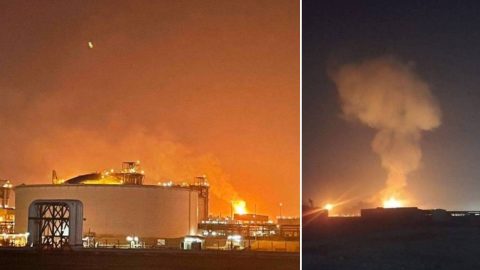


South African motorists can look forward to a modest easing of pump prices this month after international diplomatic developments hinted at a stabilising oil market. The United States and Iran have signed a memorandum of understanding that formally ends their long‑running conflict, a move analysts say could cut uncertainty that has kept crude prices elevated. With the risk of supply disruptions receding, the Department of Energy in Washington expects a gradual decline in benchmark barrels, which in turn should translate into lower wholesale costs for fuel distributors in the southern hemisphere. Energy experts in Pretoria note that while the global market will still be influenced by other factors such as OPEC decisions and seasonal demand, the immediate outlook is more favourable than the volatile weeks that preceded the agreement. Consequently, many anticipate that the promised July fuel price relief will start to materialise at the retail level before the end of the month.
The memorandum of understanding, signed on the sidelines of an international summit, marks the first formal step toward ending hostilities that have stretched over a decade. Although the document does not detail specific disarmament timelines, it signals a mutual willingness to de‑escalate and to open channels for broader diplomatic engagement. Observers point out that the conflict had repeatedly threatened the flow of Persian Gulf oil, a region that supplies roughly a third of the world’s petroleum. By removing the spectre of renewed fighting, the agreement reduces the risk premium that buyers typically add to crude contracts when geopolitical tensions run high. This risk premium has been one of the principal drivers of price spikes that filtered through to end‑users in distant markets, including South Africa.
Crude oil futures on major exchanges responded quickly to the news, with benchmark West Texas Intermediate slipping by more than a dollar per barrel in early trading. The price drop, while modest compared with the steep climbs of earlier in the year, nevertheless signalled a shift in market sentiment. Traders cited the MoU as a catalyst for a more predictable supply outlook, noting that even a marginal reduction in perceived risk can lead to lower hedging costs for refiners. In South Africa, the retail price of petrol is closely linked to the landed cost of imported crude, which is passed through a series of taxes and margins before reaching the pump. A softer global price curve therefore provides a natural floor for any subsequent retail adjustments.
July fuel price relief explained
The term July fuel price relief refers specifically to the expected dip in the average price of gasoline and diesel that South African consumers will see in the seventh month of the year. Historically, the country’s fuel price index has risen in July due to seasonal travel peaks and the timing of tax adjustments. However, analysts at the national energy council now project that the downward pressure from global markets could offset those seasonal forces, resulting in a net reduction of a few cents per litre. Such a movement, while not dramatic, would be welcomed by commuters, logistics firms, and the broader economy, which all shoulder a sizeable share of operating costs linked to fuel consumption.
The Department of Mineral Resources and Energy has issued a statement indicating that it will monitor the situation closely and that any substantive changes in international crude prices will be reflected in the next quarterly fuel price review. In the past, the department has adjusted fuel levies and excise duties to mitigate sharp price swings, but it has also warned that fiscal constraints limit the extent to which policy can counteract market forces. With the United States and Iran moving toward peace, officials say there is a clearer pathway for stable import costs, which could give the regulator greater flexibility to fine‑tune taxes without compromising revenue targets. Consumers therefore stand to benefit from a combination of market‑driven relief and prudent policy management, and the anticipated July fuel price relief adds optimism to the outlook.
Logistics companies that operate large fleets are especially sensitive to fuel price fluctuations. A reduction of even a few cents per litre can translate into savings of hundreds of thousands of rands over a month, freeing up capital for expansion or price‑competitive services. In a recent briefing, the South African Chamber of Commerce highlighted that improved fuel cost forecasts bolster confidence among exporters and importers who rely on road transport for the majority of their supply chain movements. While the agreement between Washington and Tehran does not directly affect South African oil production, it does influence the overall cost of imported refined products, which dominate the domestic market. Thus, the projected July fuel price relief is likely to have a ripple effect that supports broader economic activity.
For the average driver, the most tangible sign of relief will be the price displayed on the pump. Retail stations are required to update their price boards at least once a week, and the upcoming revisions are expected to show a modest downward tick. Consumer advocacy groups have urged the government to ensure that the reduction is passed on fully, warning that distributors sometimes absorb price drops to protect margins. Nevertheless, market observers remain cautiously optimistic, noting that the combination of reduced crude costs and competitive retail environments should keep the degree of price absorption limited. As a result, motorists are likely to feel a perceptible easing of fuel expenses during the latter half of July, and the expected July fuel price relief will become increasingly evident.
The durability of the price relief will depend on how the peace process evolves and whether other geopolitical flashpoints emerge. While the United States and Iran have taken a significant step, analysts caution that unresolved issues in the wider Middle East region, including tensions with other regional actors, could still spark supply concerns. Additionally, OPEC’s production decisions, as well as seasonal demand swings in the northern hemisphere, will continue to shape the global pricing landscape. In South Africa, the energy ministry has indicated that it will keep a close watch on these developments and will be ready to adjust fiscal levers if needed. For now, the prospect of a calmer market offers a welcome reprieve for consumers and businesses alike, and the July fuel price relief remains on the horizon.
In summary, the signing of the MoU between the United States and Iran creates a foundation for reduced volatility in the oil market, a factor that directly influences fuel pricing in South Africa. While the exact magnitude of the July fuel price relief cannot be quantified at this stage, the convergence of lower risk premiums, softer crude benchmarks, and responsive policy measures suggests a favorable trend. Stakeholders across the spectrum – from government regulators and energy traders to truck drivers and everyday commuters – are poised to benefit from a more stable pricing environment. Continued vigilance will be required to safeguard these gains, but the immediate outlook points toward a modest but positive shift in pump prices as the month progresses.
Learn more about our newsroom on our About page.