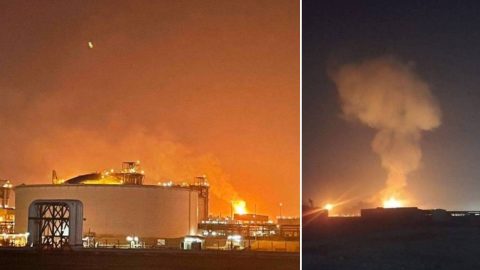


Moscow drones attack unfolded in the early hours of Monday as authorities reported that more than eighty unmanned aerial vehicles were intercepted and destroyed over the Russian capital. The incident came just days after a Ukrainian strike targeted a major oil refinery on the outskirts of the city, raising concerns about the escalating use of drones in the wider conflict.
Moscow drones attack timeline
According to the Russian defence ministry, radar stations detected a swarm of small aerial objects approaching from the south‑west direction shortly before dawn. The Moscow drones attack was quickly identified, prompting anti‑aircraft units to scramble and engage the incoming threats. By mid‑morning officials confirmed that over eighty drones had been shot down. The ministry did not disclose the exact type of weapons used, but standard surface‑to‑air missile systems stationed around the metropolitan area are typically employed in such scenarios.
The rapid response to the Moscow drones attack was credited to a heightened alert level that had been in place since the earlier refinery incident. Moscow’s air defence network, which includes a mix of older Soviet‑era platforms and newer Russian‑produced systems, has been on constant standby since the conflict intensified in 2022. The ability to intercept a large number of drones in a short period reflects both the technical upgrades made to the capital’s defensive infrastructure and the increasing sophistication of the aerial threats it faces.
In addition to missile batteries, ground‑based radars and auditory warning systems were activated to track low‑altitude trajectories. Russian officials noted that the intercepted drones varied in size and flight profile, suggesting a diversified launch strategy. Some of the objects were observed to loiter before attempting to approach critical infrastructure, a tactic that complicates prediction algorithms and forces defenders to allocate resources across a wider area.
Ukrainian drone strategy and capabilities
Ukrainian forces have relied heavily on commercially available drones and home‑grown modifications to conduct reconnaissance and limited strike missions. These platforms, often equipped with small explosive payloads, can be launched from relatively close ranges and are difficult for conventional air defence to track due to their low radar cross‑section. The recent use of drones against Moscow represents a shift from targeting peripheral infrastructure to striking high‑value urban targets.
The Moscow drones attack has prompted Ukrainian operators to refine swarm tactics, coordinating multiple drones to overwhelm defence layers. Analysts note that the surge in drone attacks is partly driven by the availability of cheap, off‑the‑shelf technology that can be adapted for military purposes. While the exact origin of the drones used in the Monday raid remains unconfirmed, the pattern of deployment aligns with previously observed tactics employed by Ukrainian volunteers and special operations units.
Strategically, the use of unmanned systems serves both a kinetic and a psychological purpose. By demonstrating the ability to reach the Russian capital, the Ukrainian side aims to impose a symbolic cost on the Russian populace, eroding the sense of invulnerability that large cities traditionally enjoy. At the same time, the relatively low cost of each drone allows for repeated attempts without a substantial financial burden.
Russian retaliation and casualties in Ukraine
While Moscow focused on its air defence, Russian forces continued their offensive operations in the east of Ukraine. Local officials reported that at least six civilians were killed in a series of strikes that targeted residential areas. The victims included a young boy and his father, highlighting the tragic impact of the conflict on non‑combatants. Ukrainian authorities condemned the attacks as violations of international humanitarian law and called for increased protection of civilians.
The Moscow drones attack occurred as Russian forces intensified artillery bombardments in contested zones. The strikes were carried out using a combination of precision‑guided missiles and conventional shells, with the exact munition types yet to be identified. The death toll, though relatively low compared to previous large‑scale assaults, underscores the persistent danger faced by communities trapped in contested zones.
Humanitarian organisations have warned that the ongoing violence could exacerbate an already dire displacement crisis, with thousands of families forced to flee their homes. Access to basic services such as clean water, healthcare and education is increasingly limited, raising the risk of secondary crises that could destabilise the region further.
International reaction and diplomatic implications
Western governments have reiterated their support for Ukraine’s right to self‑defence, while urging all parties to avoid actions that could further endanger civilians. The United Nations’ latest brief on civilian protection listed the recent Russian strikes among incidents that require urgent attention from the Security Council. Meanwhile, Russia’s justification for the attacks centres on the claim that they are responding to provocation and protecting critical infrastructure.
In diplomatic circles, the Moscow drones attack is being analysed as a potential escalation point. Some experts argue that the use of drones against a capital city could set a precedent for future operations, prompting both sides to invest more heavily in counter‑drone technologies. Others caution that the symbolic nature of the strike may outweigh its tactical significance, but stress that any increase in civilian risk is cause for concern.
Several European capitals have issued travel advisories, urging citizens to remain vigilant and to follow local authorities’ instructions in case of emergency alerts. NATO officials emphasized the importance of maintaining open channels of communication to prevent misunderstandings that could lead to broader confrontation.
Future outlook for drone warfare in the region
The growing reliance on unmanned systems is reshaping the dynamics of the conflict between Russia and Ukraine. As both sides acquire more advanced anti‑drone solutions, the battlefield may evolve into a contest of electronic warfare, sensor integration and rapid response capabilities. The Moscow drones attack illustrates that even well‑defended urban centres are not immune to persistent aerial threats, and that the psychological impact of such attacks can be substantial.
Looking ahead, military planners on both sides are likely to incorporate lessons learned from recent engagements. Ukraine may continue to refine its drone tactics, focusing on stealth, payload efficiency and swarm coordination to maximise impact. Conversely, Russia is expected to expand its layered defence architecture, incorporating laser‑based systems, radio‑frequency jamming and AI‑driven detection to counter future incursions.
For observers, the key question remains whether the escalation of drone use will translate into broader strategic gains or simply fuel a cycle of retaliation that deepens the humanitarian toll. The international community’s response, including potential sanctions, aid packages and diplomatic pressure, will shape the trajectory of the conflict in the months to come.
In summary, the Moscow drones attack highlights the increasing complexity of modern warfare, where small, inexpensive platforms can challenge the most sophisticated defence networks. The incident, coupled with the tragic loss of civilian lives in Ukraine, underscores the urgent need for renewed efforts to protect non‑combatants and to seek a diplomatic pathway out of a protracted war.
Learn more about our newsroom on our About page.