

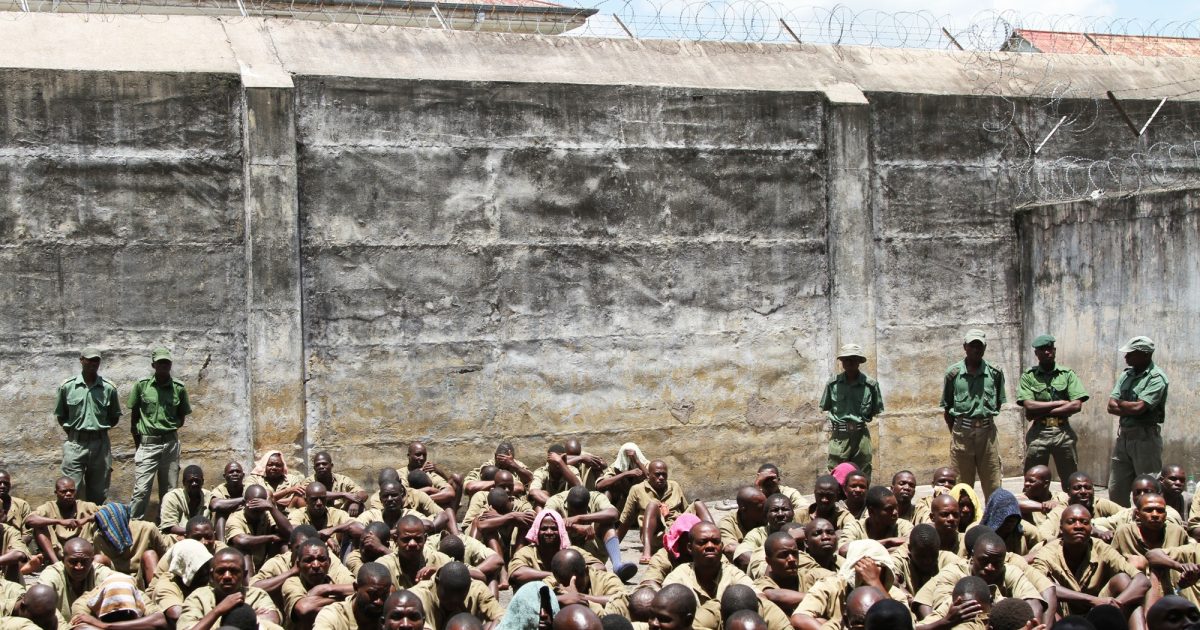
Zimbabwe released 4,305 convicted prisoners under a presidential clemency order issued to reduce overcrowding in the country’s correctional facilities.
The figure was announced by Justice, Legal and Parliamentary Affairs Minister Ziyambi Ziyambi on 2 March 2026, when the Zimbabwe Prisons and Correctional Service began processing releases nationwide. Of those who qualified, 4,082 were men and 223 were women.
The legal basis was Clemency Order No. 1 of 2026, published in the Government Gazette on 20 February 2026 as General Notice 99 of 2026. President Emmerson Mnangagwa issued the order under section 112(1)(a) and (d) of the Constitution of Zimbabwe, which gives the President the power of mercy.
Most inmates had to have served at least one-third of their sentence by the date the order was gazetted. The Zimbabwe Prisons and Correctional Service said it identified beneficiaries through a nationwide audit using an electronic inmate data system.
Who qualified
The order was limited to defined categories. Those who received a full remission of the remainder of their sentences included:
• convicted female inmates, except those convicted of specified offences
• inmates under the age of 18, except those convicted of specified offences
• inmates serving an effective sentence of 48 months or less for non-specified offences, if they had served at least one-third of the term
• inmates aged 60 years and above who had served at least one-third of their sentences
• inmates certified terminally ill by a correctional or government medical officer
• visually impaired and physically disabled inmates whose conditions could not be adequately managed in prison
• inmates serving sentences at open prisons
• inmates sentenced to life imprisonment who had already served at least 20 years, including some whose death sentences had earlier been commuted to life
Male inmates serving more than 48 months for non-specified offences did not all walk free. The order provided for a one-quarter remission of the remaining effective sentence for that group.
Who was excluded
The clemency order excluded inmates convicted of specified offences. Those offences included murder, treason, rape and other sexual offences, robbery, armed robbery, carjacking, public violence, trafficking in persons, and unlawful possession of a firearm.
Also excluded were inmates convicted under the Public Order and Security Act or the Maintenance of Peace and Order Act, the Electricity Act, the Postal and Telecommunications Act, the Railways Act and the Copper Control Act. Conspiracy, incitement or attempt to commit any of the listed offences was also excluded.
Further bars applied to inmates previously released on amnesty, people sentenced by a court martial, and inmates with a record of escaping from lawful custody.
Officials described the 2026 amnesty as targeted and merit-based, focused on vulnerable groups and inmates assessed as having made progress in rehabilitation. The stated purpose was to ease congestion so that remaining facilities could function as places of rehabilitation rather than only detention.
How the release was carried out
Releases started on Monday 2 March 2026 at prisons across the country, including Harare Central Prison and Chikurubi Female Prison. Minister Ziyambi said the bulk of beneficiaries would be released immediately and the remainder in phases.
Reported immediate-release figures from official briefings were 3,755 in some accounts and 3,978 in others, with about 327 inmates scheduled for staggered release. The confirmed total of beneficiaries remained 4,305.
Provincial figures later reported by the Zimbabwe Prisons and Correctional Service included 790 in Harare Metropolitan province, 688 in Bulawayo, 552 in Manicaland, 537 in Midlands, 398 in Masvingo, 397 in Mashonaland East, 340 in Mashonaland West, 231 in Matabeleland North, 206 in Mashonaland Central and 131 in Matabeleland South. In Matabeleland South, officials said 260 inmates were released, including 84 from Beitbridge Prison, 132 from Gwanda Prison and its satellites, and 44 from Plumtree Prison.
Communities were asked to accept the released inmates. Officials said the amnesty was not a finding that the original crimes were unimportant, and that reintegration was intended to reduce the chance of reoffending.
Why the prisons were emptied in part
Zimbabwe’s prisons have been operating well above design capacity.
Official figures from the National Prosecuting Authority in January 2026 put the prison population at 27,683 against a holding capacity of 17,800, an occupancy level of 155.5 percent and an excess of 9,883 people. Of those held, 5,970 were awaiting trial and had not been convicted.
Other official and parliamentary descriptions in 2025 and 2026 placed the population in a similar range, generally above 22,000 to 24,000 against capacity of about 17,000 to 17,800. Parliamentary reports after prison visits described inmates sleeping in shifts at some maximum-security facilities, shortages of mattresses, food, medicine, water and sanitation, and disease pressure including tuberculosis.
Presidential clemency has been used before in Zimbabwe to cut the prison population. The 2026 order followed those earlier measures and was presented as part of a wider attempt to manage congestion while a parole system was being developed.
South African reaction and what has not been shown
The size of the release later drew comment in South Africa, particularly on social media. Posts circulating in September 2026 described a release of about 3,000 prisoners and treated it as a current event. Some posts stated that the inmates had been released into South Africa, or that they would shortly cross the border and commit crimes.
Those posts do not match the official record. The amnesty was announced and carried out in Zimbabwe in February and March 2026. The confirmed total was 4,305, not 3,000. There is no official South African or Zimbabwean report showing that the inmates released under Clemency Order No. 1 of 2026 crossed into South Africa as a group, or that they have been linked to crimes inside South Africa.
A separate process between the two countries concerns sentenced prisoners already held across the border. South Africa holds several thousand Zimbabwean nationals in its prisons. Officials from both countries have discussed a prisoner-transfer arrangement that would allow eligible inmates to serve the remainder of their sentences in their home country. That discussion is not the same as the March 2026 amnesty inside Zimbabwe.
Disputes after the release
The published order excluded rape and other sexual offences. After the releases, some Zimbabwean reports and legal complaints alleged that individual inmates convicted of rape had nevertheless been freed. Those allegations led to public petitions and at least one demand for an explanation from the Zimbabwe Prisons and Correctional Service on the ground that the order did not permit such releases. The government’s published categories still listed rape and sexual offences among the excluded crimes.
What the numbers mean
The 2026 amnesty removed 4,305 convicted inmates from a system that, at the start of the year, was holding nearly 10,000 more people than it was built for. The people released were selected by category and by time already served. Murder, treason, rape, armed robbery and the other specified offences were written out of the order.
The later South African social media claims treat the release as a live border threat. The official record treats it as a domestic congestion measure carried out six months earlier, with serious violent and sexual offences excluded on paper, and with no published evidence that the released group entered South Africa or began offending there.
Mi7 reaction officers apprehend alleged burglar in Boughton after two incidents on same day
Mi7 Control Room operators received an alarm activation from a client’s property in Boughton, Pietermaritzburg, on 23 September 2026. Reaction officers nearby were immediately dispatched.
On arrival they spotted several suspects on the property and gave chase. The suspects escaped.
Later that evening information was received that individuals matching the description of those seen on the first property were in bushes near the same client’s premises.
Mi7 reaction officers were dispatched again. On arrival they observed the same suspects attempting to gain access to another client’s property in the area.
The suspects fled into the surrounding bushes. A chase followed. While searching the area, officers located and apprehended one suspect. He was confirmed to have been involved in the earlier incident at the first property.
Police were contacted and arrived at the scene shortly afterwards. The client chose not to open a case. The suspect was released with a warning.
Mi7 National Group operates armed response services in Pietermaritzburg and surrounding areas. Its emergency contact number is 0800 647 911.
PepsiCo Discontinues ProNutro in South Africa After 64 Years
PepsiCo has discontinued ProNutro in South Africa with immediate effect, ending the cereal’s 64-year presence on local shelves.
The decision was announced on Wednesday, 23 September 2026, in a statement posted on the ProNutro Facebook page and confirmed by the company. PepsiCo said it had been unable to recreate the taste and texture associated with the original product after changing the manufacturing process earlier this year.
The company said: “For generations, ProNutro has been part of South African homes, family routines and memories. Earlier this year, we introduced New Generation ProNutro to keep the brand available to consumers, while preserving its nutritional benefits and producing it in a more environmentally sustainable way.
“After launch, some consumers told us the new product experience was not what they expected from ProNutro, particularly in relation to taste, texture and mixability. We listened and explored options to bring back the original product experience, but we were unable to recreate the taste and texture consumers associated with the original ProNutro.
“After a long and careful review, we have made the difficult decision to discontinue ProNutro in South Africa. We are grateful for the support consumers have shown the brand over many years.”
Consumers with queries were directed to PepsiCo’s Consumer Care Centre on 0800 212 360 or [email protected].
April 2026 reformulation
The withdrawal follows the April 2026 launch of “New Generation ProNutro”, marketed by Bokomo as “The Original, Pushed Further”.
The new product was presented as still high in energy and plant-based protein, with 13 vitamins and four minerals, and with reduced total sugar. Nutritional information published at the time showed total sugar at 11.9g per 100g, down from 21.6g per 100g in the previous recipe — a reduction of about 45%. The company also said the new texture was intended to allow the product to be eaten as a cereal or mixed into a shake.
Packaging carried a notice that the product had a “New Generation ProNutro taste and texture”. New preparation instructions told consumers to whisk the cereal after adding milk.
The whole-wheat variant was dropped at the same time. PepsiCo said that line had been in long-term sales decline and no longer made commercial sense to produce.
PepsiCo said the change was driven by ageing manufacturing infrastructure and unreliable equipment performance. It said replacing the original machinery on a like-for-like basis would have been cost-prohibitive and would have pushed the retail price beyond what it believed consumers would pay. The company later indicated that a like-for-like replacement of the old line would have added about R25 to a 500g pack.
It also cited sustainability targets linked to the reformulation, including planned reductions of 12.7% in CO₂ emissions, 12.8% in packaging and 6.7% in water use.
PepsiCo said it conducted national consumer testing before launch, involving more than 300 adults in Gauteng, KwaZulu-Natal and the Western Cape, split between existing ProNutro users and non-users. Children were not included in the test sample.
After the new product reached shelves, consumers complained that the taste, texture, smell and mixing behaviour were different from the original. Complaints described a finer, lumpier product that did not mix as the old cereal had, and a different aroma when the pack was opened.
PepsiCo later apologised and said it would work on mixability. It also said the fundamental texture would not return to the original. Production was paused while improvements were attempted. By August 2026, major retailers including Woolworths, Pick n Pay, Checkers and SPAR were reporting little or no cereal stock in several provinces, although some ProNutro bars remained available. The brand told consumers they might not see the cereal on shelves for a period while work continued.
Why the original process could not be restored
The original ProNutro was a blend of cooked maize, soya, peanuts and skimmed milk. It was made by roller drying: a slurry was spread onto a scalding, spinning drum and scraped off as a crisp, dry film. The process dates from the 1960s.
PepsiCo said that process was energy-intensive and that the specialised equipment had become obsolete, difficult and expensive to maintain, and increasingly unreliable for consistent quality. It said water and electricity conditions when the process was developed were different from current conditions.
The company said newer, more cost-efficient processes could not reproduce the original taste and texture. It also said the original production process could not simply be transferred to another manufacturer or reproduced elsewhere in the same way, and that there was no clear like-for-like replacement for the original line.
The original machinery has been scrapped. PepsiCo said that after reviewing available options it could not return to the original method in a way that was reliable, affordable for consumers and environmentally responsible.
Food scientist Nigel Sunley, who worked on ProNutro research and development from 1981, later managed the Wadeville plant and consulted on the brand after leaving National Brands, has said his team tested cooker-extruder versions in the 1980s and 1990s. Those trials produced a nutritionally sound product but did not match the original flavour and texture.
PepsiCo said sales of ProNutro had been declining and that it had continued to subsidise the brand for many years.
History and ownership
ProNutro was developed as a high-protein food to address malnutrition. Research was led by Dr Francis Fox of the South African Institute for Medical Research, working with Dr Willem Odendaal and others. It has been described as the world’s first nutraceutical cereal.
It was launched commercially in South Africa in 1962. Early commercial production was associated with Durban company Hind Brothers & Co. Over subsequent decades the brand entered the Bokomo portfolio. National Brands sold its cereals business, including ProNutro, to Bokomo in the late 1990s. Bokomo formed part of Pioneer Foods after the 1997 Bokomo–Sasko merger.
PepsiCo acquired Pioneer Foods in March 2020 in a deal valued at about $1.7 billion, one of PepsiCo’s largest acquisitions outside the United States. Bokomo, including ProNutro, became part of PepsiCo’s South African operations.
Over the years the range included original, chocolate, banana and strawberry flavours. Some earlier variants, including honey melt and whole-wheat honey, were already discontinued before the 2026 withdrawal of the remaining cereal.
Stock still in circulation
Remaining original ProNutro from earlier production has a limited remaining shelf life. The last original batches reach their best-before date in October 2026. The soya flour used in the product has an unstable oil content and is not regarded as suitable to eat beyond about 12 months.
New Generation stock that was already in the retail chain is being cleared as remaining inventory, but PepsiCo has confirmed the brand itself is being discontinued in South Africa and will not be reformulated again for return to the market.
- Zimbabwe frees 4,305 inmates under presidential amnesty as prisons exceed capacity

- Mi7 reaction officers apprehend alleged burglar in Boughton after two incidents on same day

- PepsiCo Discontinues ProNutro in South Africa After 64 Years

- Springbok captain appointment brings 2012 school rugby disciplinary finding back into public view

- Five people died after a minibus taxi collided with two other vehicles and caught fire at a Midrand intersection on Tuesday afternoon.