Delivery motorcycle riders and rising road risks in South Africa
12 min read

Welcome back! Log in to keep reading without ads.

South Africa’s on-demand delivery sector has expanded rapidly, with an estimated 65,000 delivery bikes operating on the country’s roads as of January 2026. These motorcycles and scooters transport food, groceries, parcels and other goods for platforms including Uber Eats, Checkers Sixty60, Pick n Pay ASAP, Mr D, Bolt Food, Spar2U, Woolworths Dash and Takealot. The majority of riders use motorbikes or electric scooters. Industry figures indicate that a large proportion of the workforce consists of foreign nationals, with estimates ranging from approximately 70% to higher in some reports.
Between 2023 and 2024, fatalities involving motorbike accidents increased from 1.9% to 3.2% of all reported road accident fatalities. Motorcycle Safety Institute founder and chief instructor Hein Jonker has stated that crash statistics involving delivery riders are frightening and that comprehensive data remains scarce and underreported. Figures attributed to the institute indicate that accidents involving food delivery drivers rose 30% from 84 in May/June 2019 to 109 in the same period in 2020. On average, an estimated seven delivery rider incidents occur daily on South African roads. Data from major centres recorded close to 400 delivery rider crashes over a 12-month period, of which 56 were fatal at the scene and a further 16 people later died from injuries. These statistics predate the further growth in the number of delivery drivers. Many incidents go unreported, particularly among foreign nationals who may avoid contact with authorities.
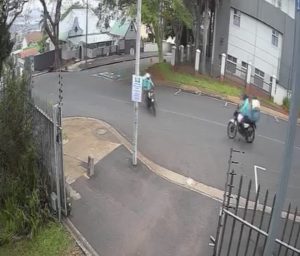
Motorists and observers have reported frequent traffic violations by delivery riders. These include disregarding traffic lights and stop signs, weaving between vehicles, riding the wrong way on one-way roads, crossing solid white lines into oncoming traffic, speeding, cutting off other vehicles, and using mobile phones while riding. Journalists have documented such infringements on multiple occasions. Public reviews on platforms such as Hellopeter for services including Checkers Sixty60 have repeatedly cited reckless driving, with the service recording ratings around 1.5 out of 5 and complaints describing riders jumping robots, failing to stop at stop signs, and driving in close proximity to other vehicles.
Specific incidents illustrate the pattern. In Phoenix, KwaZulu-Natal, two delivery motorcycles collided head-on on Viewhaven Drive; Arrive Alive reported that the riders sustained minor injuries and that one was alleged to have been under the influence of alcohol, though this was not immediately confirmed. In Central Western Jabavu, Soweto, on 10 May 2026, an Uber Eats delivery motorcycle struck two pedestrians crossing the road. One, Lungile Seneke, aged 40, died at the scene; the second sustained injuries and was taken to Chris Hani Baragwanath Academic Hospital. Johannesburg Metropolitan Police Department confirmed the incident. In Stellenbosch on 1 March 2026, a Checkers Sixty60 rider collided with a car in Andringa Street; the rider was taken away by ambulance. A Checkers Sixty60 rider died in a collision with a Toyota near Kelderhof on the R102 in Somerset West in December 2025; a charge of culpable homicide was under consideration. Another Sixty60 rider died in a head-on collision with a South African Police Service van on Voortrekker Road in Bellville.
Poor vehicle maintenance has been documented as a contributing factor. The Motorcycle Safety Institute has published examples of mechanical neglect on delivery bikes, including loose body panels exposing batteries and wiring, bald or worn tyres with little tread remaining, dry or rusty chains at risk of snapping, missing mirrors, broken lights, and components held together with tape or string. Such conditions increase the likelihood of loss of control, punctures, reduced braking effectiveness and crashes.
A 2024 survey by the Council for Scientific and Industrial Research Smart Mobility Transport Safety Lab of 109 food and parcel delivery motorcyclists in the Tshwane Metropolitan Municipality found that most riders were men from other countries, typically aged 25 to 34. Licensing data from the survey showed 80% reported using an international licence, 27% a South African licence, and 2% admitted riding without a valid motorbike licence. Nearly 70% reported working more than 55 hours per week. A large majority (78%) travelled between 5 and 10 km per trip, with continuous daily operation resulting in high cumulative distances. Self-reported behaviours included frequent lane changing to overtake, mobile phone use while riding, and failure to maintain safe following distances in some cases. Crash involvement in the preceding 12 months was reported by 18% of the surveyed riders.
These conditions affect other road users. Collisions and near-misses place motorists and pedestrians at risk of injury or death. In one reported case, a motorist involved in a collision with a Pick n Pay ASAP-branded motorbike rider (who tested positive for alcohol) faced a R5,000 insurance excess; questions arose over platform responsibility when the rider was not actively on a delivery. Multi-vehicle incidents and sudden manoeuvres by riders have been linked to pile-ups and forced evasive actions by car drivers. Illegal parking and obstruction of roads and pavements by groups of riders waiting for orders have been cited by Johannesburg Metropolitan Police Department as contributing to congestion and reduced accessibility.
Delivery riders themselves face elevated physical risks. Motorcyclists are among the most vulnerable groups for trauma ward admissions, according to clinical observations. A study of uninsured delivery motorcyclists treated for orthopaedic injuries at a Cape Town facility examined 44 young male riders who sustained 57 injuries requiring surgical intervention. The most common injuries were femur fractures (36%) and tibial fractures (24%), including open fractures. The mean cost of admission, imaging, implants and orthopaedic surgery was R52,061 per injured driver (interquartile range R32,088–R109,644; range R14,796–R348,894). Other hospital-based analyses of e-hailing motorcycle drivers have recorded lower-limb fractures as predominant, with cumulative treatment costs in the millions of rand for groups of patients. Many riders operate without comprehensive health cover and report bearing medical costs themselves after injuries.
Riders also encounter crime. Reports document hijackings, robberies at delivery points, and targeted attacks in which cables or other methods are used to cause falls. Long working hours under commission-based pay structures (for example, reports of R22 per delivery with bike hire costs of R850 per week plus fuel and servicing) create time pressure. Some riders describe aggressive responses from motorists, including blocking or attempts to force them off the road during lane filtering. Protective equipment is often limited to basic helmets and high-visibility items; formal safety training is not universal across the sector.
Enforcement actions have targeted non-compliance. In May 2025, Johannesburg Metropolitan Police Department impounded 15 delivery motorbikes in Rosebank and arrested 10 foreign nationals for Immigration Act contraventions, with additional citations for lack of licences, vehicle discs and obstruction. Similar operations in Ferndale, Randburg, and other areas have resulted in further impoundments and citations. In Pretoria, the Tshwane Metropolitan Police Department impounded 23 delivery motorcycles after a confrontation involving a group of riders. Johannesburg Metropolitan Police Department has stated that many riders lack valid driver’s licences, vehicle licence discs and, for foreign nationals, proper immigration documentation authorising commercial operations.
Some operators have implemented measures. Shoprite Holdings has stated that Sixty60 riders complete K53 training and annual defensive riding assessments by Motorcycle Safety Institute-accredited instructors, with subsidised helmets, jackets and rain suits provided. Other platforms have referenced licence requirements, onboarding that includes safety protocols, and insurance expectations. Industry bodies such as the South African Motorbike Delivery Association have called for stricter enforcement of licensing and road rules, including verification of South African Code A or A1 licences, and have raised concerns over phone use while riding and fraudulent roadworthy certificates. Data collection remains incomplete, with under-reporting noted across official and independent sources.
Delivery bike rider loses control smashing into a wall at high speed. pic.twitter.com/g6SmAXzb96
— PrimeTime News (@PrimeTimeNewsZA) August 30, 2026
The combination of high volumes of delivery traffic, documented traffic violations, mechanical issues, time pressures and incomplete regulatory oversight continues to produce measurable crash and injury outcomes for both riders and other road users on South African roads.
Airlink Issues Statement on Low-Altitude Formation Flyby over Cape Town’s DHL Stadium Ahead of Springboks-All Blacks Test
Cape Town, 30 August 2026 – South African regional airline Airlink has responded to public concerns about a low-altitude formation flyby performed by two of its Embraer aircraft over DHL Stadium in Cape Town on Saturday, 29 August 2026. The manoeuvre took place shortly before kick-off in the second Test of the Rugby’s Greatest Rivalry series between the Springboks and the New Zealand All Blacks.
The flyby involved an Embraer E190 registered ZS-YAE, painted in a special green livery, and an Embraer E195 registered ZS-YDE, painted in a special black livery. Both aircraft carried branding associated with the Rugby’s Greatest Rivalry tour, for which Airlink serves as the official domestic airline partner. The aircraft are used to transport squads, coaches, management and support staff between matches during the series.
In a statement released on 30 August 2026, Airlink noted concerns expressed on social media and online forums regarding the altitude of the formation flyby. The airline stated that the flight required careful planning and rehearsal because it involved navigating at low altitude at approximately 150 knots. The South African Civil Aviation Authority (SACAA) and Air Traffic Navigation Services provided guidance, approval and support to ensure the operation was conducted safely.
According to Airlink, each of the two aircraft was flown by a highly experienced crew consisting of three senior captains. These captains operated in the roles of commander, co-pilot and safety/technical officer. The airline further stated that flight data recorded by both aircraft confirmed the flights were performed within the SACAA’s approved and rehearsed safety altitude and speed limits for the flypast.
Independent analysis of ADS-B altitude data by Flightradar24 provided additional detail on the aircraft’s height. The lowest recorded ADS-B altitude was 50 feet above mean sea level at standard pressure. After correction for the local atmospheric pressure (QNH of 1019 hPa), the estimated altitude was 205 to 210 feet above mean sea level. DHL Stadium stands near sea level, with its structure reaching approximately 164 feet in height. Based on these figures, Flightradar24 calculated the clearance over the top of the stadium at between 41 and 46 feet (approximately 12.5 to 14 metres).
The flyby formed part of pre-match activities at the stadium and was broadcast live. It continued a South African rugby tradition of aircraft flyovers at major matches that dates back to the 1995 Rugby World Cup final at Ellis Park, when a South African Airways Boeing 747 flew over the stadium before the Springboks faced the All Blacks.
Airlink is the official domestic carrier for the 2026 Rugby’s Greatest Rivalry series, which includes multiple Test matches between South Africa and New Zealand as well as provincial fixtures. The series schedule featured the Springboks versus All Blacks match at DHL Stadium on 29 August 2026 as the second Test. The Springboks won the match 33-26, levelling the series at 1-1. Attendance was reported at approximately 56,589 spectators.
The statement from Airlink did not indicate any changes to the planned operation as a result of the public reaction. The airline maintained that the recorded flight data and regulatory approvals confirmed compliance with the approved parameters for the stadium flypast.
No reports of any incidents, injuries or operational irregularities arising from the flyby have been issued by Airlink, the SACAA or stadium authorities in connection with the event.
27 killed in head-on collision between minibus and haulage truck near Chivhu, Zimbabwe
A head-on collision between a minibus taxi and a foreign-registered haulage truck on Friday night killed 27 people and injured seven others near Chivhu in central Zimbabwe, according to police.
The crash occurred around 8:30 p.m. local time on 28 August 2026 along the Harare-Masvingo Road, near Makumimavi Primary School, at approximately the 130- to 132-kilometre mark south of Harare. The location is about 130 to 140 kilometres south of the capital.
Zimbabwe Republic Police spokesperson Commissioner Paul Nyathi confirmed the details in a statement on Saturday. A Nissan Caravan NV350 kombi (minibus) carrying an unspecified number of passengers was involved in a head-on collision with a Volvo haulage truck that was also carrying an unknown number of passengers.
Police said the foreign-registered truck was attempting to overtake another vehicle when the collision occurred. The minibus was transporting members of the African Apostolic Church (Mwazha), a popular indigenous African Christian denomination known for its white robes. The passengers were travelling from Dema to Mvuma for a church conference.
Mashonaland East Minister of State for Provincial Affairs and Devolution Advocate Itayi Ndudzo confirmed that 23 people were pronounced dead at the scene. Four more died later from their injuries after being admitted to hospital, bringing the total death toll to 27. Seven people were injured and taken for medical treatment. The bodies of the deceased were taken to the mortuary at Chivhu Hospital. Police stated that the names of the victims would be released once identified by next of kin.
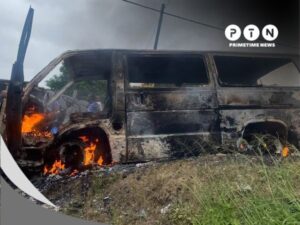
Footage and images shared by the state broadcaster ZBC and local media showed the minibus severely damaged and reduced to a charred shell after it caught fire following the impact. The truck came to rest on the opposite side of the road. The crash took place on a flat, remote stretch of highway with low vegetation along the roadside.
Both vehicles were reported to have been carrying an unspecified or unknown number of passengers at the time. Investigations into the exact circumstances are continuing, with police indicating that further details would be provided as the probe progresses.
Road traffic accidents remain a significant issue in Zimbabwe. Authorities have previously attributed a high proportion of crashes to human factors, alongside challenges with road conditions on major routes. Minibus taxis, known locally as kombis, form a primary mode of public transport for many people.
This account is based on official police statements and reports from multiple outlets citing those statements and provincial authorities. No further verified details on the specific identities of drivers or additional passenger counts had been released at the time of reporting.
- TENSIONS REMAIN HIGH AT SOUTH AFRICAN VOTING STATIONS AS POLITICAL PARTY RIVALRIES RAISE CONCERNS

- VIDEO RAISES QUESTIONS OVER ELECTION MATERIALS AS SOUTH AFRICA FACES SCRUTINY OVER ELECTORAL INTEGRITY

- Grade 7 Learner Dies After Rolling Down Hill at Emerald Resort in Vanderbijlpark

- Suspect Arrested Following Attempted Robbery in Fisantekraal

- WATCH: Uber Driver Shot and Allegedly Tortured After Female Passenger Asks Him to Wait in Daveyton