VIDEO RAISES QUESTIONS OVER ELECTION MATERIALS AS SOUTH AFRICA FACES SCRUTINY OVER ELECTORAL INTEGRITY
8 min read

Welcome back! Log in to keep reading without ads.
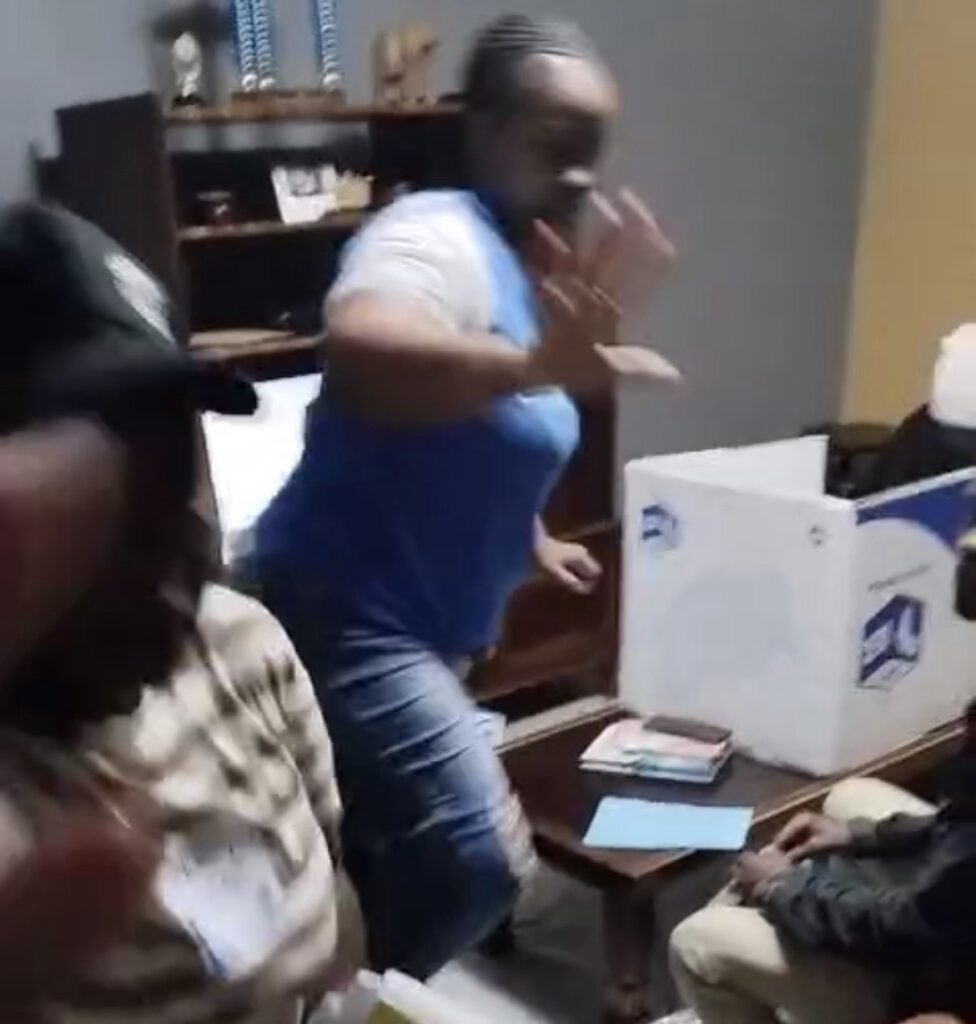
A video circulating on social media has raised questions about the handling of election materials in South Africa after a group of people were filmed inside what appears to be a private living room, with an official-looking Independent Electoral Commission (IEC) ballot box visible in the room.
Disclaimer: Home visits for special voting are permitted under IEC procedures for approved voters who are unable to visit their voting stations due to qualifying circumstances. However, this footage raises questions about the manner in which the election materials were being handled and the conduct of the individuals involved. Their apparent reaction when they noticed they were being recorded has added to public concern.
This post does not claim that election fraud took place. The circumstances surrounding the footage and whether the correct IEC procedures were followed should be clarified by the Electoral Commission.
The footage appears to show several people handling and sorting election-related materials. Their activities have raised concerns about why election materials would be handled in a private residential setting and whether the correct electoral procedures were being followed.
The people in the footage also appear uncomfortable when a camera is brought out, prompting further questions about the circumstances surrounding the gathering.
However, the identities of those involved, the location where the footage was recorded and the exact nature of the materials being handled have not been independently established. It has also not been confirmed whether the footage shows actual ballot papers being counted or whether any electoral offence took place.
The presence of an IEC-branded ballot box does not, by itself, establish that the people involved were committing election fraud.
The footage comes as South Africa holds its 2026 Local Government Elections on Wednesday, 4 November, with the handling of ballot papers, special votes and election materials receiving increased public attention.
IEC OFFICIAL REMOVED FROM DUTIES FOLLOWING SEPARATE VIDEO INCIDENT
Concerns about the conduct of election officials have also emerged following a separate incident in Mdantsane in the Eastern Cape.
An IEC presiding officer in the area was relieved of her duties after footage circulated showing an election official carrying special-voting ballot materials inside a private home while accompanied by political party representatives wearing party-branded clothing.
The official was reportedly found to have transported party agents in an IEC vehicle. It was further alleged that the representatives were distributing political party T-shirts while travelling to homes where special votes were being conducted.
The incident prompted complaints from political parties and criticism of the conduct of the election officials involved.
The removal of the presiding officer demonstrated the importance of maintaining political neutrality during the electoral process.
IEC officials are expected to perform their duties impartially, while political party representatives must operate within the rules governing election activities and the handling of election materials.
The incident did not, in itself, establish that votes had been altered or manipulated. However, it raised legitimate concerns about whether the required procedures and standards of impartiality had been followed.
HOW VOTES ARE SUPPOSED TO BE HANDLED AND COUNTED
The Electoral Commission of South Africa is constitutionally responsible for managing elections and ensuring that they are conducted freely and fairly.
The handling of ballot papers and ballot boxes is governed by electoral legislation and established procedures designed to protect the integrity of every vote.
Under normal procedures, ballot boxes are sealed during voting. The Electoral Act provides that sealed ballot boxes must remain sealed until they are opened for counting, subject to the provisions governing their transfer where counting does not take place at the voting station.
The IEC’s published counting procedures explain that ballot boxes are accounted for before being opened, after which ballot papers are checked for the required security stamp, sorted according to the votes cast and counted.
Party agents, independent candidate agents and accredited observers are able to monitor the counting and results process.
The results are also reconciled against the number of ballot papers received and the number of votes cast. Results slips are signed by the relevant election officials and party or independent candidate agents.
These safeguards are intended to ensure that the votes counted correspond with the ballots issued and that the results can be independently scrutinised.
The handling of election materials outside authorised procedures can undermine these safeguards and raise questions about the reliability of the electoral process.
WHAT CONSTITUTES ELECTORAL FRAUD IN SOUTH AFRICA?
Electoral fraud is not limited to physically changing a ballot paper or placing additional votes inside a ballot box.
South African electoral legislation prohibits various forms of conduct that could compromise the fairness, independence and credibility of an election.
These include:
- Voting more than once in an election.
- Voting under another person’s identity.
- Attempting to vote at a station where a person is not registered.
- Removing, concealing, damaging or destroying election materials unlawfully.
- Interfering with ballot boxes or other voting materials.
- Impersonating an IEC official or an accredited election representative.
- Bribing or improperly influencing election officials.
- Forcing or intimidating people into voting for a particular political party or candidate.
- Interfering with a voter’s right to cast a secret ballot.
- Publishing false information intended to influence or disrupt an election.
The Electoral Act also prohibits unauthorised interference with sealed ballot boxes and election materials.
Depending on the offence, individuals found guilty of electoral offences can face fines or imprisonment. The IEC’s electoral fraud guidance states that certain offences can carry prison sentences of up to 10 years.
SPECIAL VOTING AND THE HANDLING OF BALLOT MATERIALS
Special voting is another area that has attracted attention during the 2026 elections.
Special votes allow approved voters who cannot reach their voting stations on election day to cast their ballots before the main voting day. This can include voters who receive permission to have election officials visit them at home.
During home visits, election officials follow procedures for recording and securing the votes. The ballot materials are subsequently returned to the relevant voting station.
The IEC has recently addressed videos circulating online that appear to show election officials transferring special-vote materials from carrying containers into main ballot boxes.
Chief Electoral Officer Sy Mamabolo said the videos were being shared without context and that the transfers shown formed part of standard procedures following home visits.
The IEC warned against interpreting ordinary electoral procedures as evidence of fraud without establishing the circumstances.
This is an important distinction because the movement of ballot materials does not automatically mean that votes are being manipulated.
However, it does not mean that every action performed by someone wearing IEC clothing is automatically legitimate. Officials must still follow the prescribed procedures, and suspected misconduct must be investigated.
IEC WARNS ABOUT ELECTION MISINFORMATION AND IRREGULARITIES
The IEC has also raised concerns about attempts to undermine confidence in the electoral process through misleading social media posts.
On 3 November, the commission said its Information Integrity Hub had identified an increase in unsubstantiated election-fraud claims being circulated online.
The commission reported that its Real411 platform had received 34 complaints involving misinformation, disinformation, incitement to violence, hate speech and harassment.
The IEC urged political parties, candidates and members of the public to use established reporting mechanisms when they identify suspected misconduct rather than relying exclusively on social media allegations.
At the same time, the commission acknowledged that it had taken action against officials who failed to perform their duties as required.
This highlights the importance of distinguishing between false claims about election procedures and genuine cases of misconduct that require investigation.
WHY TRANSPARENCY IS IMPORTANT
Public confidence in elections depends on more than the announcement of final results. Voters must also have confidence that their ballots are protected from the moment they are cast until the results are declared.
Every ballot box, ballot paper and official election document forms part of a process that must be properly controlled and accounted for.
When election materials appear in private settings or are handled by individuals whose authority cannot immediately be established, the circumstances deserve clarification.
If the footage shows an authorised procedure, the IEC should be able to explain why the materials were there, who was responsible for them and what process was being followed.
If the footage instead reveals unauthorised handling of ballots or interference with election materials, the matter should be investigated and those responsible held accountable.
South Africa’s democratic system depends on voters being able to choose their representatives without intimidation, manipulation or interference.
Allegations of election corruption should therefore never be dismissed without examination, but neither should unverified social media footage be treated as proof of criminal conduct.
The central question surrounding the circulating footage remains whether the people involved were authorised to handle the election materials and whether the correct procedures were followed.
Until the footage is independently verified and the IEC provides an explanation, no conclusion can responsibly be drawn about whether electoral fraud occurred.
- VIDEO RAISES QUESTIONS OVER ELECTION MATERIALS AS SOUTH AFRICA FACES SCRUTINY OVER ELECTORAL INTEGRITY

- Grade 7 Learner Dies After Rolling Down Hill at Emerald Resort in Vanderbijlpark

- Suspect Arrested Following Attempted Robbery in Fisantekraal

- WATCH: Uber Driver Shot and Allegedly Tortured After Female Passenger Asks Him to Wait in Daveyton

- Three Suspects Fatally Wounded in Shootout With SAPS TRT Members in Ngqeleni