
Cable theft remains a major infrastructure crime in South Africa, affecting electricity distribution, telecommunications, rail operations and other essential services.
Although stolen copper and other metals can have significant scrap value, the consequences extend far beyond the value of the material removed. When cables are cut from electricity networks or other infrastructure, residents and businesses can be left without services while municipalities and state-owned companies are forced to spend money replacing equipment and repairing damage.
The scale of the problem is reflected in figures from several major infrastructure operators.
Electricity networks among the biggest targets
Eskom reported that conductor and cable theft resulted in losses of approximately R77 million from 1,585 incidents during the 2024/25 financial year. This represented an improvement from the previous year, when 2,380 incidents resulted in losses of about R120 million.
The utility has warned that theft and vandalism of its infrastructure can result in unplanned electricity outages and serious safety risks. Damage involving transformers, high-voltage equipment and other critical components can also take considerably longer to repair because replacement equipment may not be immediately available.
The problem is not limited to Eskom infrastructure.
Municipal electricity networks are also repeatedly targeted, meaning communities can experience outages even when electricity is available elsewhere on the national grid.
Johannesburg affected by hundreds of incidents
City Power in Johannesburg recorded hundreds of incidents involving cable theft and vandalism during 2025 and 2026.
The utility said the number of incidents had placed significant pressure on its ability to repair damaged infrastructure, with some communities experiencing prolonged electricity disruptions.
Cable theft and vandalism have become recurring problems in several parts of Johannesburg, with criminals targeting underground and above-ground electricity infrastructure.
For households, an electricity outage caused by cable theft can affect basic activities such as cooking, refrigeration, lighting, charging mobile phones and accessing the internet.
Businesses can face additional consequences when electricity is unavailable. Shops, restaurants, workshops, offices and other businesses may be unable to operate normally, while equipment and stock can also be affected by prolonged outages or repeated interruptions.
Municipalities lose money that could be spent elsewhere
Cable theft creates a direct financial burden for municipalities because stolen infrastructure has to be replaced.
The City of Tshwane has reported that cable theft and infrastructure vandalism have a severe impact on service delivery across the municipality.
The city has experienced thousands of unplanned electricity outages, with cable theft and vandalism among the factors contributing to disruptions.
Tshwane has estimated that cable theft and related infrastructure vandalism cost the city millions of rand.
Money spent repairing stolen or vandalised infrastructure is money that cannot simultaneously be used for other infrastructure projects, upgrades and community services.
Cape Town has also reported substantial expenditure caused by vandalism and theft.
The City’s Energy Directorate spent approximately R75 million during the 2025/26 financial year repairing and replacing electricity infrastructure damaged by criminal activity.
The City said money spent dealing with vandalism and theft could otherwise have been directed towards upgrading existing infrastructure, expanding the electricity network and funding other capital projects.
This creates a cycle in which municipalities have to divert resources away from planned infrastructure improvements to replace infrastructure that has already been installed.
The cost is ultimately felt by residents
Infrastructure crime does not only affect the companies or municipalities that own the cables.
When infrastructure is repeatedly stolen or damaged, residents experience the consequences through service interruptions, delays in repairs and the diversion of public resources.
The National Prosecuting Authority has highlighted the wider consequences of infrastructure-related crime during prosecutions involving cable theft.
Cases have involved cables belonging to electricity and telecommunications providers, with stolen infrastructure being removed from networks used to provide essential services.
Infrastructure-related crimes create financial losses for service providers while placing additional pressure on public resources and disrupting services used by law-abiding citizens.
Telecommunications infrastructure is also being targeted
The consequences extend beyond electricity.
South Africa’s telecommunications sector has also reported increasing costs associated with theft and infrastructure crime.
Figures released by the Independent Communications Authority of South Africa showed that theft-related costs in the telecommunications sector increased substantially, rising from approximately R69.59 million in 2024 to R201.48 million in 2025.
The telecommunications sector has identified theft, vandalism and electricity outages as ongoing challenges.
Damage or theft affecting telecommunications infrastructure can disrupt connectivity and increase the costs involved in maintaining reliable networks.
For ordinary residents, that can mean interruptions to internet and communication services, while businesses increasingly dependent on digital connectivity can also be affected.
Rail infrastructure is another target
Cable theft has also caused significant problems for South Africa’s rail infrastructure.
Transnet has repeatedly been targeted by criminals stealing copper cable and other infrastructure.
Police operations have resulted in the recovery of millions of rand worth of suspected stolen copper cable believed to belong to Transnet.
Police have also arrested suspects during operations targeting critical infrastructure theft at Transnet facilities.
The theft and vandalism of rail infrastructure can affect railway operations and increase the costs involved in maintaining and securing the country’s rail network.
Cable theft can put lives at risk
The removal of electrical cables is not simply a property crime.
Electrical infrastructure can remain dangerous even after it has been damaged or partially disconnected. People attempting to steal cables can be exposed to electricity, while damaged infrastructure can create hazards for residents, workers and emergency personnel.
Eskom has repeatedly warned that tampering with electrical infrastructure can be fatal.
Other forms of infrastructure vandalism, including the theft of equipment and transformer oil, can also disrupt electricity supplies and create safety hazards.
The danger can continue after thieves have left the scene because damaged infrastructure may require isolation, inspection and repairs before it can safely be returned to service.
Copper theft creates an organised criminal market
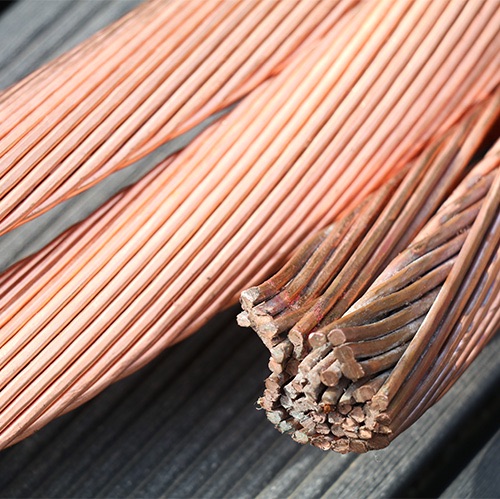
The continued targeting of copper cables is closely linked to the value of copper and the market for scrap metal.
Government has previously identified theft of public infrastructure for resale as scrap metal as a major economic problem.
In 2022, government estimated that metal theft was causing more than R47 billion in damage to the South African economy annually.
The same government figures highlighted significant losses experienced by major infrastructure operators as a result of cable theft.
Police investigations have repeatedly uncovered large quantities of suspected stolen copper at properties and scrapyards.
In the Free State, police have recovered copper cables believed to belong to electricity providers and arrested suspects in connection with the alleged possession of suspected stolen infrastructure.
Similar operations have taken place in other provinces, with police recovering suspected stolen copper and arresting people accused of offences involving essential infrastructure.
These cases illustrate how stolen infrastructure can move through networks involving theft, transportation and the resale of metal.
The problem extends beyond the stolen cable itself
Replacing a stolen cable involves more than simply buying another length of copper.
Utilities and municipalities have to locate the fault, secure the area, investigate the damage, obtain replacement materials, deploy repair teams and restore the affected network.
In some cases, additional infrastructure can also be damaged during the theft.
Where critical equipment such as transformers or high-voltage components is damaged, restoration can take considerably longer because replacement equipment may not be immediately available.
This means that an incident lasting only a short period for the criminals responsible can result in a much longer disruption for the community.
Residents are often the first to notice the consequences
For residents, the signs of infrastructure theft can be immediate.
Streetlights may stop working. Electricity can be interrupted. Telecommunications services can become unreliable. Rail services can be disrupted. Businesses may have to close temporarily or operate under difficult conditions.
In areas already struggling with ageing infrastructure and limited municipal resources, repeated theft can make restoration more difficult.
The problem therefore becomes cumulative: infrastructure is installed, stolen or damaged, repaired at public expense and then potentially targeted again.
Law enforcement continues to target infrastructure crime
SAPS has established and supported essential infrastructure crime operations involving police units, municipalities, state-owned companies and other stakeholders.
Arrests and recoveries made during recent operations demonstrate that law enforcement agencies continue to target both people allegedly involved in stealing infrastructure and those suspected of dealing in stolen metals.
The National Prosecuting Authority has also indicated that essential infrastructure cases are being prioritised for prosecution.
Serious sentences have been handed down in cases involving the theft and destruction of essential infrastructure, demonstrating the potential consequences for offenders who are successfully prosecuted.
A national infrastructure problem
Cable theft is therefore not simply a matter of replacing stolen wires.
It affects the reliability of electricity networks, telecommunications systems and rail infrastructure. It creates additional expenditure for municipalities and state-owned companies, diverts resources away from infrastructure development and can leave communities without essential services.
The financial losses recorded by Eskom, municipalities, telecommunications companies and Transnet demonstrate that the consequences extend far beyond the scrap value of the stolen metal.
For ordinary South Africans, the ultimate impact can be measured in hours or days without electricity, disrupted communications, interrupted business activity, damaged services and public money being redirected towards repairs instead of new infrastructure.
Alleged cable thief https://t.co/ErEWX63WJ1
— PrimeTime News (@PrimeTimeNewsZA) October 6, 2026
As long as stolen copper and other infrastructure continue to have a profitable resale market, the theft of essential infrastructure remains a significant challenge for South Africa’s public services and economy.
OTHER NEWS
Boksburg couple allegedly forced to drink rat poison before deaths, court hears
New and disturbing allegations have emerged in the case involving Boksburg couple Yudistan Pillay, 25, and Jessica Rabe, 20, whose bodies were discovered partially buried at a property in Van Dyk Park.
According to evidence reportedly heard in court, the couple was allegedly forced to drink rat poison before their deaths.
The allegation adds a new and disturbing dimension to a case that has already shocked the Van Dyk Park community following the discovery of the couple’s bodies in a shallow grave.
Pillay and Rabe were reported missing after their families became concerned about their whereabouts. Information gathered during the search eventually led investigators to a property in Wildevy Crescent, Van Dyk Park.
On August 30, police and search teams recovered the bodies of the missing couple from the property. They had been partially buried beneath the house.
The bodies were taken for formal identification and further investigation into the circumstances surrounding their deaths. Their identities were subsequently confirmed by their next of kin.
Earlier reports indicated that the cause of death had not initially been established.
The investigation resulted in the arrest of three suspects. Two men, Haroon Rashid Adam, 27, and Wessel Hendrick Swart, 27, subsequently appeared in the Boksburg Magistrate’s Court in connection with the deaths.
The pair face charges including premeditated murder, kidnapping, assault and defeating the ends of justice.
The State has opposed bail and the accused have remained in custody while the matter proceeds through the courts.
The latest court proceedings have now brought the alleged use of rat poison into focus.
The allegation is that Pillay and Rabe were forced to consume rat poison before they were killed.
The claim remains an allegation presented during the court proceedings and has not been established as a final finding of guilt against the accused.
The court has yet to determine the full circumstances surrounding the deaths, and the accused remain entitled to the presumption of innocence until proven guilty.
The discovery of the bodies followed an extensive search after the couple disappeared.
Pillay’s family became concerned after he failed to report for work. His family subsequently searched for him and opened a missing-person case before seeking further assistance.
Missing-person information was circulated through local community networks while information about the couple’s possible whereabouts was followed up.
Information received by investigators eventually led police to the Wildevy Crescent property.
SAPS Search and Rescue personnel and forensic investigators were deployed to the scene, where the bodies were eventually located.
Earlier reports also indicated that the bodies had been wrapped in plastic before being buried.
The discovery was made at a property where the couple’s bodies had been concealed from view.
The circumstances surrounding the alleged deaths have raised further questions about what happened to the couple between their disappearance and the discovery of their bodies.
The latest allegation heard in court — that they were allegedly forced to drink rat poison — is now part of the evidence being considered as the criminal proceedings continue.
The case has attracted significant attention from the Van Dyk Park community, with residents expressing shock after learning that the bodies of two missing young people had been concealed at a residential property.
Rabe’s family has previously called for justice, while Pillay’s relatives have also demanded that those responsible be held accountable.
The accused remain before the Boksburg Magistrate’s Court as the legal process continues.
Further court proceedings are expected to shed more light on the alleged sequence of events leading to the deaths of Rabe and Pillay, the role of the accused and the circumstances surrounding the alleged poisoning and concealment of the bodies.
The rat-poison allegation remains an allegation at this stage and will ultimately be tested through the court process.
- Cable Theft in South Africa Leaves Residents, Businesses and Municipalities Paying the Price

- Ramaphosa’s Ankole Heifer Queen Arusha Sells for Record R6.4 Million

- Boksburg couple allegedly forced to drink rat poison before deaths, court hears

- Six Killed, Including Three SAPS Members and Two Prisoners, in R524 Crash

- Feroz Khan’s Associate Preggy Padayachee Shot Dead in Ekurhuleni