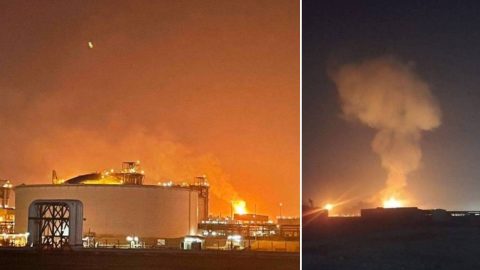


In a surprising turn of events, Trump criticizes Israel for its approach to striking Hezbollah positions in Lebanon, arguing that the strategy of bombing whole residential structures is excessive and puts innocent lives at risk. The comments were made during a press briefing in Washington on Tuesday, where the president expressed a rare public rebuke of an ally’s military conduct. By targeting densely populated neighborhoods, the Israeli defense forces are accused of ignoring proportionality principles that are central to international humanitarian law. The president emphasized the need for precision in warfare, especially when non‑combatants are caught in the crossfire, and suggested that alternative tactics could achieve the same security objectives without such high civilian costs. This stance marks a notable deviation from the usual diplomatic language that typically shields allies from overt criticism.
Trump criticizes Israel, and the backdrop to these remarks is the ongoing conflict between Israel and Hezbollah, a Lebanese militant group that has launched rockets into Israeli territory for years. The latest escalation began earlier this month when Israeli airstrikes targeted what officials described as weapons caches and command centers belonging to the Shiite organization. In response, Hezbollah fired a series of short‑range missiles across the border, prompting Israel to intensify its air campaign. Casualty figures remain fluid, but humanitarian agencies have warned that civilian areas are increasingly being caught in the crossfire, with reports of displacement and infrastructure damage mounting.
Trump criticizes Israel tactics in Lebanon
Trump criticizes Israel, and during the briefing, the president highlighted a specific incident in which an entire apartment building in the southern Lebanese town of Marjeyoun was hit by an Israeli strike. While Israeli officials claimed the structure housed senior Hezbollah operatives, satellite imagery and eyewitness accounts suggested that the building also accommodated families with children, the elderly and small business owners. The president questioned the proportionality of deploying such heavy ordnance in a tightly packed urban setting, noting that the risk to civilians far outweighs any tactical advantage gained from eliminating a handful of militants. He called for a review of targeting protocols and urged the Israeli defense establishment to prioritize methods that minimise collateral damage.
Washington’s reaction comes at a time, and Trump criticizes Israel, when diplomatic channels between the United States and Israel are already under strain due to broader regional concerns. The White House has repeatedly stressed the importance of a two‑state solution to the Israeli‑Palestinian conflict, while also maintaining a strong security partnership with Israel. However, the president’s remarks signal a willingness to publicly challenge actions that are perceived as contrary to humanitarian norms, even when they involve a staunch ally. Critics argue that such public rebukes could undermine the cohesion of the US‑Israel strategic relationship, whereas supporters contend that they reflect a necessary moral leadership in the face of civilian suffering.
Analysts note that the president’s statements could be influenced, and Trump criticizes Israel, by domestic political calculations as well. With the upcoming mid‑term elections and increasing public scrutiny of foreign policy decisions, the administration may be attempting to demonstrate a tough stance on military excesses abroad. The debate over the ethics of urban warfare is also resonating with advocacy groups within the United States, who have called for stricter oversight of American arms sales to Israel and for congressional hearings on the matter. While the president stopped short of proposing any concrete legislative changes, his commentary has already sparked discussions among lawmakers about the need for clearer guidelines governing the use of force in densely populated areas.
From an international law perspective, and Trump criticizes Israel, the principle of distinction obliges combatants to differentiate between military targets and civilian objects. The principle of proportionality further requires that any anticipated civilian harm not be excessive in relation to the direct military advantage anticipated. In the context of the Lebanon conflict, the application of these principles has been contentious, with each side accusing the other of violating the rules of war. Human rights organisations have called for independent investigations into alleged war crimes, citing the use of high‑explosive bombs in residential districts as potential evidence of unlawful conduct. The president’s remarks, though not a legal judgement, echo these concerns and reinforce the call for accountability and transparency.
Israel’s military spokesperson responded, and Trump criticizes Israel, by defending the operations as necessary to protect Israeli citizens from imminent threats posed by Hezbollah’s rocket fire. The spokesperson reiterated that the Israeli defense forces employ a “targeted approach” that seeks to minimise civilian casualties, and that any damage to non‑military structures is an unfortunate but unavoidable consequence of the conflict. According to the Israeli narrative, the targeted apartment building housed key command elements of the militant group, and its destruction was essential to degrading Hezbollah’s operational capacity. The spokesperson also warned that external criticism could embolden adversaries and impede Israel’s right to self‑defence in a volatile region.
In the broader geopolitical arena, Trump criticizes Israel, as the United States must balance its strategic interests in the Middle East with evolving expectations around humanitarian standards. The president’s commentary may shape future discussions on aid packages, intelligence sharing and diplomatic engagements with both Israel and Lebanon. Moreover, the remarks could influence the stance of other allied nations that are closely monitoring the conflict, potentially prompting a collective call for restraint and a renewed emphasis on civilian protection. As the situation develops, the interplay between military necessity and moral responsibility will remain a focal point of international debate.
Regional actors, including Iran and Syria, have also weighed in, and Trump criticizes Israel, as their statements accuse Israel of aggression and warn of a broader regional conflagration. Their statements, while largely rhetorical, underscore the delicate balance of power that defines the Levantine security environment. The president’s remarks may be viewed by these actors as an invitation to further diplomatic pressure on Israel, though the United States continues to affirm its commitment to Israel’s security under existing agreements. The potential for escalation underscores the importance of measured rhetoric and the pursuit of diplomatic channels to de‑escalate tensions.
Learn more about our newsroom on our About page.