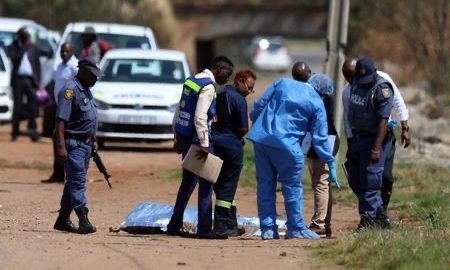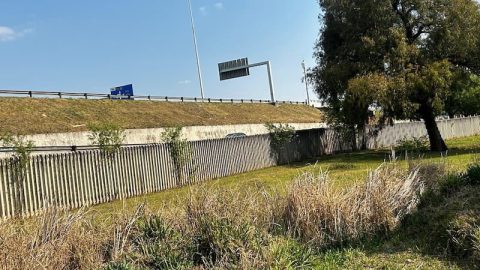


A man aged between 28 and 36 years, reportedly from Sekgosese in Limpopo, was electrocuted on or around 5 August 2026 while allegedly attempting an illegal electricity connection on a municipal pole in the Mamelodi East RDP area of Tshwane.
According to tip-offs circulating on social media, the individual was trying to connect to what is commonly known as “izinyoka” (illegal electricity connections) when the incident occurred. He was rushed to hospital for medical treatment. Reports describe him as originating from Sekgosese, a rural area in the Greater Letaba Local Municipality within Limpopo’s Mopani District.
Social media accounts sharing updates on crime and incidents in South Africa have reported the event, noting the existence of video footage of the scene. Some of these accounts have stated they will not circulate the video due to its sensitive and graphic nature, advising viewer discretion.
No official statements from the City of Tshwane, Eskom, or the South African Police Service confirming the man’s identity, condition, or precise circumstances had been publicly issued at the time of the initial reports. Details remain based on community tip-offs and unverified social media accounts.
Illegal electricity connections, referred to locally as izinyoka, have long been documented as a persistent issue in parts of Mamelodi East, including areas near RDP housing and informal settlements. These unauthorised connections typically involve tapping into municipal poles, transformers, or overhead lines without permission or proper safety measures. Authorities and utility providers have repeatedly warned that such practices overload infrastructure, cause frequent power outages for paying residents, damage equipment, and create serious electrocution and fire hazards for those making the connections as well as bystanders, including children.
Past incidents in Mamelodi East and surrounding areas have included electrocutions linked to exposed or poorly installed illegal cables. The City of Tshwane has conducted multiple operations targeting illegal connections in the broader Mamelodi area, including the removal of transformers, poles, and cables in informal settlements such as Phomolong. These efforts form part of wider campaigns against electricity theft and infrastructure vandalism, which officials have linked to revenue losses, network strain, and public safety risks.
Sekgosese, the area named in reports about the man’s origin, is a rural settlement in Limpopo. Migration between rural Limpopo communities and urban townships such as Mamelodi is common, with many residents seeking work or housing opportunities in the Tshwane metropolitan area.
Electricity safety guidelines from utilities emphasise that only authorised personnel or qualified electricians should work on electrical infrastructure. Illegal connections lack proper insulation, earthing, and protective devices, significantly increasing the risk of severe injury or death upon contact with live conductors.
Doing illegal connections ends in tears in Mamelodi East pic.twitter.com/pu1lPAr5dL
— PrimeTime News (@PrimeTimeNewsZA) August 5, 2026
Further details, including the man’s medical condition, any formal police investigation or inquest, and official confirmation from municipal or law-enforcement authorities, had not been released at the time of the initial tip-offs. Updates are expected as more information becomes available from official sources.
WATCH: Thug recorded while getting his fingers flattened after being caught by truck drivers
According to research by the Institute for Security Studies, at least two people die each day in South Africa from mob violence or vigilante attacks. South African Police Service data linked 1,202 of the 21,325 murders in the 2019/2020 financial year to mob justice. By 2022, of roughly 27,000 recorded murders, at least 1,894—about 7 percent—were attributed to mob justice and vigilantism, more than double the figure from five years earlier. In the first nine months of 2023 alone, a further 1,472 mob justice deaths were registered. Quarterly figures continue the pattern: the third quarter of the 2023/24 financial year (October–December 2023) recorded 431 murders linked to vigilantism and mob justice, with Gauteng highest at 84, followed by the Eastern Cape at 80 and KwaZulu-Natal at 78. Reports covering later periods into 2024 noted over 1,000 deaths in nine months leading to December in some tallies, with the practice remaining among the top causative factors for murder, attempted murder, and serious assault.
Forensic studies confirm the lethality and method. A 10-year review (2006–2016) at Germiston Forensic Pathology Service Medico-legal Mortuary identified 354 mob justice fatalities. All victims were Black, 99.4 percent male, and the largest share aged 21–30. Blunt force trauma caused 92.4 percent of deaths, with head injury the most common mechanism (79.9 percent). Half died at the scene; of those hospitalized, more than half died within 24 hours. Similar patterns appear in other provincial mortuary data: victims are predominantly young Black African men, injuries combine blunt force, burns, and sharp force, and death often occurs rapidly after the attack.
Necklacing—placing a fuel-soaked tire around a victim’s neck and setting it alight—has been a documented method in South African cases, alongside stoning, beating with sjamboks or clubs, and setting individuals or vehicles alight. One well-documented incident involved a vigilante group abducting nine young men, marching them to a soccer field, assaulting them with stones, sjamboks, and axes, then necklacing them; eight died.
Kenya ranks high in absolute recent numbers but lower than South Africa’s sustained annual totals. Interior Cabinet Secretary Kipchumba Murkomen reported to the Senate that from January 2025 onward, Kenya recorded 845 mob justice incidents resulting in 579 deaths and 266 serious injuries. Kiambu County led with 90 incidents and 58 deaths; Nairobi followed with 85 incidents and 55 deaths. Other counties with elevated figures included Embu (51 cases, 33 deaths), Kisumu (45 cases, 36 deaths), and Kirinyaga (39 cases, 28 deaths). Independent estimates place earlier multi-year totals in the thousands. Most victims are accused of theft, robbery, phone snatching, or similar property crimes; many are pursued by boda-boda riders or neighborhood groups and stoned or beaten before police arrive.
Uganda reports roughly 900–1,000 mob-action murders annually in recent police crime reports. The Uganda Police Force recorded 950 murders by mob action in 2025, representing 22.4 percent of 4,238 homicide cases that year. Between January 2021 and December 2025 the cumulative toll exceeded 3,764. Earlier data showed 746 deaths in 2019 alone. Triggers commonly include theft, robbery, murder, and witchcraft accusations. In one 2026 case, a rugby player was beaten by a crowd (including boda-boda riders) on suspicion of theft and later died of his injuries; police recorded multiple arrests but the pattern of rapid lethal assault before formal intervention remains consistent.
Nigeria’s documented figures are lower on an annual basis but still substantial and widely regarded as undercounts. Amnesty International recorded at least 555 victims of mob violence from 363 incidents between January 2012 and August 2023—an average of roughly 50 per year. Of those examined in detail, dozens were burned alive, tortured to death, or buried alive. Regional patterns differ: southern cases often involve theft or witchcraft accusations; northern cases frequently involve blasphemy allegations. SB Morgen Intelligence reported at least one mob execution death per week in a multi-year window ending mid-2024, with robbery the leading trigger. Independent open-source monitoring projects have logged dozens of additional deaths in shorter recent periods. Perpetrators almost always escape prosecution.
Across these countries the danger to a suspected criminal intercepted by community members rather than police is extreme and immediate. Crowds act as prosecutor, judge, and executioner within minutes. Victims are typically beaten with blunt objects, stoned, burned, or subjected to prolonged torture. Survival after severe injury is limited; many die at the scene or within hours of hospital admission. Police response is frequently too late, and investigations of the killings themselves yield few convictions because of community solidarity, witness reluctance, and resource constraints. Afrobarometer surveys in multiple countries link the practice to declining public trust in police and courts, high perceived corruption, slow judicial processes, and elevated local crime rates—particularly property crime in dense urban and peri-urban areas.
In South Africa the Institute for Security Studies and police data place mob justice among the leading non-gang, non-argument causes of murder. In Kenya official statements explicitly cite public perception that investigations and court processes are slow or biased, plus the circulation of “instant justice” videos, as drivers. Ugandan police reports and human-rights monitoring repeatedly note that theft and robbery accusations dominate triggers and that formal complaints against unnamed crowds rarely advance. Nigerian Amnesty documentation highlights law-enforcement failures to prevent, investigate, or prosecute the killings themselves, allowing the cycle to continue with near-total impunity for participants.
These figures are drawn from official police crime reports, parliamentary statements, forensic mortuary studies, and human-rights organization investigations (Amnesty International, Institute for Security Studies, Uganda Police Force annual reports). Absolute numbers remain undercounts in every country because motives are not established for all murders and many rural or informal-settlement cases go unrecorded. South Africa’s combination of high absolute totals, multi-year consistency above 1,000 deaths, and detailed forensic confirmation establishes it as the country where community interception of suspected criminals carries the greatest documented lethal risk on the continent.
Investigations Underway After Man Killed in Incident Involving Municipal Water Tanker in Adams Mission, uMbumbulu
A 39-year-old man died on the morning of 3 August 2026 following an incident involving an eThekwini Municipality water tanker in Ward 96, Adams Mission, in the uMbumbulu area south of Durban, KwaZulu-Natal.
The eThekwini Municipality confirmed the fatality. In an official statement issued the same day, the municipality stated that it noted the incident with deep sadness. One person lost their life. The municipality extended its condolences to the family, friends and community of the deceased.
The South African Police Service (SAPS) has opened a case. A culpable homicide investigation is underway. The municipality confirmed that it is cooperating fully with SAPS and has initiated its own internal processes in parallel. As the matter remains under investigation, the municipality stated it is not in a position to comment on the circumstances that led to the incident.
A municipal team was deployed to Adams Mission to visit the affected family and provide support.
Video footage of the incident circulated widely on social media. Reports and circulating material describe community members surrounding the water tanker shortly before it left the scene. The municipality appealed to residents and members of the public to refrain from circulating the footage out of respect for the deceased and his family.
The incident occurred in an area that has experienced ongoing challenges related to water supply. The municipality’s water tankers operate in such communities to deliver water where formal supply is limited or interrupted.
Graphic Video Circulates Appearing to Show Man Being Run Over by eThekwini Municipality Water Tanker pic.twitter.com/XwNiXYEME5
— PrimeTime News (@PrimeTimeNewsZA) August 3, 2026
No further details regarding the identity of the deceased beyond his age, the precise sequence of events, or the status of the driver have been released by SAPS or the municipality at this stage. Investigations by both SAPS and the municipality continue.
Two drivers killed in head-on collision between SUVs on Wit Road near N17 in Springs
Two adult male drivers died and four passengers were injured in a head-on collision involving two SUVs on Wit Road near the N17 freeway in Selection Park, Springs, Ekurhuleni, on Sunday evening, 2 August 2026.
The crash occurred at approximately 18:17. Emergency services from Ekurhuleni responded to the scene. Both drivers sustained fatal injuries and were pronounced dead at the scene by paramedics.
Three of the injured passengers sustained critical injuries. A minor suffered minor injuries. The four injured passengers, who were travelling in one of the SUVs and are believed to have been members of the same family, received treatment at the scene before being transported to a nearby medical facility for further care.
Rescue personnel from the Selection Park Fire Station arrived to find both drivers trapped inside the wreckage of their vehicles. Specialised hydraulic rescue equipment, known as the Jaws of Life, was used to extricate the trapped occupants and recover the deceased drivers from the damaged vehicles.
The road was temporarily closed to allow emergency crews to carry out the rescue operations safely. Once the rescue work was complete, the scene was handed over to the City of Ekurhuleni Metropolitan Police Department for further investigation. Officers facilitated the removal of the deceased to a forensic pathology facility. Road rehabilitation was also undertaken to clear vehicle debris and an oil spill resulting from the collision.
CCTV captures head-on collision that killed two drivers on Wit Road near N17 Springs pic.twitter.com/C6IjyvAZGn
— PrimeTime News (@PrimeTimeNewsZA) August 3, 2026
A case of culpable homicide has been opened at Springs Police Station. The circumstances surrounding the crash remain under investigation.
Three dead, four injured in high-speed head-on collision on P614 near Misty Ridge
Three people died and four others were injured in a head-on collision between two vehicles on the P614 near Misty Ridge in KwaZulu-Natal on Saturday evening, 1 August 2026.
IPSS Medical Rescue received reports of the motor vehicle collision earlier that evening. On arrival, paramedics established that the two vehicles had collided head-on at high speed.
Four patients sustained injuries ranging from serious to critical. They were stabilised at the scene and transported to nearby medical facilities under the care of IPSS Medical Rescue Advanced Life Support paramedics.
Three other occupants sustained fatal injuries and were declared deceased at the scene.
The scene was handed over to the South African Police Service, which is investigating the cause of the accident. No further details on the circumstances, vehicle types, identities of those involved, or exact time of the crash have been released.
Misty Ridge is located in the Winston Park / Gillitts area of KwaZulu-Natal, roughly midway between Durban and Pietermaritzburg.
This account is based on official information released by emergency responders regarding the incident.
Security Officer Shot Dead in Early Morning Attack in Tembisa’s UMfuyaneng Section
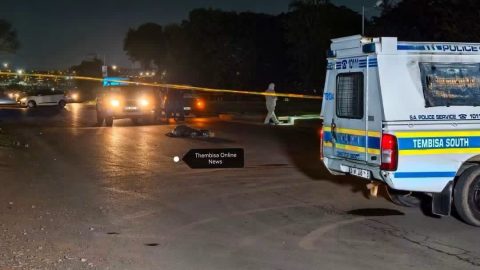
Tembisa South SAPS members responded to a scene in UMfuyaneng Section, Tembisa, in the early hours of Saturday morning after a 29-year-old security officer was shot and killed. The incident occurred not far from Muduopo Primary School.
The security officer was inside his vehicle when he was shot. He attempted to drive away from the scene but the vehicle struck a wall at a nearby house roughly 100 metres from the original location of the attack.
Witness accounts indicate the incident may have involved a hijacking and robbery. A 39-year-old male e-hailing driver who had been asleep in his car next to the security officer’s vehicle was kidnapped. The e-hailing driver was also robbed of cash and a cellphone.
Police are investigating the matter.
UMfuyaneng Section (also referred to locally as Umfuyaneni) forms part of Tembisa on the East Rand in Gauteng. The area is a densely populated township section where residents and those working night shifts, including security personnel and e-hailing drivers, often park or remain in vehicles during early morning hours. The proximity of the scene to Muduopo Primary School places the incident within a residential and educational zone of the township.
According to the information available, the security officer was the sole fatality. The second victim, the e-hailing driver, survived the ordeal after being kidnapped and robbed. No further details on the number of suspects, the type of firearm used, or any recovery of the stolen items have been released at this stage.
Tembisa South SAPS has taken charge of the investigation. As is standard procedure in cases involving fatal shootings, possible vehicle-related crime and kidnapping, detectives are expected to examine the scene, collect ballistic and forensic evidence, take statements from witnesses, and review any available CCTV or cellphone data that may assist in identifying those responsible.
The case remains open. Anyone with information that could assist the investigation is urged to contact Tembisa South SAPS or the nearest police station.
- Eight of Nine Women Found Dead in Ekurhuleni Identified as Police Continue Probe into Series of Deaths
- Police Question Suspects Amid Ongoing Probe into Ekurhuleni Women’s Murders
- Salon owner shot dead near Ehlanzeni Hostel in Tembisa
- Fatal Collision Between Light Motor Vehicle and Truck Claims One Life on R57 Near N1 Turn-Off in Vanderbijlpark

- Cable Theft Across South Africa Leaves Communities Without Power, Disrupts Transport and Endangers Lives