Ekurhuleni killings: timeline, victims and police challenges
5 min read

Welcome back! Log in to keep reading without ads.

Since July 2026, a string of murders has shocked the Ekurhuleni metropolitan area in Gauteng. Seven women, all discovered in various suburbs, have been linked to what investigators now refer to as the Ekurhuleni killings. The case has drawn national attention not only because of the brutality of the crimes but also due to the severe bottleneck in forensic processing that threatens to stall justice.
Chronology of the seven victims
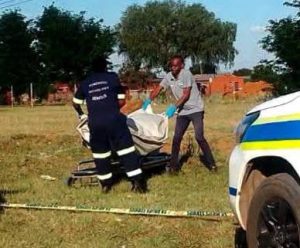
The first bodies were uncovered in late July in the industrial precinct of Kempton Park. Over the next two months, additional victims were located in Springs, Rhodesfield, KwaThema and finally in Clayville, a township bordering Tembisa. All seven women were found partially or completely unclothed, with many showing clear signs of sexual assault. The fifth victim, 38‑year‑old jogger Elizabeth “Tsontso” Moselakgomo, became a focal point after a nationwide appeal led to the recovery of her remains on 14 September in Rhodesfield.
On 15 September, a second corpse was recovered from a roadside in KwaThema, roughly 45 kilometres from the earlier sites. Hours later, acting Gauteng Police Commissioner Major General Fred Kekana confirmed a seventh victim had been identified in Clayville. Although the woman’s body was initially discovered on 7 September in a river, it was only after cross‑checking police records that investigators linked her to the ongoing probe. She was found wearing only undergarments and, unlike the earlier cases, displayed no overt injuries.
Police response and the formation of a task team
In reaction to the mounting death toll, the South African Police Service (SAPS) assembled a multidisciplinary task force. Detectives from the Murder and Robbery Unit now work side‑by‑side with psychologists from the Investigative Psychology Unit and forensic analysts. The task force’s mandate is to determine whether the murders are the work of a single perpetrator or a series of unrelated attacks that happen to share geographic proximity.
Former SAPS profiler and forensic psychologist Dr. Lindiwe Mthembu has cautioned investigators to treat the cases as serial until proven otherwise. “The label matters less than the methodology,” she explained. “If the investigations remain siloed, critical patterns may be missed, allowing the offender to continue unchecked.”
Forensic DNA backlog: a systemic obstacle
Perhaps the most daunting hurdle facing the investigation is the staggering backlog in South Africa’s forensic laboratories. Current estimates indicate that roughly 300,000 DNA samples are awaiting analysis, with an average turnaround time approaching 800 days – more than two years. This delay is not unique to the Ekurhuleni killings; it reflects chronic under‑funding, equipment shortages, and a shortage of qualified analysts across the nation’s crime‑lab network.
The lag has real consequences. Evidence that could tie the victims together – such as DNA from a suspect’s vehicle, clothing fibers, or trace biological material – may sit untouched for months, eroding the chain of custody and diminishing its probative value. Bella Monsoon, a prominent true‑crime commentator with a following of over 26,000 on Facebook, highlighted this risk, noting that “the window for connecting related cases narrows each day the lab sits idle.”
Community outrage and calls for swift action
Public frustration has been palpable. Residents of Kempton Park, Springs, and Tembisa have staged demonstrations outside local police stations, waving placards that read “Enough is Enough” and “Stop Femicide.” The Public Servants Association has demanded that authorities issue a public safety warning much sooner, questioning why it took over a month for an official alert to be released.
Social media users have echoed these concerns. One commenter asked, “What can we do to get the DNA processed faster? Why does it take so long?” Others suggested deploying undercover officers along suspected routes or increasing patrols in high‑risk zones. The Gauteng Police Commissioner has responded by designating Rhodesfield a high‑risk hotspot and urging women to travel in groups, avoid isolated pathways, and share live location data with trusted contacts.
Broader context: femicide in South Africa
The Ekurhuleni killings occur against a backdrop of alarmingly high femicide rates in South Africa. According to the 2023 Gender-Based Violence (GBV) report, a woman is murdered roughly every 12 hours, making the nation one of the most dangerous places for women globally. Activists argue that focusing solely on “personal safety tips” shifts responsibility onto victims rather than addressing systemic failures such as police under‑resourcing, inadequate forensic capacity, and insufficient prosecutorial follow‑through.
Historically, similar serial murder investigations – such as the “Gauteng serial killer” cases of the early 2010s – have been hampered by inter‑jurisdictional communication gaps. Lessons learned from those investigations underscore the importance of a unified command structure, rapid forensic turnaround, and community liaison officers who can bridge the trust deficit between residents and law enforcement.
As the task force continues to sift through evidence, the hope among South Africans is that the combined pressure of public outcry, media scrutiny, and political attention will accelerate the forensic process and bring the perpetrator—or perpetrators—of the Ekurhuleni killings to justice.