Disrespecting Law Enforcement in South Africa Carries Clear Legal Consequences, Especially When Intoxicated
12 min read

Welcome back! Log in to keep reading without ads.
In South Africa, interactions with members of the South African Police Service (SAPS) or other law enforcement officials are governed by specific statutes that protect officers in the execution of their duties. Disrespectful conduct, particularly when combined with intoxication, frequently escalates into criminal charges with measurable penalties under existing law. Courts and police statements emphasise that compliance is required during lawful stops, arrests or processing, and that voluntary intoxication does not automatically excuse criminal liability.
Section 67 of the South African Police Service Act 68 of 1995 makes it an offence for any person to resist, wilfully hinder or obstruct a police member in the exercise of powers or performance of duties, or to wilfully interfere with the member, uniform or equipment. The same section covers threats or suggestions of violence against the member or the member’s relatives or dependents, or threats of injury to their property, when made to compel or restrain the officer in the performance of duties. Conviction carries a fine or imprisonment for a period not exceeding 12 months.
Physical assault on a police officer is prosecuted under the common-law offences of common assault or assault with intent to do grievous bodily harm (assault GBH). Where the assault involves a dangerous wound, grievous bodily harm, or threats with a firearm or dangerous weapon, it falls under expanded Schedule 1 provisions of the Criminal Procedure Act following the Criminal and Related Matters Amendment Act. Penalties are determined by the court according to the facts, previous convictions and aggravating circumstances. In reported cases involving intoxicated suspects who turn violent during processing, additional charges of resisting arrest and intimidation are commonly added.
Public intoxication itself is regulated primarily through provincial liquor legislation. For example, being drunk in a place to which the public has access can constitute an offence under provisions such as those in the Western Cape Liquor Act. Municipal by-laws frequently prohibit consumption of alcohol in public spaces and allow for arrest where the person becomes disorderly. Courts have held that “disorderly” conduct includes behaviour that violates ordinary rules of good order and tends to annoy or insult others sufficiently to warrant criminal intervention. Loud abusive language directed at officers while intoxicated has been accepted in some judgments as contributing to a finding of disorderly conduct justifying arrest under section 40(1)(a) of the Criminal Procedure Act 51 of 1977, which permits arrest without warrant for an offence committed in the presence of a peace officer.
Case law clarifies limits. Swearing or the use of foul language directed at a police officer, while potentially constituting crimen iniuria (impairment of dignity), does not by itself amount to wilful obstruction under section 67 of the SAPS Act. Courts have stated that obstruction requires some form of physical conduct or positive action, assessed objectively. Purely verbal insults therefore do not automatically trigger the statutory obstruction offence, though they may support other charges or form part of a broader disorderly-conduct case when linked to intoxication and public disturbance.
Intoxication intersects with these offences in two main ways. First, voluntary intoxication is not a complete defence to crimes requiring intent in the majority of circumstances. South African law recognises that extreme intoxication can, in rare cases, exclude capacity or voluntariness, but courts scrutinise such claims carefully and the burden remains high. Second, intoxication is routinely treated as an aggravating or mitigating factor at sentencing rather than a bar to conviction. Magistrates have noted that alcohol can lower inhibitions while still leaving the offender responsible for the resulting conduct.
When the disrespect occurs during a driving-under-the-influence stop, the consequences compound. Section 65 of the National Road Traffic Act 93 of 1996 criminalises driving with a blood-alcohol concentration of 0.05 g per 100 ml or more, or a breath-alcohol concentration of 0.24 mg per litre or more. Penalties include fines, imprisonment (statutory maxima rising with prior convictions, reaching several years), suspension or cancellation of the driver’s licence, and a permanent criminal record until expungement. If the intoxicated driver then assaults officers, resists processing or makes threats, separate charges under the SAPS Act and common-law assault provisions are laid. Recent operational statements from SAPS have recorded such combined charges following arrests in which suspects became violent at the police station after a positive alcohol test.
National Police Commissioner statements have described attacks on officers as attacks on the state and on national security. Interference with police duties during crime-prevention operations is treated as undermining public order. Officers are authorised to use reasonable and proportional force to overcome resistance under section 49 of the Criminal Procedure Act, provided the force remains necessary to effect a lawful arrest.
Arrest and detention following these offences follow standard Criminal Procedure Act procedures. A person may be held until sober if intoxication presents a risk to self or others, then charged and either released on warning, police bail or court bail, or detained pending appearance. Conviction produces a criminal record that remains on the SAPS National Criminal Register until formal expungement, typically after a prescribed period without further convictions. Employment consequences, licence implications and restricted travel can follow independently of the formal sentence.
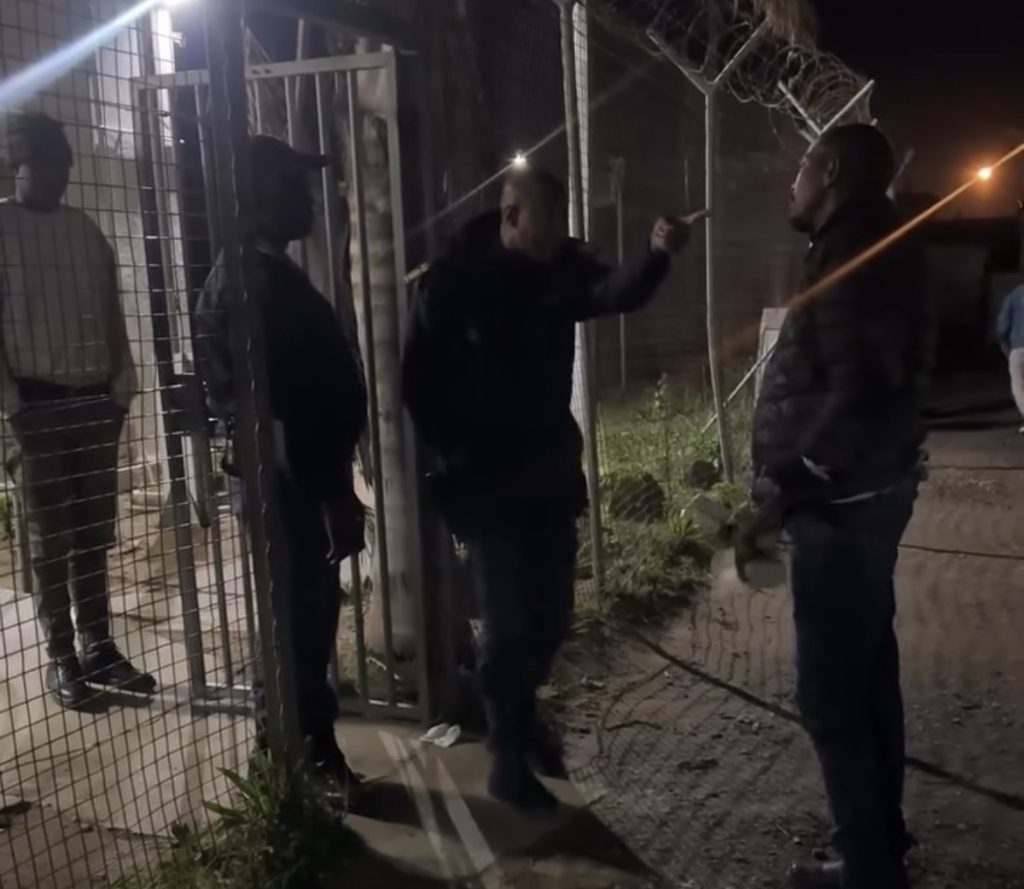
An alleged drunk male was slapped by a police officer after being disrespectful towards the officers at the station pic.twitter.com/WwraNrjkEg
— PrimeTime News (@PrimeTimeNewsZA) August 31, 2026
In short, the legal framework does not treat disrespect or resistance lightly. Verbal abuse alone rarely sustains an obstruction charge, yet physical resistance, threats, assault or disorderly conduct while intoxicated routinely attract prosecution under the SAPS Act, provincial liquor laws, the National Road Traffic Act and common-law assault provisions. Penalties range from fines and short terms of imprisonment for obstruction to longer custodial sentences and licence loss where assault or impaired driving is involved. Courts assess each case on its facts, but the statutory structure makes clear that intoxication does not shield an individual from the ordinary consequences of failing to comply with lawful police instructions.
Four dead in minibus and pick-up collision on B1 south of Otjiwarongo
Twenty-three people were involved in a road accident approximately 120 kilometres south of Otjiwarongo on the B1 road on Monday morning.
The collision occurred between a 16-seater minibus and a Ford Bantam pick-up. Four people died as a result of the crash.
Police and emergency services attended the scene. Investigations into the circumstances of the accident are ongoing.
Further details, including the identities of the deceased, the condition of the surviving occupants, the direction of travel of the vehicles, and any contributing factors, have not been released at this stage.
The B1 is a major national route linking Otjiwarongo with destinations further south, including Okahandja and Windhoek.
Two shot dead in Mhluzi Extension 5, Middelburg
Two people were shot dead in Mhluzi Extension 5, Middelburg, in Mpumalanga on the night of Sunday, 30 August 2026.
The incident took place after 20:00. Community members in the area reported hearing more than five gunshots. The location was near the New Money Pub.
Emergency services and police responded to the scene.
At the time of reporting, no further official details have been released regarding the identities of the deceased, the circumstances leading to the shooting, any suspects, possible motive, or arrests. Investigations by the South African Police Service are understood to be underway.
Mhluzi Extension 5 forms part of the broader Mhluzi township area on the outskirts of Middelburg. Local reports of gunfire in residential sections of the township have occurred periodically in recent years, though each incident is treated as a separate matter by authorities.
Anyone with information that could assist the investigation is urged to contact the nearest police station, Crime Stop on 08600 10111, or use the MySAPS application.
Further updates will depend on official statements from the police once additional verified information becomes available.
Airlink Issues Statement on Low-Altitude Formation Flyby over Cape Town’s DHL Stadium Ahead of Springboks-All Blacks Test
Cape Town, 30 August 2026 – South African regional airline Airlink has responded to public concerns about a low-altitude formation flyby performed by two of its Embraer aircraft over DHL Stadium in Cape Town on Saturday, 29 August 2026. The manoeuvre took place shortly before kick-off in the second Test of the Rugby’s Greatest Rivalry series between the Springboks and the New Zealand All Blacks.
The flyby involved an Embraer E190 registered ZS-YAE, painted in a special green livery, and an Embraer E195 registered ZS-YDE, painted in a special black livery. Both aircraft carried branding associated with the Rugby’s Greatest Rivalry tour, for which Airlink serves as the official domestic airline partner. The aircraft are used to transport squads, coaches, management and support staff between matches during the series.
In a statement released on 30 August 2026, Airlink noted concerns expressed on social media and online forums regarding the altitude of the formation flyby. The airline stated that the flight required careful planning and rehearsal because it involved navigating at low altitude at approximately 150 knots. The South African Civil Aviation Authority (SACAA) and Air Traffic Navigation Services provided guidance, approval and support to ensure the operation was conducted safely.
According to Airlink, each of the two aircraft was flown by a highly experienced crew consisting of three senior captains. These captains operated in the roles of commander, co-pilot and safety/technical officer. The airline further stated that flight data recorded by both aircraft confirmed the flights were performed within the SACAA’s approved and rehearsed safety altitude and speed limits for the flypast.
Independent analysis of ADS-B altitude data by Flightradar24 provided additional detail on the aircraft’s height. The lowest recorded ADS-B altitude was 50 feet above mean sea level at standard pressure. After correction for the local atmospheric pressure (QNH of 1019 hPa), the estimated altitude was 205 to 210 feet above mean sea level. DHL Stadium stands near sea level, with its structure reaching approximately 164 feet in height. Based on these figures, Flightradar24 calculated the clearance over the top of the stadium at between 41 and 46 feet (approximately 12.5 to 14 metres).
The flyby formed part of pre-match activities at the stadium and was broadcast live. It continued a South African rugby tradition of aircraft flyovers at major matches that dates back to the 1995 Rugby World Cup final at Ellis Park, when a South African Airways Boeing 747 flew over the stadium before the Springboks faced the All Blacks.
Airlink is the official domestic carrier for the 2026 Rugby’s Greatest Rivalry series, which includes multiple Test matches between South Africa and New Zealand as well as provincial fixtures. The series schedule featured the Springboks versus All Blacks match at DHL Stadium on 29 August 2026 as the second Test. The Springboks won the match 33-26, levelling the series at 1-1. Attendance was reported at approximately 56,589 spectators.
The statement from Airlink did not indicate any changes to the planned operation as a result of the public reaction. The airline maintained that the recorded flight data and regulatory approvals confirmed compliance with the approved parameters for the stadium flypast.
No reports of any incidents, injuries or operational irregularities arising from the flyby have been issued by Airlink, the SACAA or stadium authorities in connection with the event.
27 killed in head-on collision between minibus and haulage truck near Chivhu, Zimbabwe
A head-on collision between a minibus taxi and a foreign-registered haulage truck on Friday night killed 27 people and injured seven others near Chivhu in central Zimbabwe, according to police.
The crash occurred around 8:30 p.m. local time on 28 August 2026 along the Harare-Masvingo Road, near Makumimavi Primary School, at approximately the 130- to 132-kilometre mark south of Harare. The location is about 130 to 140 kilometres south of the capital.
Zimbabwe Republic Police spokesperson Commissioner Paul Nyathi confirmed the details in a statement on Saturday. A Nissan Caravan NV350 kombi (minibus) carrying an unspecified number of passengers was involved in a head-on collision with a Volvo haulage truck that was also carrying an unknown number of passengers.
Police said the foreign-registered truck was attempting to overtake another vehicle when the collision occurred. The minibus was transporting members of the African Apostolic Church (Mwazha), a popular indigenous African Christian denomination known for its white robes. The passengers were travelling from Dema to Mvuma for a church conference.
Mashonaland East Minister of State for Provincial Affairs and Devolution Advocate Itayi Ndudzo confirmed that 23 people were pronounced dead at the scene. Four more died later from their injuries after being admitted to hospital, bringing the total death toll to 27. Seven people were injured and taken for medical treatment. The bodies of the deceased were taken to the mortuary at Chivhu Hospital. Police stated that the names of the victims would be released once identified by next of kin.
Footage and images shared by the state broadcaster ZBC and local media showed the minibus severely damaged and reduced to a charred shell after it caught fire following the impact. The truck came to rest on the opposite side of the road. The crash took place on a flat, remote stretch of highway with low vegetation along the roadside.
Both vehicles were reported to have been carrying an unspecified or unknown number of passengers at the time. Investigations into the exact circumstances are continuing, with police indicating that further details would be provided as the probe progresses.
Road traffic accidents remain a significant issue in Zimbabwe. Authorities have previously attributed a high proportion of crashes to human factors, alongside challenges with road conditions on major routes. Minibus taxis, known locally as kombis, form a primary mode of public transport for many people.
This account is based on official police statements and reports from multiple outlets citing those statements and provincial authorities. No further verified details on the specific identities of drivers or additional passenger counts had been released at the time of reporting.
- TENSIONS REMAIN HIGH AT SOUTH AFRICAN VOTING STATIONS AS POLITICAL PARTY RIVALRIES RAISE CONCERNS

- VIDEO RAISES QUESTIONS OVER ELECTION MATERIALS AS SOUTH AFRICA FACES SCRUTINY OVER ELECTORAL INTEGRITY

- Grade 7 Learner Dies After Rolling Down Hill at Emerald Resort in Vanderbijlpark

- Suspect Arrested Following Attempted Robbery in Fisantekraal
- WATCH: Uber Driver Shot and Allegedly Tortured After Female Passenger Asks Him to Wait in Daveyton