Armed standoff near Robertson ends with death of 40-year-old man after police operation
16 min read

Welcome back! Log in to keep reading without ads.

A prolonged armed confrontation on a farm in the De Hoop area near Robertson in the Western Cape ended on the evening of Monday, 17 August 2026, when a 40-year-old man identified as Cornelius van Dalen was shot and killed by members of the South African Police Service Special Task Force.
The incident began on the evening of Sunday, 16 August 2026, when Robertson police received a complaint that a man had fired shots at a neighbour’s vehicle. Officers from Robertson Police Station responded to the farm. Upon arrival, they came under fire from the individual and requested backup.
The Tactical Response Team was deployed as the situation developed. Members of the TRT were also fired upon, resulting in one police official sustaining a gunshot wound to the shoulder. The injured officer was taken to hospital for medical treatment.
The operation was further escalated on Monday afternoon with the deployment of the Special Task Force. A heavy exchange of gunfire followed. The man fired at STF members and damaged a police armoured vehicle, a Nyala. During the operation, STF members rescued two women who were inside a neighbouring house. Officers then tactically entered the structure where the 40-year-old man was located. He was shot during the shootout and died at the scene.
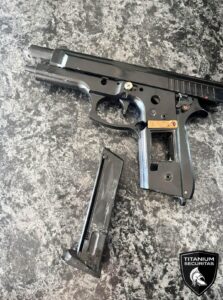
Police seized an assault rifle, a shotgun, two pistols, magazines, various types of ammunition, flags and notebooks containing inscriptions from the property. An inquest docket has been opened. Officials from the Independent Police Investigative Directorate were summoned to the scene. Police maintained a strong presence on the farm as further investigations continued.
Acting National Commissioner of the South African Police Service, Lieutenant General Puleng Dimpane, commended the response by members involved. She specifically noted the actions of Robertson Police Station members who first attended the scene and came under fire, the Tactical Response Team members who provided reinforcement, and the Special Task Force for bringing the situation to an end while protecting civilian lives. Dimpane stated that members demonstrated courage, discipline and tactical restraint in confronting an armed individual who posed a direct threat to police officers and members of the community. She emphasised that operational responses must be proportionate to the threat, coordinated and decisive, while prioritising the protection of innocent lives. She also wished the injured police official a speedy recovery.
According to reports from farm owner Karl Smith, the man had resided alone on Top View farm for approximately nine months. Neighbours had experienced ongoing difficulties during that period, including incidents of vehicle damage such as cut tyres and a screwdriver inserted into a radiator. The man had allegedly accused others of intending to harm him and had been observed wearing a bulletproof vest and using a bulletproof vehicle.
Western Cape police are investigating the seized materials, including a handwritten journal titled “The Enemies of the Boer” (also referred to in connection with “enemies of the Boerevolk”). Provincial Deputy Police Commissioner for Crime Detection, Major General Bongani Maqhashalala, stated that the journal contains a list of names of prominent South Africans described as enemies of the white race or individuals who needed to be dealt with. The names have not been publicly released to avoid causing unnecessary alarm, as they involve people from different provinces. Investigators are examining whether the individual was acting alone or had connections to a wider extremist network, and counterintelligence involvement is planned as part of the follow-up.
Police have confirmed that the deceased has been identified as Cornelius van Dalen, aged 40. Efforts to locate family members formed part of the early investigative process. No further details on any potential associates or additional charges have been publicly confirmed beyond the ongoing probe into the weapons, the journal and possible links.
The Independent Police Investigative Directorate continues its examination of the police shooting as part of standard procedure. Investigations into the full circumstances of the standoff remain active.
Gunman Killed in Shootout Ending Two-Day Farm Standoff in De Hoop, Robertson
A two-day armed standoff between South African Police Service members and a 40-year-old man on a farm in De Hoop, Robertson, in the Western Cape, ended on Monday evening, 17 August 2026, when the gunman was shot and killed during an exchange of fire with the Special Task Force.
The incident began on Sunday evening, 16 August 2026, after Robertson police received a complaint that a man had allegedly fired shots at a neighbour’s vehicle. Officers from Robertson SAPS who responded to the scene came under fire from the gunman and requested backup.
The Tactical Response Team was deployed to address the developing situation. Members of the TRT also came under fire. One police official sustained a gunshot wound to the shoulder and was hospitalised, where he continues to receive medical attention.
As the standoff continued into Monday, the operational response was escalated. The Special Task Force was deployed during the afternoon of 17 August. A heavy exchange of gunfire followed. The gunman fired at STF members, damaging a police Nyala armoured vehicle.
During the operation, STF members rescued two women who were inside a neighbouring house. Officers then tactically gained entry to the house where the 40-year-old gunman was located. He was shot during the shootout and died at the scene.
An inquest docket has been opened to investigate the circumstances of the shooting. Officials from the Independent Police Investigative Directorate attended the scene. Police have maintained a strong presence on the farm while further investigations continue.
Items seized at the scene include an assault rifle, a shotgun, two pistols, magazines, various types of ammunition, flags, and notebooks containing inscriptions.
Western Cape police are examining whether the deceased man was acting alone or had links to a wider network. Among the recovered items were an old South African flag and a handwritten journal titled “The Enemies of the Boer.” According to Provincial Deputy Police Commissioner for Crime Detection Bongani Maqhashalala, the journal contains a list of names of prominent South Africans described as self-appointed enemies of the white race and individuals who needed to be dealt with. Authorities are withholding the specific names, which include people from different provinces, to avoid causing unnecessary alarm. Maqhashalala stated that investigators will engage counterintelligence resources and that it has not yet been established whether the man acted alone or as part of a group. Police have indicated the deceased has not yet been formally identified as efforts continue to locate his family.
Acting National Commissioner of the South African Police Service, Lieutenant General Puleng Dimpane, commented on the police response. She stated that members demonstrated courage, discipline and tactical restraint in confronting an armed individual who posed a direct and serious threat to police officers and members of the community. Dimpane specifically commended the Robertson Police Station members who first responded and came under fire, the Tactical Response Team members who reinforced them, and the Special Task Force for bringing the situation to an end while protecting civilian lives. She noted that police officers must not be expected to face heavily armed individuals without appropriate tactical support and that operational responses must be proportionate, coordinated and decisive, with the protection of innocent lives central to the approach. Dimpane wished the injured officer a speedy recovery and affirmed the SAPS commitment to protecting its members and the communities they serve.
Investigations remain ongoing.
KZN nurse suspended after viral video of alleged patient assault at Durban hospital
A nurse at King Dinuzulu Hospital in Durban has been placed on precautionary suspension after a video showing her allegedly physically assaulting a male patient went viral on social media on Wednesday.
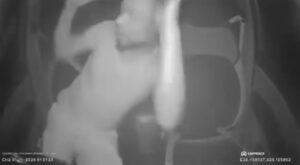
In the footage, the nurse, who is wearing a mask, stands beside the patient’s bed in a ward. She points at him and repeatedly pokes or shoves her finger toward his face near his eyes. The patient raises his hand to protect himself. The pair exchange words before the nurse moves to another nearby patient while continuing to engage with the first man.
The KwaZulu-Natal Department of Health said in a statement that it had noted the video with serious concern. “The Department unequivocally condemns this behaviour in the strongest possible terms. The conduct displayed in the video is completely unacceptable, violates the core values of our healthcare system, and will not be tolerated under any circumstances.”
The department added that the video appears to show the nurse striking the patient on the face while making inappropriate remarks. The nurse has been placed on precautionary suspension with immediate effect pending a full internal investigation.
Patients in South African public health facilities have experienced documented harm, neglect, abuse, and substandard care, according to official statistics, Health Ombud investigations, surveys, and complaint reports.
In Gauteng public hospitals, from 1 April 2024 to 31 March 2025, 7,386 serious adverse events (SAEs) were recorded. This was an increase from 7,117 the previous year. Earlier figures showed 6,910 in 2021, 4,701 in 2020, and 4,170 in 2019. SAEs included patient accidents, pressure ulcers acquired during admission, self-inflicted injuries, and healthcare-associated infections. These led to avoidable injury, permanent disability, or death in some cases.
Hospitals with the highest numbers of SAEs in that period included Chris Hani Baragwanath Academic Hospital (1,257), Dr George Mukhari Academic Hospital (600), Steve Biko Academic Hospital (592), Charlotte Maxeke Johannesburg Academic Hospital (498), Helen Joseph Hospital (434), Weskoppies Hospital (426), Leratong Hospital (414), and Tembisa Hospital (384). Smaller facilities such as Bheki Mlangeni Hospital recorded 109. The Gauteng Department of Health reported 55 disciplinary actions during the period.
The Office of the Health Ombud recorded high volumes of complaints. In the 2024/25 financial year, 3,938 new complaints were received (up from 2,616 in 2023/24), representing a 59.5% increase. Of these, 3,734 were classified as low risk, with smaller numbers medium, high, or extremely high risk. Gauteng accounted for the majority (around 61%). In 2023/24, 2,416 complaints were recorded, with 1,431 from public establishments. Cumulative figures from 2019/20 onward showed Gauteng contributing over half of total complaints received by the Ombud, with facilities such as Chris Hani Baragwanath Academic Hospital, Steve Biko Academic Hospital, Tembisa Tertiary Hospital, Dr George Mukhari Academic Hospital, and Charlotte Maxeke Johannesburg Academic Hospital among those with the highest numbers.
A 2023 Freedom Front Plus report compiled 273 complaints from patients at approximately 93 public hospitals (and three private). Nearly a quarter of the complaints related to Gauteng facilities. Documented allegations included sexual abuse, insufficient anaesthetic during surgery, patients left for hours in blood- and urine-soaked linen, a stillborn infant placed in a medical waste bag and thrown in a bin in front of the mother, filthy wards and operating theatres, long waits for pain relief, and hostile or humiliating treatment by staff. Shortages of ambulances, medicines, equipment, and personnel were also reported in the complaints.
The 2025 Embrace Birthing Survey, covering experiences over the previous decade in KwaZulu-Natal and Gauteng, found that 60% of surveyed individuals who gave birth experienced some form of obstetric violence. This extrapolated to an estimated 1.79 million people (approximately 864,297 in Gauteng and 923,130 in KwaZulu-Natal). Prevalence was 63% in KwaZulu-Natal and 58% in Gauteng. Nurses and midwives were implicated in 92% of reported cases; doctors in 14%. Verbal abuse (shouting, insults, or disrespectful speech) was reported by 57%. Procedures without consent (including caesarean sections, episiotomies, or sterilisation) were reported by 25%. Lack of privacy during childbirth was reported by 40%. Healthcare workers did not adequately explain procedures or provide enough information in 60% of cases. Only 25% were allowed their preferred birth companion. Physical mistreatment (slapping, pinching, scolding, or hitting) was higher in KwaZulu-Natal (17%) than Gauteng (10%). Denial of pain medication occurred in 21% of KwaZulu-Natal cases and 17% in Gauteng. Rough examinations without consent were reported at similar rates (around 33–34%). Infant mistreatment or injury was reported by about 10–11%. Most reported abuse occurred in public hospitals (94% in KwaZulu-Natal; 87% in Gauteng).
KZN nurse suspended after viral video of alleged patient assault at Durban hospital pic.twitter.com/MIYPqcUCZa
— PrimeTime News (@PrimeTimeNewsZA) August 19, 2026
A Health Ombud investigation into care at the Northern Cape Mental Health Hospital and Robert Mangaliso Sobukwe Hospital in Kimberley (covering July–August 2024) described care as unsupervised, unstructured, non-standardised, unsafe, and altogether substandard. Two patients died and one was left with permanent brain damage. Patients were exposed to extreme cold due to electricity supply failures. Blankets were thin, of poor quality, and insufficient. Patients lacked shoes, proper clothing, or pyjamas. Wards remained cold even during the day. One patient, Tshepo Mdimbaza, was found unresponsive with cold skin; resuscitation was delayed because equipment was non-functional. Exposure contributed to deaths from hypothermia or lobar pneumonia. Emergency power supply was non-existent and resuscitation equipment did not work. Staff shortages left junior healthcare workers in charge of high-acuity units. Other findings included poor governance, crumbling infrastructure, poor medicine management, non-compliance with record-keeping, and poor laundry services.
Another Health Ombud investigation into the death of mental healthcare user Lerato Mohlamme at Dr George Mukhari Academic Hospital in June 2024 found she was starved, deprived of medicine, and confined to a seclusion room in freezing winter conditions while clad only in underwear. She died in a fire that began in her room. Admission did not meet legal requirements (no independent assessment by two medical practitioners). Staff subjected her to punitive treatment, including withholding medication and food, excessive mechanical restraint, and failure to act on her sexual assault allegations. The seclusion room was far from the nurses’ station without adequate monitoring. Emergency exits were locked, keys were misplaced or hidden, and there were critical delays in accessing the room during the fire. Non-fire-retardant materials were present.
The Office of Health Standards Compliance (OHSC) inspected 3,093 public health facilities between 2019 and 2023 (about 83% of the total). In 2022 (latest detailed year available at the time of reporting), only four out of ten public facilities achieved compliance. No province scored higher than the equivalent of three stars when compliance rates were converted to a star rating. Gauteng had the highest proportion meeting requirements (roughly three out of five facilities). In the Northern Cape and Limpopo, very few inspected facilities passed. Non-negotiable measures related to medical emergencies, lifesaving medical gas supply, and proper consent were met in at least seven out of ten clinics/community health centres and half of district hospitals in only Gauteng and the Western Cape.
Additional documented cases include:
- At Charlotte Maxeke Johannesburg Academic Hospital and Helen Joseph Hospital, patients reported soiled underwear in toilet paper dispensers, toilets without handles or locks, no taps, patients tied to beds with bandages, TB patients sharing wards with psychiatric patients, nurses ignoring cries for help at night, and rude or disrespectful treatment.
- At Witbank General Hospital (eMalahleni), reports included unattended patients, blood-stained sheets, delayed emergency surgery (one patient told to wait nine days for a ruptured appendix while another had waited seven days), and staff instructing patients not to eat then later allowing food.
- At Rob Ferreira Hospital (Mpumalanga), an SAHRC oversight visit found no hot water for more than four years, chronic bed shortages (patients using stretchers, wheelchairs, or mattresses on floors), linen shortages requiring families to bring blankets and sheets, broken toilets without doors, and frequent water outages.
- Three nurses at Hewu Hospital (Eastern Cape) were suspended after allegedly recording and circulating a video of a naked patient who died the same day. Community reports indicated delayed assistance linked to fees charged for walk-in patients without referral letters.
- A viral video from King Dinuzulu Hospital (KwaZulu-Natal) showed a nurse physically assaulting a patient; the nurse was placed on precautionary suspension pending investigation.
- Historical reference includes the Life Esidimeni tragedy, in which 144 psychiatric patients died after transfer from private facilities to unlicensed NGOs.
The National Health Act and Patients’ Rights Charter establish rights including emergency treatment, informed consent, privacy, dignity, and the right to complain and have complaints investigated. Norms and standards regulations require health establishments to protect users from abuse (including sexual, physical, or psychological ill-treatment) and to treat them with respect and dignity.
These figures and cases are drawn from provincial legislative replies, Health Ombud investigation reports, OHSC inspection data, the Freedom Front Plus complaint compilation, and the 2025 Embrace Birthing Survey findings.
LATEST NEWS
JMPD Tactical Response Unit arrests man in Lenasia South on firearm charges
Johannesburg Metropolitan Police Department (JMPD) Tactical Response Unit officers arrested a high-profile male suspect in Lenasia South on Tuesday afternoon, 18 August 2026. The arrest followed information received while officers were conducting high-visibility patrols. The suspect was found in possession of an illegal revolver with its serial number filed off. During preliminary questioning he directed officers to a second location in the same street, where a Tommy Gun (submachine gun) and live ammunition were recovered.
The man was detained at Lenasia South SAPS and faces charges relating to the possession of unlicensed firearms and prohibited weapons.
JMPD initially stated that the information linked the suspect to recent gang-related violence, specifically a shooting in the Westbury area over the preceding weekend that resulted in four fatalities. On 19 August 2026 the department issued a formal correction. Further verification and preliminary investigative work established that the individual is not linked to the fatal gang shootings in Westbury. The initial connection was based on preliminary information later confirmed as a case of mistaken identity regarding that specific incident. The arrest itself remains valid in relation to the firearm offences. The suspect remains in custody at Lenasia South SAPS. JMPD stated that it regrets the initial misattribution and remains committed to pursuing those responsible for the violence in Westbury.
The weekend incident referred to in the original information occurred on Saturday evening, 15 August 2026, in Newclare, adjacent to Westbury. Police responded to a report of a shooting at a flat. Three victims aged between 18 and 20 were found deceased at the scene. Two further victims, aged 18 and 23, had sustained gunshot wounds and were taken to hospital. One of those wounded later died, bringing the death toll to four. Police are investigating four counts of murder and one count of attempted murder. The motive has not been established and the suspects remain unknown. The area has experienced ongoing incidents of gun violence associated with gang activity.
JMPD spokesperson Xolani Fihla confirmed the details of the Lenasia South operation and the recovery of the illegal revolver, Tommy Gun and ammunition. The department noted assistance received from Tracksecure Security Company during the operation. JMPD has stated that it will continue efforts to remove illegal firearms from the streets and address organised crime. Investigations into the firearm offences continue, as do separate inquiries into the Newclare/Westbury shootings.
- TENSIONS REMAIN HIGH AT SOUTH AFRICAN VOTING STATIONS AS POLITICAL PARTY RIVALRIES RAISE CONCERNS
- VIDEO RAISES QUESTIONS OVER ELECTION MATERIALS AS SOUTH AFRICA FACES SCRUTINY OVER ELECTORAL INTEGRITY
- Grade 7 Learner Dies After Rolling Down Hill at Emerald Resort in Vanderbijlpark
- Suspect Arrested Following Attempted Robbery in Fisantekraal
- WATCH: Uber Driver Shot and Allegedly Tortured After Female Passenger Asks Him to Wait in Daveyton