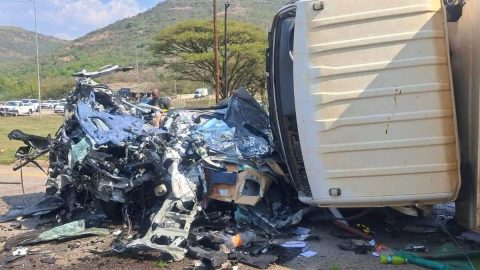


taxi crash creche incident occurred in the early afternoon on a busy street in KwaZulu-Natal when a minibus taxi veered onto a driveway that leads directly to a children’s creche. Witnesses said the driver appeared to lose control, perhaps due to slick pavement after recent rain. The vehicle struck the front entrance of the facility, sending the front section of the taxi into the building’s lobby area. Emergency services arrived within minutes, establishing a triage area on the scene. Eleven occupants, comprising both passengers and children inside the creche, were taken to nearby hospitals for assessment. Initial reports describe injuries ranging from superficial cuts to more serious trauma requiring further observation.
The injured parties were quickly evaluated by paramedics who prioritize those with potentially life‑threatening conditions. Two children were reported to have suffered broken bones, while several adults sustained bruises, sprains and lacerations. Hospital staff noted that most injuries were treatable, though a few individuals required surgical intervention. Family members of the victims gathered outside the hospitals, awaiting news about their loved ones. The creche staff, many of whom were present at the time of the impact, assisted in cooling the children and providing first aid until responders took over.
The minibus taxi sustained extensive damage to its front section, right side and windscreen as a result of the collision. The impact flattened the bumper, crushed the driver’s door and shattered the large glass pane, rendering the vehicle inoperable. Police investigators noted that the severity of the damage suggested a high‑speed impact, although exact speed estimates will be determined after a thorough forensic examination. The wreckage was removed from the site later in the afternoon to allow investigators and safety inspectors to document evidence.
The site of the accident lies on a stretch of road that connects the town of Stanger with surrounding suburbs. The area is known for mixed traffic, with private cars, commuter buses and commercial taxis sharing the lanes. Nearby schools and residential complexes increase the volume of pedestrians during peak hours. Local authorities have previously highlighted the need for better traffic calming measures in this corridor, citing past incidents involving pedestrians and public transport vehicles.
Taxi crash creche investigation updates
The taxi crash creche investigation was launched by the provincial traffic unit shortly after emergency crews cleared the scene. Officers are reviewing dash‑cam footage from the taxi, as well as surveillance recordings from the creche’s entrance. They are also interviewing witnesses, the driver and senior staff members present at the time. Early findings suggest that a possible mechanical fault or sudden brake failure could have contributed to the loss of control, but officials caution that no conclusions will be drawn until the full report is compiled.
Emergency responders coordinated closely with medical teams, fire services and police to manage the situation efficiently. The fire brigade assisted in removing debris that blocked access to the creche entrance, while paramedics set up a temporary medical station in a nearby community hall. Communication between agencies was facilitated through a joint operations centre, which enabled real‑time updates for the public and media. The swift collaboration limited further risk to by‑standers and ensured that all injured individuals received prompt care.
The taxi crash creche occurrence adds to a broader pattern of minibus taxi accidents that have plagued South Africa for years. Statistics from the Road Traffic Management Corporation show that taxis are involved in a disproportionate number of serious collisions, often linked to overcrowding, vehicle maintenance lapses and aggressive driving. Transportation analysts warn that without systematic reforms, such incidents are likely to persist, endangering passengers and vulnerable road users alike. Community leaders have called for stricter enforcement of vehicle safety standards and greater investment in public transport infrastructure to address these systemic issues.
Impact of taxi crash creche on child care safety
The taxi crash creche incident has raised concerns about the safety of early‑learning centres located adjacent to busy roads. Child care providers are now reviewing their emergency evacuation plans and considering additional barriers to protect against vehicular intrusion. The Department of Social Development has reminded operators that compliance with location licensing criteria is mandatory, including adequate setbacks from high‑traffic zones. While the creche involved in the collision met regulatory requirements at the time of construction, authorities are exploring whether more stringent zoning rules could prevent similar tragedies in the future.
The taxi crash creche investigation will also examine the road surface condition, signage visibility and recent maintenance records to assess whether environmental factors played a role. The area had received rain the previous night, and drainage reports indicated possible standing water on the pavement. If slipperiness contributed to the driver’s loss of traction, municipal engineers may be required to implement anti‑skid treatments. Additionally, the presence or absence of speed‑limit signs will be verified, as they are critical in zones frequented by schools and childcare facilities.
Residents of the neighbourhood expressed shock and empathy for those affected, posting messages of support on social media platforms. Local businesses offered meals and transport assistance to families coping with hospital visits. The incident has also sparked a debate among commuters about the need for designated taxi lanes, which some argue would reduce the likelihood of vehicles straying into side streets. Community meetings are scheduled to discuss possible improvements to road design and traffic enforcement in collaboration with municipal officials.
The taxi crash creche episode prompted a renewed public awareness campaign focused on defensive driving and respect for vulnerable road users. The campaign will feature roadside signage, radio spots and school outreach programmes that emphasize the consequences of reckless behavior behind the wheel. By highlighting real‑world examples, officials hope to cultivate a culture of caution among professional drivers, especially those operating passenger‑carrying vehicles. Volunteers from local NGOs will also conduct workshops on emergency preparedness for childcare centres.
Legal experts note that the taxi crash creche case may lead to charges ranging from reckless driving to culpable homicide if investigations reveal negligence. Victims may also pursue civil claims for medical expenses, rehabilitation costs and emotional distress. Insurance firms typically assess liability based on police findings, and they may adjust premiums for the operator of the minibus taxi accordingly. Courts will consider whether the driver complied with licensing requirements and adhered to vehicle maintenance schedules at the time of the accident.
Preventing a repeat of a taxi crash creche scenario will require coordinated action across multiple sectors. Transportation authorities are urged to strengthen inspection regimes for commercial vehicles, while urban planners should prioritize safe distances between schools, creches and high‑traffic corridors. Advances in driver‑assistance technologies, such as electronic stability control and collision‑avoidance systems, could further reduce the risk of loss of control incidents. Community advocacy groups continue to lobby for stricter enforcement of existing traffic laws and for the allocation of funds to upgrade road infrastructure in high‑risk areas.
As the investigation proceeds, officials stress the importance of patience while facts are verified. The eleven injured persons are expected to recover with appropriate medical care, and families are encouraged to seek support services as needed. The incident stands as a stark reminder of the intersecting vulnerabilities of transport passengers and children in early‑learning environments. Ongoing efforts aim to translate the lessons learned into concrete policy changes that will safeguard roads and protect the most vulnerable members of society.
This report draws on original coverage by The Citizen. Learn more about our newsroom on our About page.