Medical Emergency in Melkbosstrand: Quick Response Saves Life
4 min read

Welcome back! Log in to keep reading without ads.
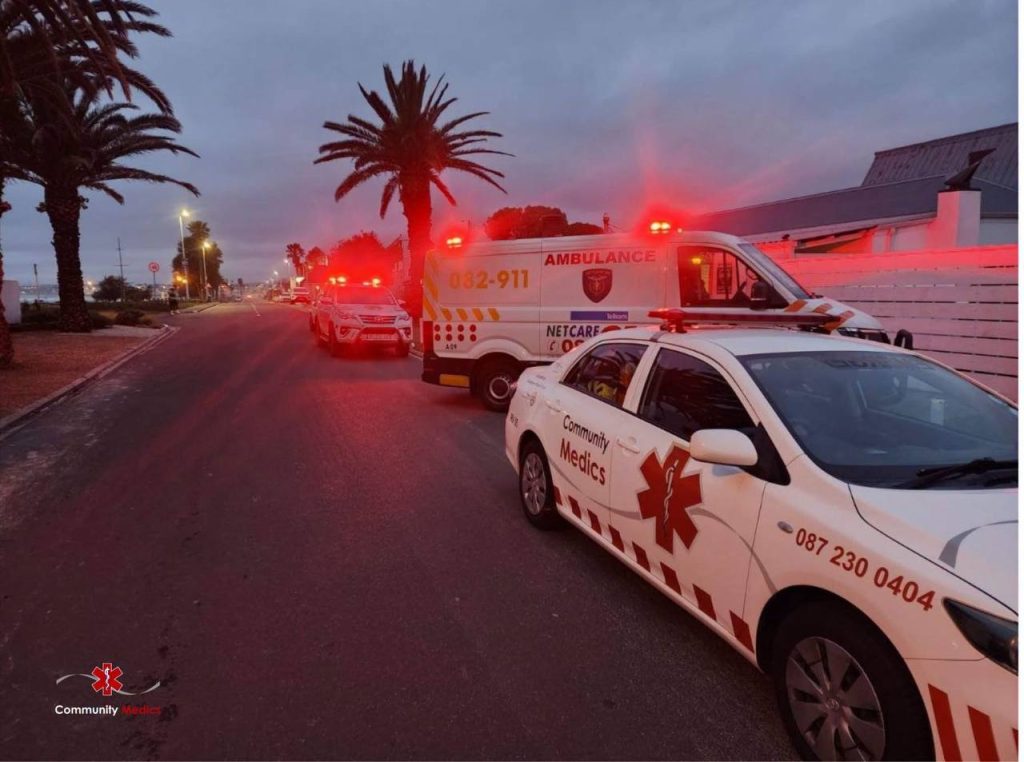
Last night, a serious medical emergency unfolded on the coastal road of Melkbosstrand, a picturesque suburb north of Cape Town known for its white sand beaches and popular surf spots. The incident tested the readiness of local emergency responders, and the coordinated effort of Community Medics and Netcare 911 proved decisive.
What happened on the Melkbosstrand coast?
At approximately 22:30, a passerby reported a person who had collapsed near the shoreline, displaying signs of severe distress. The location, a narrow stretch of the R27 highway that borders the beach, can be hazardous after dark due to limited lighting and occasional strong winds. Within minutes, the emergency call was routed to Netcare 911, South Africa’s leading private emergency medical service, which dispatched an advanced life support (ALS) ambulance to the scene.
Simultaneously, Community Medics – a volunteer‑run organization that provides rapid response medical care in the Western Cape – mobilised one of its nearest units. Their ability to reach the site within five minutes of the alert was crucial, as the patient’s condition required immediate stabilisation to prevent further deterioration.
On‑site stabilisation and teamwork
Upon arrival, the two teams performed a coordinated assessment. The patient, a middle‑aged individual, showed symptoms consistent with a possible cardiac event: chest pain, shortness of breath, and a faint pulse. Community Medics’ paramedics initiated high‑flow oxygen, attached a cardiac monitor, and began chest compressions while Netcare 911’s ALS crew prepared a defibrillator and administered a dose of aspirin.
Within ten minutes, the patient’s heart rhythm stabilised, allowing the teams to secure an intravenous line and start an infusion of saline to maintain blood pressure. The combined expertise of the volunteer medics and the professional ambulance crew ensured that the patient remained conscious and responsive throughout the procedure – a testament to the importance of rapid, well‑trained response in rural and semi‑urban settings.
Transport to hospital and ongoing care
After achieving a stable vital sign profile, the patient was carefully transferred onto the stretcher of the Netcare 911 ambulance. The vehicle, equipped with a portable cardiac monitor and a supply of emergency medications, set off for Groote Schuur Hospital, a major trauma centre located about 30 kilometres away. En route, the paramedics continued to monitor the patient’s cardiac rhythm and administered a second dose of nitroglycerin to relieve chest discomfort.
The seamless handover between Community Medics and Netcare 911 illustrates how public‑private partnerships can enhance emergency care outcomes, especially in regions where ambulance turnaround times can be stretched by traffic or distance. The patient arrived at the hospital’s emergency department within 25 minutes of the initial call, a time frame that aligns with international best‑practice benchmarks for cardiac emergencies.
Why rapid response matters in coastal towns
Melkbosstrand, while celebrated for its natural beauty, presents unique challenges for emergency services. The area’s winding roads, occasional sand drift, and limited street lighting can delay access for conventional ambulances. Moreover, the town’s popularity among tourists means that peak periods see a surge in visitors unfamiliar with local hazards, such as sudden tidal changes or heat‑related illnesses.
Statistics from the Western Cape Health Department indicate that emergency call‑out times in coastal suburbs average 12 minutes longer than in central Cape Town. Initiatives like Community Medics, which rely on a network of trained volunteers stationed throughout the region, aim to bridge this gap. By arriving on scene within minutes, they can deliver life‑saving interventions that buy valuable time until a fully equipped ambulance arrives.
Looking ahead: strengthening community health resilience
Both Community Medics and Netcare 911 have highlighted the Melkbosstrand incident as a case study for future training drills. Plans are underway to conduct joint simulation exercises that focus on high‑risk scenarios such as drownings, severe allergic reactions, and multi‑vehicle collisions on the R27.
In addition, local authorities are reviewing the feasibility of installing additional streetlights and emergency call boxes along the coastal stretch, measures that could further reduce response times. Public education campaigns are also being considered, aiming to inform residents and visitors about basic first‑aid techniques and the importance of calling emergency services promptly.
For the patient involved, the immediate priority is a full recovery. Doctors at Groote Schuur Hospital have indicated that early stabilisation significantly improves prognosis for cardiac events, underscoring the life‑saving impact of the swift actions taken on the night of the emergency.
Overall, the incident reinforces a vital lesson: when professional emergency services and dedicated community volunteers work hand‑in‑hand, even the most urgent medical emergencies can be managed effectively, ensuring that residents of Melkbosstrand and surrounding areas receive the highest standard of care.