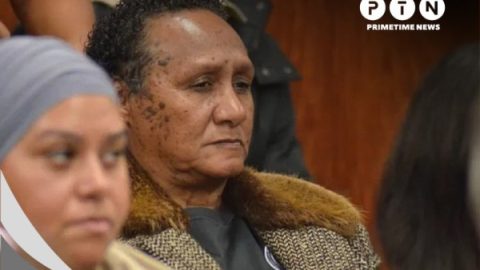


Hundreds of South Africans took to the streets in a coordinated show of support for the principle that justice not xenophobia should guide public policy. Demonstrators carried banners that called for the enforcement of the rule of law and rejected any narrative that pits citizens against one another on the basis of origin. The gathering was described by organisers as a peaceful demand for legal protection rather than a campaign of hatred. Observers noted a palpable sense that the protests were rooted in a desire to see courts apply statutes fairly and to protect all residents from discrimination. The crowd repeatedly chanted justice not xenophobia, reinforcing their resolve.
Justice not xenophobia: The rallying call of protestors
The march unfolded in several major urban centres, with participants ranging from students and trade unionists to community elders. While the precise size of each gathering varied, the common thread was a shared insistence that legal mechanisms, not mob sentiment, should determine outcomes. Organisers emphasised that the objective was not to vilify any particular group but to reaffirm that the legal system must serve every individual equitably. This message resonated strongly in a nation that has grappled with episodic tension over immigration and identity. The movement’s slogan, justice not xenophobia, was displayed on many placards.
In recent years South Africa has seen periodic spikes in xenophobic incidents, prompting civil society to call for stronger protective statutes. The constitution guarantees equality before the law, and the criminal justice system is tasked with upholding those rights irrespective of nationality. Protesters therefore framed their demonstration as a reminder that the state’s own legal commitments must be brought to life on the ground. They argued that without consistent enforcement, the very notion of justice erodes, allowing prejudice to fester unchecked.
Legal analysts point out that the distinction between lawful protest and unlawful incitement is well established in South African jurisprudence. The right to peaceful assembly is enshrined alongside the duty of the state to maintain public order. By invoking the phrase justice not xenophobia, marchers sought to occupy that legal space where expression is protected while also demanding government action to curb hate‑driven crimes. The alignment of civil rights with public safety concerns created a compelling narrative that attracted broad support.
Legal framework and constitutional guarantees
The South African Constitution contains explicit provisions that prohibit discrimination on the grounds of ethnicity, language, or national origin. Section twenty‑four, for instance, safeguards the right to equality, while section thirty‑five lists specific grounds upon which discrimination is unlawful. Courts have repeatedly affirmed that these sections apply to both citizens and non‑citizens, reinforcing the idea that law must be blind to origin. Protest organizers highlighted these clauses as the legal backbone of their demands, urging officials to translate text into tangible outcomes. Activists repeatedly shouted justice not xenophobia as they highlighted the constitutional provisions.
Judicial precedent also supports the view that hate‑based offences must be prosecuted with vigor. Past rulings have underscored that failure to investigate and prosecute such crimes can constitute a breach of constitutional duties. By referencing these decisions, demonstrators aimed to pressure law‑enforcement agencies into a more proactive stance. The narrative that justice not xenophobia is not merely a slogan but a call to align practice with principle was repeated throughout the crowds.
Beyond the courts, civil society groups have been instrumental in documenting incidents and providing support to victims. Their reports often feed into parliamentary inquiries, creating a feedback loop between grassroots advocacy and legislative oversight. In the current climate, these organisations have amplified the march’s message, urging policymakers to allocate resources for prevention programmes and victim assistance. The synergy between street protest and institutional advocacy reflects a mature democratic process seeking to correct systemic gaps.
Looking ahead: public expectations and government response
Government representatives have responded by affirming a commitment to uphold the rule of law and to investigate any allegations of bias. Officials have promised to engage with community leaders to address underlying tensions and to ensure that law‑enforcement training incorporates sensitivity to diversity. While these statements signal a willingness to act, activists caution that rhetoric must be matched by concrete measures, such as transparent reporting and swift judicial action. Officials echoed the call for justice not xenophobia in their statements.
The path forward involves balancing security concerns with the protection of fundamental freedoms. Experts suggest that the most effective approach will combine robust policing with community‑based interventions that address the socioeconomic drivers of xenophobia. By fostering dialogue and inclusive public policy, the nation can move towards a climate where justice not xenophobia becomes a lived reality rather than a rallying cry.
In summary, the recent demonstrations underscore a deep‑seated yearning among South Africans for a society where the law applies uniformly, regardless of where a person comes from. The marchers’ insistence that justice not xenophobia be the guiding principle reflects both a critique of past shortcomings and an aspiration for a more equitable future. As the country continues to grapple with complex social dynamics, the resolve of ordinary citizens to demand accountability offers a hopeful sign that democratic values remain vibrant.
Learn more about our newsroom on our About page.