

What Happened at the Wellington Site
On the afternoon of 12 September 2026, employees at a manufacturing plant on the outskirts of Wellington, Western Cape, were startled by a sudden loss of power followed by a crackling sound. The source was later identified as an exposed live wire that had become energized during routine maintenance on a high‑voltage conveyor system. When three workers approached the equipment, the electricity travelled through the metal frame, causing an instant electrocution.
One of the workers, a 38‑year‑old electrician, suffered fatal injuries despite immediate cardiopulmonary resuscitation (CPR) from his colleagues. The other two, a 27‑year‑old machinist and a 45‑year‑old supervisor, were knocked unconscious and sustained severe burns and internal injuries. Both were later classified as having moderate to serious trauma.
The incident occurred in a section of the plant that is normally restricted to qualified personnel only. Preliminary reports suggest that safety lock‑out/tag‑out (LOTO) procedures may not have been fully observed, allowing the machinery to remain live while work was underway.
Emergency Response and Medical Treatment
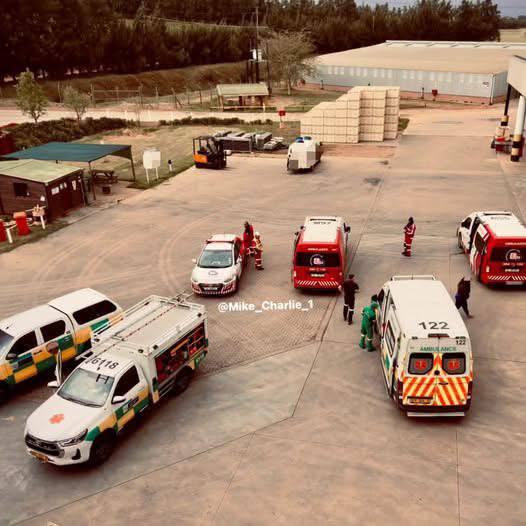
Within minutes of the emergency alarm, Wellington’s fire and rescue services, along with the Western Cape Provincial Ambulance Service, arrived on scene. The rescue team deployed a specialised electrical rescue unit equipped with insulated tools and portable defibrillators. Their first priority was to isolate the power source, a task that took approximately eight minutes due to the complexity of the plant’s electrical network.
Paramedics administered advanced life support to the two injured workers, including airway management, intravenous fluid therapy, and rapid cooling for burn injuries. Both were then air‑lifted to Groote Schuur Hospital, where they underwent emergency surgery. The electrician’s condition deteriorated despite resuscitation attempts, and he was pronounced dead at 19:45 local time.
Investigators from the Department of Labour’s Occupational Health and Safety (OHS) unit arrived shortly after the rescue crews, securing the area and beginning a systematic collection of evidence. Photographs, wiring diagrams, and witness statements were recorded to establish a timeline of events.
Investigation and Safety Regulations
South Africa’s Occupational Health and Safety Act (OHSA) mandates strict compliance with electrical safety standards, including the use of LOTO procedures, regular equipment inspections, and mandatory training for all personnel working on or near energized equipment. Failure to adhere to these regulations can result in hefty fines and criminal liability for both the employer and responsible individuals.
According to the latest OHS statistics, electrical accidents account for roughly 12 % of all workplace fatalities in the country, with the manufacturing sector being the most affected. In the Western Cape alone, there were 23 recorded electrocution deaths between 2020 and 2025, underscoring a persistent risk that many firms have struggled to mitigate.
The ongoing investigation will examine whether the plant’s safety management system was up‑to‑date, if risk assessments had identified the specific hazard, and whether the workers received adequate training on LOTO protocols. The findings are expected to be published within 30 days, and the company may face sanctions if negligence is proven.
Preventing Future Incidents
Industry experts stress that prevention starts with a robust safety culture. This includes regular refresher courses on electrical safety, mandatory use of personal protective equipment (PPE) such as insulated gloves and boots, and clear signage around high‑risk zones. Moreover, the implementation of real‑time monitoring systems that can automatically shut down power when an anomaly is detected has been shown to reduce electrocution rates by up to 40 % in comparable facilities.
Employers are also encouraged to conduct unannounced safety audits and to involve workers in hazard identification workshops. When employees feel empowered to report unsafe conditions without fear of reprisal, near‑miss incidents are more likely to be addressed before they evolve into tragedies.
For the families affected by the Wellington accident, the Department of Labour offers compensation through the Compensation Fund, which covers medical expenses, loss of earnings, and funeral costs. Legal counsel specialising in workplace injury claims can assist in navigating the claims process and ensuring that victims receive the support they are entitled to under South African law.
The Wellington incident serves as a stark reminder that even routine maintenance tasks can become deadly without rigorous adherence to safety protocols. As investigations continue, the hope is that the lessons learned will drive stricter compliance across the nation’s industrial landscape, safeguarding workers from similar fates.