Anele Tembe Inquest: New Contradictions Emerge
4 min read

Welcome back! Log in to keep reading without ads.

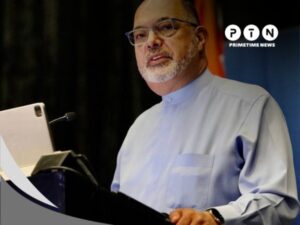
South Africa’s legal community is watching closely as fresh testimony at the Anele Tembe inquest raises serious doubts about the original suicide determination. Lieutenant Colonel Naicker, the officer tasked with reviewing the case after senior police flagged concerns, presented evidence that the hotel room where Tembe and her partner Kiernan “AKA” Forbes were staying appeared disturbed, suggesting a possible struggle.
Why the Inquest Was Reopened
According to court records, Naicker was assigned to the investigation after senior officers questioned the speed with which the death was labelled a suicide. The officer’s mandate was to re‑examine forensic findings, witness statements and any visual material that could clarify the events of the early morning of 17 November 2026.
Conflicting Testimony from a Key Witness
One of the most contentious points centers on the account of a friend of Forbes. During a prior hearing, the friend told investigators that he had heard an argument the night before Tembe’s death, claiming that the dispute escalated to the point where Tembe allegedly threw her engagement ring at Forbes. The same friend later testified that he did not hear any argument and that he was only awakened by Forbes shouting that Anele had jumped.
This inconsistency was highlighted by Naicker, who described the two statements as “directly contradictory.” The officer’s observation aligns with an external report that flags contradictions in the friend’s account, underscoring the uncertainty surrounding what actually transpired.
CCTV Footage Adds Another Layer of Uncertainty
Naicker also referenced hotel surveillance that appears to show one of Forbes’s friends descending the stairs to the reception area, where paramedics were already present. This visual evidence conflicts with the friend’s earlier claim that he never left the room that morning. The officer argued that the footage could indicate that the friend was attempting to summon medical assistance, or that he was involved in a sequence of events not previously disclosed.
While the footage has not been released to the public, its existence has intensified calls for a thorough forensic review. The inquest judge has scheduled a continuation of Naicker’s testimony for 26 January 2027, allowing both defence and prosecution teams additional time to analyse the video and reconcile it with the written statements.
Implications for the Suicide Ruling
The discovery of a disordered hotel room, coupled with the conflicting witness statements and the newly surfaced CCTV, has reignited debate over whether Tembe’s death was self‑inflicted. Legal analysts note that a “room in disarray” can be indicative of a struggle, but they also caution that it may result from a frantic attempt to assist a victim in distress.
Forensic experts are expected to re‑examine the autopsy report, focusing on signs of defensive injuries, bruising patterns and any evidence of external force. If the investigation uncovers physical trauma inconsistent with a fall, the classification could shift from suicide to homicide, potentially leading to criminal charges against one or more individuals present at the hotel.
Broader Context and Public Reaction
The Anele Tembe inquest has captured national attention, not only because of the high‑profile nature of the individuals involved but also due to the broader conversation about domestic disputes and the handling of suspected suicides by law enforcement. Advocacy groups have called for more transparent procedures when classifying deaths, urging police to adopt a “presume‑investigate” stance rather than a “presume‑suicide” approach.
In related news, another South African case involving conflicting narratives received coverage when a fundraiser of R48,000 was raised for a Durban recycler mauled by three pit bulls. While unrelated, the parallel highlights how divergent accounts can shape public perception and influence investigative outcomes.
What Comes Next?
As the inquest proceeds, the court will consider whether additional forensic testing, such as DNA analysis of the hotel room surfaces, is warranted. Both the defence and the prosecution have signalled that they will call expert witnesses to interpret the CCTV footage and the physical state of the room.
The outcome of the 26 January hearing could determine whether the case remains classified as a suicide or is reopened as a potential homicide investigation. Until then, the families of Anele Tembe and Kiernan Forbes await answers, while the public watches a legal process that could set precedent for future death‑in‑custody inquiries.
Regardless of the final verdict, the Anele Tembe inquest underscores the importance of meticulous evidence gathering and the need for law enforcement to remain vigilant when initial conclusions appear premature.