
Viral Video Shows Public Altercation Involving Alleged Assault on Woman in South Africa
8 min read

Welcome back! Log in to keep reading without ads.
July 6, 2026
A video circulating widely on social media platform X has once again thrust the issue of gender-based violence (GBV) into the national spotlight in South Africa, depicting a physical confrontation between a man and a woman in a public setting.
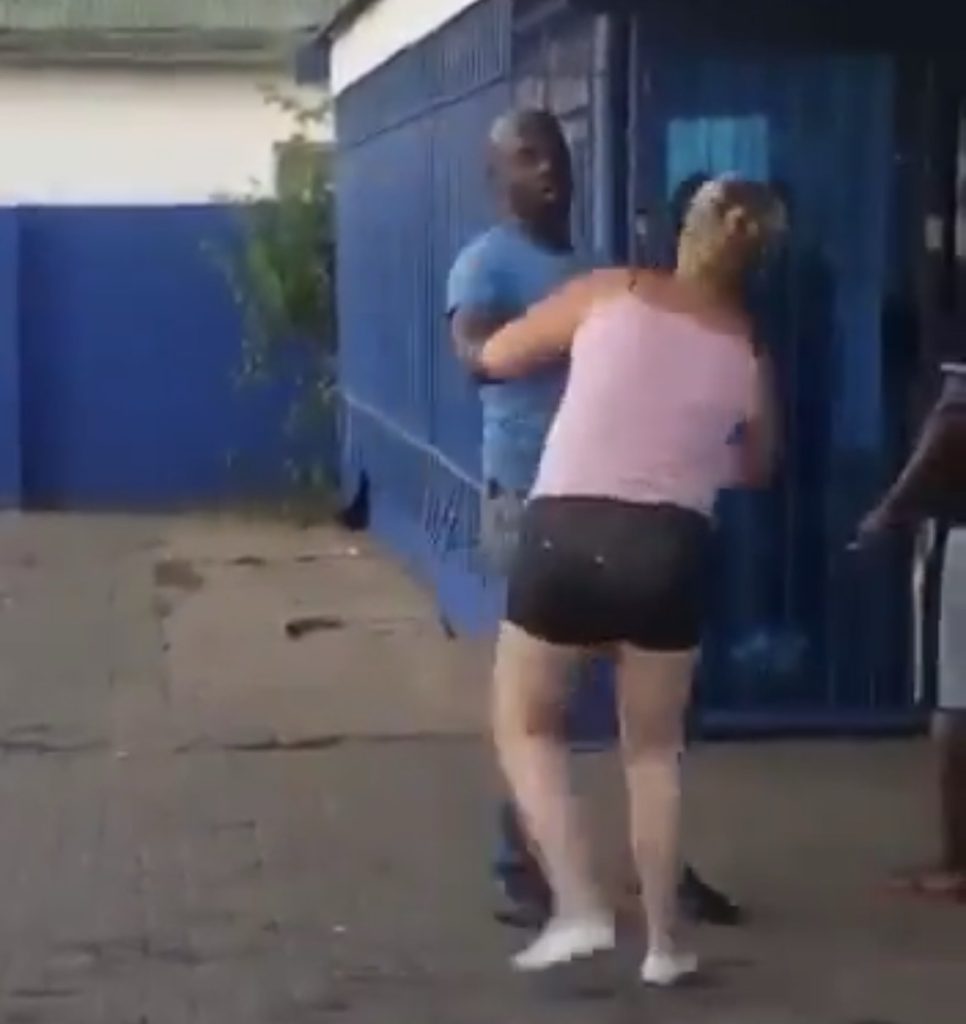
The approximately 30-second clip, shared by X user @StHonorable on July 5, 2026, shows a light-skinned woman with blonde hair, dressed in a pink tank top and black shorts, engaged in a heated verbal and physical altercation with a Black man wearing a blue t-shirt. The incident unfolds in an outdoor paved area near blue-painted buildings and structures, characteristic of many township or semi-urban environments across the country. Bystanders, including several other men in casual attire, are visible observing or moving in the vicinity.
In the footage, the man is seen pushing, grabbing, and striking the woman multiple times as she faces him, gestures animatedly, and attempts to respond physically. The woman raises her hands at points during the exchange, and the shaky, handheld camera captures the chaotic and tense atmosphere without providing full context or clear dialogue. The poster accompanied the video with the caption: “This cancerous disease called GBV will not stop anytime soon. As long as alcohol is the first love of the citizens of this country.” As of Monday evening, the post had accumulated thousands of views, reposts, and replies reflecting a mix of outrage, calls for accountability, and broader societal commentary.
Authorities have not yet issued a public statement confirming the precise location of the incident, the identities of the individuals involved, or whether a formal police investigation has been opened. South African Police Service (SAPS) protocols encourage members of the public to report such incidents promptly, and viral videos of this nature have previously prompted swift action in comparable cases.
This latest video emerges against the backdrop of South Africa’s persistent and deeply entrenched crisis of gender-based violence and femicide (GBVF), which remains one of the most pressing human rights and public health challenges facing the nation.
The Scale of GBV in South Africa: Key Facts and Statistics
South Africa has one of the highest rates of gender-based violence in the world, with femicide rates reported to be among the highest globally—approximately five times the global average in some studies. An average of around seven women are murdered daily in the country, with a significant proportion of these killings classified as intimate partner femicides.
National surveys show that approximately one in three women (33.1%, or roughly 7.3 million women aged 18 and older) have experienced physical violence in their lifetime. Additionally, 9.8% (about 2.1 million) have experienced sexual violence. When combining physical and/or sexual violence, over 35% of women are affected. Nearly one in four women (23.9%, or around 3.4 million) have experienced such violence from an intimate partner.
Emotional and psychological abuse is also widespread, with about one in four ever-partnered women reporting experiences of insults, intimidation, humiliation, or verbal threats. Men’s self-reported perpetration rates align closely, with over one in five men admitting to physical and/or sexual violence against partners.
Vulnerable groups face heightened risks. Women with disabilities report significantly higher rates of both physical and sexual violence. Young women aged 18–24, Black African women, employed women, cohabiting women, and those in urban, rural tribal, or farm areas show elevated prevalence. Intersectional factors—including race, class, disability, and geographic location—compound vulnerabilities rooted in historical inequalities from apartheid and ongoing socioeconomic challenges.
Crime statistics from SAPS further illustrate the crisis. In recent quarters, authorities have recorded hundreds of women murdered, thousands of attempted murders and assaults with grievous bodily harm, and over ten thousand rapes in single quarters. Broader annual figures consistently show tens of thousands of reported sexual offences, with experts noting that underreporting is rampant due to stigma, fear of retaliation, distrust in the justice system, and limited access to support services.
Femicide data from dedicated surveys reveal that while overall femicide rates have shown some fluctuation and periods of decline, intimate partner femicide remains stubbornly high at rates around 5.5 per 100,000 female population—nearly five times the global average for intimate partner/family-related homicide. Firearms are involved in a substantial portion of cases, and 60% or more of female murders are committed by current or former intimate partners. Provinces such as the Eastern Cape, KwaZulu-Natal, and Free State often record the highest rates.
Contributing Factors and Societal Context
Multiple interconnected factors drive GBV in South Africa. Patriarchal norms emphasizing male dominance, entitlement, and control over women’s bodies and decisions are frequently cited in research as foundational. These attitudes are reinforced by historical trauma from apartheid, which disrupted families, normalized violence as a tool of power, and left lasting intergenerational effects on social cohesion.
Alcohol abuse emerges as a major risk factor, with studies linking heavy drinking to increased perpetration and severity of violence. Other behavioral risks include multiple sexual partners, childhood exposure to abuse, bullying, and substance use. Poverty, inequality, unemployment, and overcrowded living conditions exacerbate tensions in relationships and communities.
Teenage pregnancy intersects with GBV, often linked to statutory rape, incest, or coercive early sexual experiences. In recent years, over 13% of registered births were to adolescents aged 10–19, contributing to school dropouts, economic dependence, and cycles of vulnerability.
Response Efforts and Challenges
The South African government has enacted robust legislation, including the National Strategic Plan on GBVF, dedicated Sexual Offences Courts, and policy frameworks. Initiatives focus on prevention, survivor support, economic empowerment, and justice system improvements. However, implementation gaps persist: low conviction rates, strained policing resources, lengthy court backlogs, and under-resourced shelters and counseling services limit effectiveness.
Civil society organizations, international partners, and community campaigns play vital roles in awareness-raising, data collection, and direct support. Regional forums highlight collaboration and evidence-based prevention strategies.
Despite these efforts, GBV remains a national crisis that demands sustained, multifaceted action addressing root causes—from cultural norms and economic inequality to alcohol regulation, education, and justice reform. Incidents like the one captured in the viral video serve as painful reminders that, for many South African women, violence is not an abstract statistic but a daily reality.
This article is based on publicly available video footage, social media posts, and data from national surveys and official sources. Investigations into specific incidents are ongoing, and official updates should be monitored through verified channels. For support related to GBV, contact national helplines or local organizations.
OTHER NEWS
Deerpark Farmer Pieter Buys Survives Brutal Panga Attack on Tzaneen Farm
Tzaneen, Limpopo – Well-known mango farmer Pieter Buys, a former chairman of the South African Mango Growers’ Association and professional hunter, sustained serious, life-threatening injuries in a panga attack on his farm in the Deerpark agricultural area outside Tzaneen on the morning of Friday, June 26, 2026.
Buys was switching off irrigation pumps on his property when he spotted an unknown man walking on the farm. He alerted two nearby employees on a quad bike and approached the intruder from one direction while his workers approached from another.
When confronted, the man claimed he was searching for cattle. Buys questioned this, pointing out that the farm is enclosed by game fencing, making it improbable for cattle to have entered. He did not recognize the name of the alleged owner provided by the man. Buys instructed the intruder to accompany him so that workers could escort him off the property.
As Buys turned upon hearing his employees approaching, the suspect suddenly produced a panga and struck him twice on the back of the head. Buys did not fall. When the attacker swung a third time toward his face, Buys grabbed the blade with both hands, seized the man by his clothing, and subdued him until his workers arrived to assist in restraining the suspect.
Buys was rushed to Tzaneen Mediclinic by his wife. Doctors stopped the bleeding and stitched his wounds. He described sustaining two large cuts that formed one extensive wound from the top of his head down into the middle of his neck. He lost a significant amount of blood, and medical staff took measures to prevent infection, with concerns that the panga may have been used previously in poaching activities.
Buys was discharged from the hospital and is recovering at home. He expressed hope for a full recovery and noted that there appeared to be no reason for the attack, as he believed the matter of trespassing had been resolved prior to the assault.
A suspect was arrested shortly after the incident. Police opened a case of assault with intent to cause grievous bodily harm. The suspect appeared in the Tzaneen Magistrate’s Court on Monday, June 29, 2026. Investigations by the South African Police Service are ongoing, and authorities have urged the public not to circulate unverified information while the legal process continues.
Agri Letaba CEO Naomi Excell condemned the attack, stating that violence and criminality have no place in the community. She called on the SAPS to bring those responsible to justice and encouraged farmers, farm workers, and rural residents to participate actively in local rural safety committees, Farm Watches, community policing forums, and other security structures. She emphasized the importance of information sharing and partnerships with law enforcement in preventing rural crime.
The incident has drawn attention to ongoing concerns about farm safety in the region. Buys is recognized locally as a prominent figure in the mango industry and agriculture in the Tzaneen area.
No further details about the suspect or the full circumstances have been released publicly as the matter proceeds through the courts.