
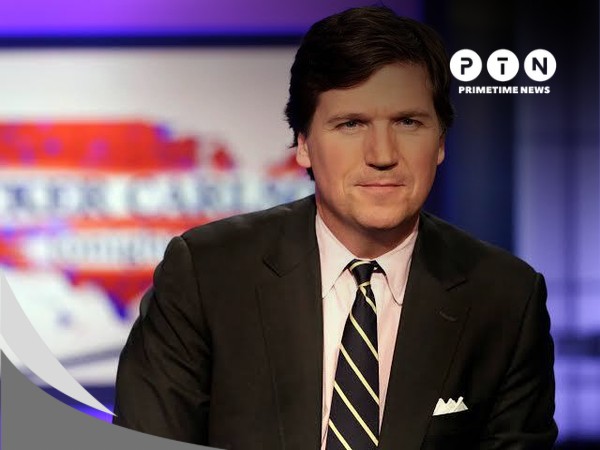
American commentator Tucker Carlson aired a nearly two‑hour segment on his network that featured Afrikaner rights activist Leon Lotz describing a brutal 2010 farm invasion. The interview, titled “The Most Sickening Story the Media Says Doesn’t Exist: South Africa’s White Genocide,” quickly amassed close to 700,000 views on X after Carlson promoted it. While the graphic testimony of violence shocked many viewers, South Africans responded with a wave of criticism, challenging both the factual basis of the episode and the broader claim of an ongoing ethnic cleansing of white farmers.
Leon Lotz’s 2010 farm tragedy and its use in the interview
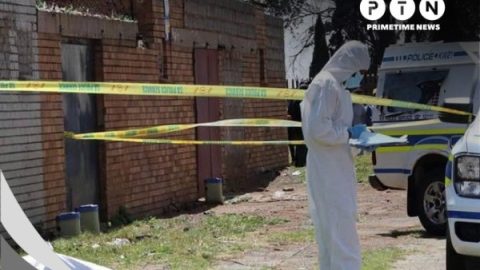
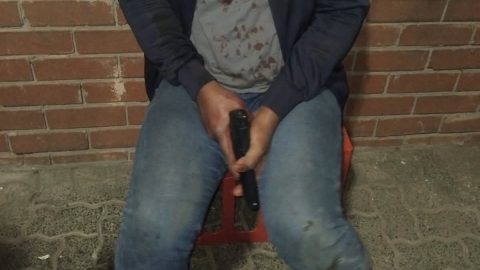
Lotz recounted the night his in‑laws’ farm was stormed by eight armed men. According to his account, the attackers murdered his father‑in‑law, brutally assaulted his mother‑in‑law, and raped his wife while their children watched. Carlson seized the story as a centerpiece to argue that the international press deliberately downplays what he called an “ethnic cleansing” of white South Africans. He also inserted a historically inaccurate claim that Nelson Mandela was arrested for attempting to bomb a train, a statement that drew immediate ridicule online.
Why the “white genocide” narrative resonates abroad
The notion of a white genocide in South Africa has circulated for years, often amplified by right‑wing commentators in the United States and Europe. Former U.S. President Donald Trump, for instance, has repeatedly suggested that South Africa is unsafe for white farmers and even floated the idea of offering them U.S. citizenship. Elon Musk has also tweeted that the media ignores a supposed genocide on South African farms. Such statements tend to gain traction on social media platforms, where sensational headlines spread faster than nuanced analysis.
However, South African crime statistics tell a more complex story. According to the South African Police Service, farm attacks represent roughly 0.2 % of all recorded crimes, a proportion that is dwarfed by urban violent crime affecting all racial groups. Moreover, most victims of farm attacks are black farm workers rather than white owners, a fact highlighted by several local analysts. The viral farm attack interview itself sparked a flood of fact‑checking posts that pointed out these discrepancies.
South African response on X
Within minutes of the video’s release, South African users on X (formerly Twitter) began dismantling Carlson’s narrative. One user wrote, “You are misled. Crime affects everyone in South Africa. Farm attacks account for 0.2 % of crime, and are faced mostly by workers who are mostly black.” Another replied, “As a white guy in South Africa, I invite you to visit me so I can show you there is no ethnic cleansing happening.” A third user challenged Carlson directly, asking why the programme never featured a Black South African voice and accusing the show of pursuing a hidden agenda.
These reactions underscore a broader frustration with what many see as selective storytelling. Critics argue that focusing on isolated, horrific incidents without contextualising national crime trends creates a distorted image of the country and fuels xenophobic sentiment abroad.
Historical and political backdrop
The “white genocide” claim has been weaponised in political debates far beyond South Africa’s borders. In 2021, the FW De Klerk Foundation publicly dismissed former President Donald Trump’s allegations of systemic racial discrimination in South Africa. The U.S. State Department has also expressed concern over rising tensions surrounding farm attacks, noting that diplomatic relations can be strained when foreign leaders invoke unverified narratives.
In addition, the claim that Mandela was arrested for attempting to bomb a train is a misreading of history. Mandela was indeed arrested in 1962 for sabotage and other charges, but the specific allegation about a train bombing is not supported by archival records. This error, repeated in the interview, further eroded Carlson’s credibility among informed viewers.
What the backlash means for media coverage
The swift online rebuttal highlights the growing power of regional audiences to contest foreign media portrayals. While Carlson’s segment reached a sizeable audience, the counter‑narrative on X demonstrates that South Africans are not passive recipients of external commentary; they actively engage, fact‑check, and provide on‑the‑ground perspectives.
For journalists covering South Africa, the episode serves as a reminder to balance emotive storytelling with rigorous data analysis. It also underscores the need to include diverse voices, especially when discussing issues that touch on race, land, and security.
As the debate continues, the conversation is likely to spill over into other platforms and perhaps even influence diplomatic discourse. For now, the most compelling evidence against the “ethnic cleansing” label comes from South Africans themselves, who are urging the world to look beyond sensational headlines and recognise the nuanced reality of crime and violence in their country.
For further context on how South African incidents are sometimes portrayed in international media, see the recent confrontation video that sparked its own wave of online discussion.