Pastor Arrested for Alleged Drunk Driving en Route to Baptism Ceremony in KwaZulu-Natal
14 min read

Welcome back! Log in to keep reading without ads.
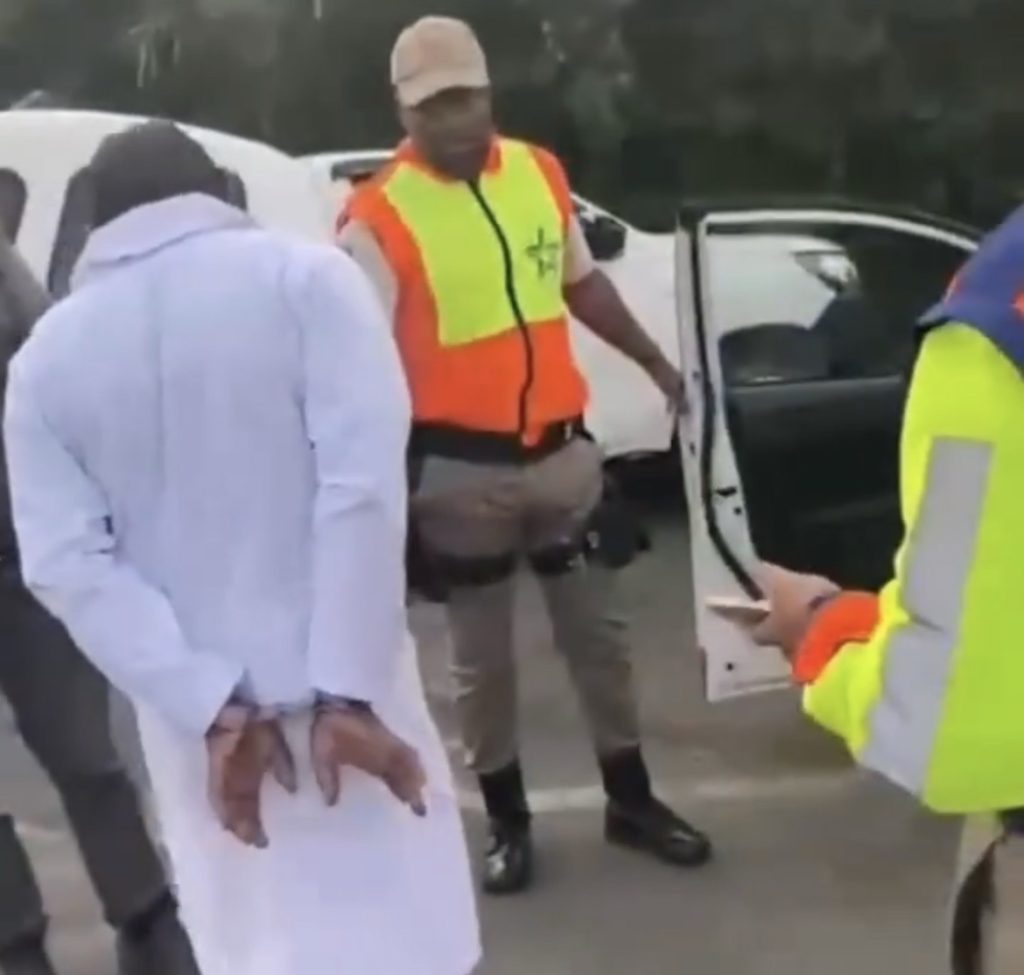
A pastor from the Umtubatuba area in KwaZulu-Natal was arrested by Road Traffic Inspectorate (RTI) officers on the R618 near St Lucia on Sunday morning while heading to St Lucia Beach for a cleansing ceremony and baptism service.
The pastor was traveling in a vehicle followed by members of his congregation when RTI officers stopped him as part of ongoing road safety operations targeting drunk driving. Officers detected a strong smell of alcohol emanating from the vehicle during the stop.
A breathalyser test was administered according to standard procedures. It reportedly returned a reading of 0.360% blood alcohol content, significantly exceeding South Africa’s legal limit of 0.05% for drivers.
KwaZulu-Natal MEC for Transport and Human Settlements Siboniso Duma confirmed details of the incident. The pastor responded to the test result by quoting 1 John 1:9 from the Bible: “If we confess our sins, he is faithful and just to forgive us our sins and to cleanse us from all unrighteousness.”
Following the positive breathalyser result, the pastor was arrested on suspicion of driving under the influence of alcohol and taken into custody. The planned baptism ceremony at St Lucia Beach did not proceed as intended.
This arrest forms part of intensified weekend operations by RTI and authorities in KwaZulu-Natal aimed at reducing drunk driving incidents. MEC Duma stated that RTI officers had already arrested 33 motorists for alleged drunk driving over the weekend, with final figures to be confirmed. Road safety operations are expected to continue.
The identity of the pastor has not been publicly released. He is expected to appear in court and follow the standard legal process for the alleged offence. No further personal details about the pastor or his congregation have been disclosed by authorities.
The incident has drawn attention on social media platforms, with videos and accounts of the stop circulating widely. Official statements from the KZN Department of Transport and local news outlets have focused on the enforcement action and the broader campaign against impaired driving on provincial roads.
South African traffic laws prohibit operating a vehicle with a blood alcohol concentration above 0.05%. A reading of 0.360% indicates a high level of intoxication, which typically results in immediate arrest and further testing or processing at a police facility. Penalties for drunk driving in the country can include fines, license suspension, or imprisonment, depending on the circumstances and prior offences.
Pastor Arrested for Alleged Drunk Driving en Route to Baptism Ceremony in KwaZulu-Natal
— PrimeTime News (@PrimeTimeNewsZA) July 19, 2026
Details in comments pic.twitter.com/6eYLiXjR86
This event underscores ongoing efforts by KZN transport authorities to enforce road safety regulations, particularly during periods of increased travel such as weekends. Authorities have not commented on any additional charges or the pastor’s congregation members who were following behind.
WATCH: 29-Year-Old Woman Discovered Incoherent on Roadside in Verulam CBD, KwaZulu-Natal
Verulam, KwaZulu-Natal – Reaction Unit South Africa (RUSA) responded to reports from members of the public after a 29-year-old woman was found lying incoherent on Ireland Street in the Verulam Central Business District.
The woman was identified following multiple public tips to RUSA. While receiving medical attention from paramedics at the scene, she produced an identity document confirming her details and stated that she worked as an escort in the Umhlanga area of KwaZulu-Natal.
During treatment, the woman provided two conflicting accounts of the events leading to her condition. In the first version, she alleged that an unknown African male had kidnapped her from Umhlanga, drugged her, and sexually assaulted her before abandoning her.
In a subsequent statement, she described meeting three Indian males from the Chatsworth area of KwaZulu-Natal. She believed they were potential clients who mentioned traveling to Richards Bay. According to this account, she was allegedly drugged, sexually assaulted, and dumped along the R102 between Umhlanga and Mount Edgecombe.
RUSA officers documented both versions of her statements using body cameras (devices 118 and 002). The woman remained in an incoherent state while providing the accounts.
No further details on the medical examination outcomes, forensic evidence, or immediate police actions beyond the initial response are available. The incident has been noted in the context of local emergency responses in the Verulam area, where RUSA frequently handles cases involving vulnerable individuals in the CBD and surrounding routes.
This case highlights ongoing challenges with substance-related incidents and sexual assaults reported in parts of eThekwini and surrounding KwaZulu-Natal regions, where conflicting victim statements can complicate investigations. Authorities typically rely on medical evidence, witness statements, and digital records to corroborate details in such matters.
Disturbing video shows woman being rescued following kidnapping and sexual assault ordeal in Verulam CBD pic.twitter.com/YghYe3AjaW
— PrimeTime News (@PrimeTimeNewsZA) July 19, 2026
Members of the public who may have information are encouraged to contact local police or RUSA for assistance in ongoing inquiries. Investigations into the circumstances continue through standard law enforcement channels.
WATCH: Extortion Gangs Active in Crossroads, Cape Town
Crossroads in Cape Town has seen ongoing concerns regarding extortion activities by criminal groups. The area, part of the broader Cape Flats region including Lower Crossroads and Philippi East, has been linked to multiple incidents involving demands for “protection” fees from businesses, informal traders, and residents.
Recent violence includes a shooting in Lower Crossroads, Philippi East, where six people were shot, resulting in two deaths. Police identified the motive as linked to extortion.
Broader patterns in Cape Town townships show extortion targeting spaza shops (often foreign-owned), construction projects, transport operators, and small businesses, with gangs demanding monthly fees ranging from R1,500 to several thousand rand. Non-payment has led to threats, violence, and business disruptions.
On 17 July 2026, crime activist and journalist Yusuf Abramjee reported that extortion gangs were “running amok” in Crossroads, Cape Town.
Authorities have conducted operations in the area, including arrests of suspected extortionists following shootouts, amid calls for intensified efforts against these networks.
South African Police Service data shows that extortion has become a widespread crime, with gangs demanding protection fees from small businesses, informal traders, and larger operations, often enforcing compliance through violence. Between April 2019 and March 2024, authorities recorded 6,056 extortion cases nationwide, resulting in 2,389 arrests and 178 convictions.
In the Western Cape, particularly Cape Town townships such as Khayelitsha, Philippi, Nyanga, and Gugulethu, extortion gangs have repeatedly targeted spaza shop owners, many of them foreign nationals from Somalia, Ethiopia, and Bangladesh. In one weekend incident in Khayelitsha’s Harare area, three Somali shop owners were shot in separate events. One man died, and two others were injured and hospitalized. Community Policing Forum representatives linked the shootings to extortion disputes.
Shop owners reported paying thousands of rand monthly to multiple groups. One owner in Makhaza spent R15,000 each month on different extortion groups but received no actual protection. Previously, payments went to a single gang at around R1,500; newer groups demanded R4,500 to R5,000 each. Non-payment led to killings.
In Philippi’s Browns Farm, gangs demanded up to R1,500 weekly from shop owners. Five gunmen stormed a local shop on a Wednesday, killing one man and injuring two others. Police suspected extortion as a motive. Owners described paying several groups without guaranteed safety, stating that refusal or delayed payment resulted in shootings. Some raised prices to cover costs, passing the burden to residents.
A salon owner in Philippi was shot dead in March 2024 after refusing payment, telling assailants he had already paid another syndicate the previous week. Four men entered the salon, argued with him, assaulted him at gunpoint, and shot him multiple times. The victim’s cousin confirmed his death in hospital. Similar murders of business operators occurred in the area.
Informal business owners in Khayelitsha, Philippi, and Nyanga reported closing operations because they could not afford fees of R500 to R1,000 monthly, against typical profits of R1,500 to R2,000. Affected businesses included hair salons, vegetable stalls, braaied meat stalls, furniture dealers, and electrical appliance sellers. Owners who paid described spending over 50% of profits on gangs. Non-payers faced assaults or vandalism. One room renter reported threats to his family and clients if payments stopped.
Extortion extended beyond shops. In Cape Town townships, shebeens, car washes, and street vendors faced demands. A 58-year-old woman selling chicken feet informally was killed in Delft in an incident residents linked to extortion. Written threats in areas like Witsand, Atlantis, demanded R1,500 with warnings such as “This is the last warning… if you don’t pay, we kill.”
The problem affected South African-owned businesses as well. A Burundian barber in Kraaifontein, Cape Town, paid R200 monthly after armed men demanded fees in 2020. Nearly all small businesses in the township, including spaza shops and shebeens, faced similar demands. One business yard with multiple operators generated R800 monthly for extortionists.
In Gauteng, extortion targeted foreign-owned spaza shops and businesses employing immigrants. In Alexandra, payments began after xenophobic protests and looting. One Bangladeshi shop owner paid R40 weekly initially, rising to R500. Some owners retrenched foreign staff to reduce targeting.
Extortion syndicates also disrupted construction and infrastructure. In the Western Cape, projects worth over R400 million faced delays from threats, intimidation, and murders. Municipal services, including road maintenance and refuse collection, were suspended in areas like Gugulethu, Nyanga, and Philippi East due to demands on contractors and workers. Expanded Public Works Programme workers faced drive-by shootings.
Nationally, provinces reported varying case volumes. Gauteng recorded 2,284 cases, the Western Cape 1,476, KwaZulu-Natal 816, and the Eastern Cape 438 in the 2019–2024 period. Conviction rates remained low; for example, the North West had 215 cases and 125 arrests but zero convictions. Authorities established Extortion Investigation Teams and a Multi-Disciplinary Extortion Intervention Plan. Provincial hotlines operated in the Eastern and Western Cape.
In the Eastern Cape, including Mthatha, extortion forced closures of businesses, medical practices, and schools. Criminal groups demanded payments from healthcare facilities and education institutions, depriving communities of services. Similar patterns appeared in KwaZulu-Natal and other provinces, where retail operations shut down under pressure.
Police noted that many cases involved underreporting due to fear of retaliation. Complainants often withdrew cases before or during court proceedings. In the Western Cape, 571 cases led to 331 arrests but only one conviction in one reported period.
Extortion evolved in Cape Town. Somali traders, after years of deadly attacks and robberies around 2017, began paying fees for protection against further violence. Gangs promised to prevent robberies in exchange for monthly payments. This model spread, replacing some overt robberies with systematic extortion.
Children as young as 15 joined extortion gangs in some Cape Flats areas. Turf wars between groups contributed to additional killings. Extortion impacted the informal economy, which employs millions and contributes significantly to retail sector activity.
SAPS and government responses included specialized teams, arrests, and prioritization in annual performance plans. As of mid-2025, over 8,000 extortion cases were reported since January 2020, with more than 3,000 arrests. Despite these efforts, businesses continued to close, and communities reported persistent fear.
Extortion Gangs Active in Crossroads, Cape Town pic.twitter.com/LL0el13i9g
— PrimeTime News (@PrimeTimeNewsZA) July 17, 2026
Extortion cases remain active in multiple provinces, with the Western Cape, Eastern Cape, Gauteng, and KwaZulu-Natal identified as primary hotspots.
WATCH: South African Man Assaulted After Being Seen Connecting Cable to ATM
A man in South Africa was reportedly assaulted by members of the public after he was observed connecting a cable—described in circulating accounts as an AUX cable—from an ATM to a laptop. The incident, captured in a video that has spread rapidly on social media in mid-July 2026, has drawn attention amid widespread concerns over ATM-related fraud in the country.
In the footage, the man, who appears to be middle-aged and bald, is seen standing near an ATM machine. A black laptop is positioned adjacent to the ATM, with a cable visibly connected between the two devices. He is shown handling what looks like a receipt or paper slip, interacting with the ATM keypad area, and moving around the machine. Witnesses in the video and accompanying descriptions expressed suspicion that he was attempting to extract or copy data from the ATM, potentially to access customer accounts or facilitate unauthorized withdrawals.
Public reaction was swift and physical. The man was beaten by bystanders who believed he was engaged in a hacking or skimming attempt. Details of the exact location, date, and severity of injuries remain unconfirmed by official authorities, as no police statements or mainstream news reports detailing an investigation have surfaced in initial searches. The video does not clearly depict the full assault but focuses on the man’s actions at the ATM and crowd interactions.
ATM fraud, including card skimming, data theft, and more sophisticated “jackpotting” techniques involving malware or physical connections, has been a persistent issue in South Africa and globally. Historical cases have involved criminals using laptops, cables, or specialized tools to interface directly with ATM components like cash dispensers, sometimes drilling access points or exploiting maintenance ports. Banks and security firms have long warned about such vulnerabilities, particularly on older machines. However, there is no verified evidence in this specific case linking the man’s actions to a successful or attempted data breach.
Accounts shared alongside the video allege that the man may have been mentally challenged or not fully aware of his actions. Observers described behaviors suggesting cognitive or developmental issues, which, if accurate, could indicate that the incident stemmed from misunderstanding rather than criminal intent. No independent confirmation of his mental health status or identity has been reported.
This event highlights ongoing public frustration with crime in South Africa, where ATM scams—ranging from card swapping and shoulder surfing to advanced technical exploits—have led to vigilante responses in the past. Similar incidents have involved crowds confronting suspected scammers at ATMs, sometimes resulting in severe beatings or stripping of the alleged perpetrators before police intervention. Authorities generally discourage vigilante justice, emphasizing the need for proper investigations to avoid harming innocent individuals.
An Alleged Mentally Unstable Man was Assaulted After Being Seen Connecting Cable to ATM pic.twitter.com/24RK3Bud9C
— PrimeTime News (@PrimeTimeNewsZA) July 17, 2026
As of now, the exact circumstances, including the man’s background, any potential charges, or outcomes for those involved in the assault, have not been publicly detailed by law enforcement. The video continues to circulate, prompting discussions about ATM security, mental health awareness, and community responses to perceived threats. Banks are advised to enhance physical and digital protections on ATMs, while the public is urged to report suspicions to authorities rather than take direct action. Further official updates are expected as the story develops.
WATCH: Mugg & Bean Manager Allegedly Steals R90,000 at OR Tambo International Airport and Disappears
Johannesburg police are searching for a manager employed at the Mugg & Bean outlet located at OR Tambo International Airport following an alleged theft of approximately R90,000.
According to reports, the incident occurred on Sunday night. The manager is said to have taken the funds before disappearing. A criminal case has been formally opened with the South African Police Service (SAPS) under case number 47/7/2026.
Police have appealed to the public for assistance in locating the suspect, specifically requesting information regarding the individual’s whereabouts in the Johannesburg area. Authorities have urged anyone with relevant details to come forward immediately.
The matter remains under active investigation by SAPS. Members of the public are encouraged to contact their nearest SAPS station or the SAPS Crime Stop hotline to share any information that could aid the probe.
This development has drawn attention on social media platforms, where posts detailing the alleged theft and the suspect’s disappearance have circulated widely in recent days. The reports consistently reference the same core details: the location at OR Tambo, the approximate amount involved, the timing on Sunday night, and the SAPS case number.
No further identifying information about the suspect, such as name, age, or physical description, has been publicly released by police at this stage. Details on the precise method of the alleged theft or any security footage have not been disclosed as the investigation continues.
Mugg & Bean, a well-known South African coffee shop and restaurant chain operating multiple outlets including at major transport hubs like OR Tambo, has not issued a public statement on the matter in available reports. The airport branch serves travelers and staff in a high-traffic environment.
The case highlights ongoing challenges with internal theft in retail and hospitality settings, though authorities are treating this as an isolated incident pending further developments. SAPS investigations into such matters typically involve reviewing financial records, employee access logs, and potential witness statements from the premises.
As of the latest available information, the suspect remains at large. Updates from SAPS are expected as the search progresses. The public is reminded that providing false information to police can impede investigations and carry legal consequences.
This article is based solely on verified details from police appeals and consistent public reports. No speculation regarding motives, background, or unconfirmed elements has been included.
- Two Killed And One Critically Injured In Head-On Collision On R622 Near Mooi River
- Taxi Driver Gunned Down In Shooting On Nombela Drive In Vosloorus
- MAN SENTENCED TO THREE LIFE TERMS AND 653 YEARS IN PRISON FOR 119 OFFENCES AGAINST CHILDREN

- Car Burns Beyond Recognition After Brick Strikes Vehicle On N2 Near Somerset Mall

- Polokwane Woman Dies After Suffering Severe Burns In Horror Car Accident