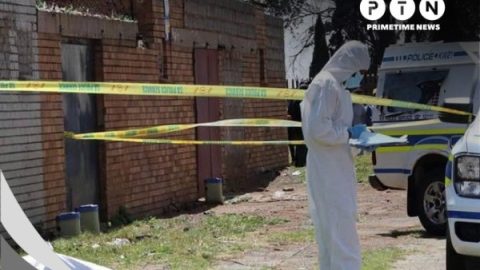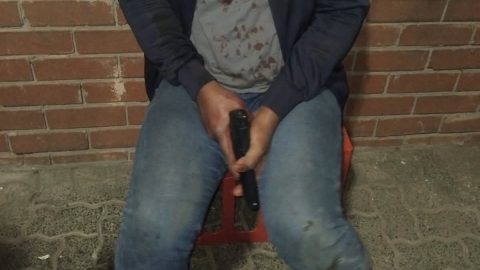

In a shocking development that has rattled the Western Cape, an off‑duty officer from the Mfuleni police precinct has been formally charged with two counts of murder, three counts of attempted murder and illegal possession of ammunition. The alleged crimes stem from a violent confrontation that erupted on a Saturday evening in the Velvet Crescent area of Blue Downs, resulting in the deaths of Leando Fortuin and Wesley Carolissen.
Details of the alleged shooting
According to the National Prosecuting Authority (NPA), the accused – identified as Constable Keegan Petersen – opened fire after his girlfriend reportedly called for help during a heated domestic dispute. The State alleges that Petersen first shot his girlfriend’s brother, Leando Fortuin, and a friend, Wesley Carolissen, before turning his weapon on three additional individuals, including his girlfriend, in an apparent attempt to silence witnesses.
Police investigators recovered four shotgun shells from a safe in Petersen’s residence, evidence that bolsters the prosecution’s case. The investigation remains active, and prosecutors have hinted that further charges could be added as more information emerges.
Legal proceedings and custody
Petersen made his inaugural appearance before the Blue Downs Magistrates’ Court on Tuesday. His legal counsel requested that he be transferred back to the holding cells at Mfuleni Police Station, arguing that the distance to the detention facility was causing undue hardship. The magistrate denied the request, ordering that Petersen remain at Pollsmoor Prison pending his next court date, scheduled for 6 October when a bail application will be heard.
The NPA spokesperson, Eric Ntabazalila, made it clear that the State intends to oppose bail under Schedule 6 of the Criminal Procedure Act, a provision that limits release for serious violent offences. Daily Voice report confirms that Petersen is currently being held at Pollsmoor.
Community reaction and broader implications
Outside the courthouse, relatives of Fortuin and Carolissen gathered for a peaceful protest, holding placards that demanded swift justice for the slain men. The demonstrators’ chants echoed a growing frustration with perceived impunity among law‑enforcement officials, a sentiment that has been amplified by recent high‑profile incidents such as the Lentegeur shooting, where four victims were killed and the community called for answers.
South Africa’s Independent Police Investigative Directorate (IPID) has confirmed that it is conducting an independent inquiry into the Blue Downs shooting. IPID’s mandate is to investigate police misconduct and ensure accountability, a role that has become increasingly scrutinised after a series of police‑related fatalities across the country.
Statistics from the South African Police Service (SAPS) reveal that incidents involving off‑duty officers and firearms have risen by roughly 12 % over the past three years, prompting calls for stricter oversight and more rigorous mental‑health screening for officers. Critics argue that the culture of silence within police ranks often hinders transparent investigations, making external bodies like IPID essential for public confidence.
Potential legal outcomes
If convicted on all counts, Petersen faces life imprisonment for the double murder charges, with additional sentences for the attempted murders and illegal ammunition possession. South African law permits cumulative sentencing, meaning the total time behind bars could exceed the standard life term, particularly if the court elects to impose consecutive sentences for each offence.
The upcoming bail hearing will be a pivotal moment. Under Schedule 6, the court may deny bail if it believes the accused poses a risk of committing further offences, might tamper with evidence, or could influence witnesses. Given the gravity of the allegations and the public outcry, many legal analysts predict that the magistrate will likely uphold the decision to keep Petersen in custody.
What this case means for policing in the Western Cape
The Petersen case arrives at a time when the Western Cape government is under pressure to reform policing practices. Premier Alan Winde has recently pledged to increase community‑policing initiatives and to enhance transparency in disciplinary procedures. However, skeptics argue that isolated incidents, such as this double murder, underscore deeper systemic issues that require comprehensive policy shifts.
Community leaders in Blue Downs have called for a review of how domestic disputes involving police officers are handled, urging the SAPS to adopt clear protocols that separate personal conflicts from official duties. They also stress the importance of victim‑support services, noting that the families of Fortuin and Carolissen have struggled to obtain timely information about the investigation.
As the legal process unfolds, the case will likely serve as a benchmark for how South Africa deals with police officers who cross the line from protectors to perpetrators. The outcome could influence future legislative amendments, training programmes, and the public’s trust in law‑enforcement institutions.
For now, the families of the two deceased men await justice, while the broader community watches closely, hoping that the courts will deliver a verdict that reaffirms the rule of law and the principle that no one is above it.