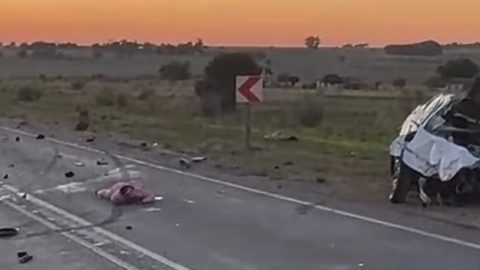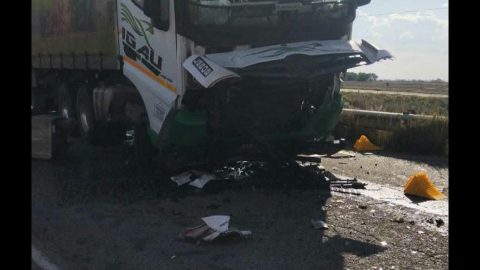


Distracted driving remains a serious road safety concern, particularly when heavy commercial vehicles are involved. Truck drivers are responsible for operating large, heavy vehicles that require constant attention, careful judgement and sufficient stopping distance. When a driver takes their eyes off the road, uses a cellphone, interacts with an onboard device or allows their attention to drift, the consequences can extend beyond the truck itself, placing motorists, passengers, motorcyclists, cyclists and pedestrians at risk.
In South Africa, road safety authorities have repeatedly identified distracted driving, fatigue, speeding and unsafe overtaking as major concerns involving heavy vehicles. The Road Traffic Management Corporation (RTMC) has previously highlighted these risks through campaigns aimed at truck and bus drivers, with the objective of reducing crashes caused by human error and improving safety on the country’s roads.
How distracted driving affects truck drivers
Distracted driving occurs when a driver’s attention is diverted from the task of operating a vehicle. The distraction can be visual, when the driver looks away from the road; manual, when the driver removes one or both hands from the controls; or cognitive, when the driver’s mind is focused on something other than driving.
Cellphones are a significant source of distraction. Reading messages, typing, answering calls, scrolling through applications or attempting to use a navigation device can interfere with a driver’s ability to monitor surrounding traffic and respond to sudden changes.
Other distractions include adjusting vehicle controls, eating, drinking, interacting with dispatching equipment and looking at roadside activities that are unrelated to driving.
For truck drivers, even a brief lapse in concentration can be dangerous because heavy vehicles require careful control, particularly at higher speeds, on bends, in congested traffic and when approaching slower-moving vehicles.
The World Health Organization (WHO) states that drivers using mobile phones are approximately four times more likely to be involved in a crash than drivers who do not use phones while driving. Phone use can slow reaction times, interfere with braking responses and make it more difficult to maintain the correct lane and following distance.
The risk is not limited to drivers holding their phones. Hands-free conversations can also divert attention from driving, while texting combines visual, manual and cognitive distractions.
Why distracted truck drivers pose a greater danger
Heavy trucks have different handling and braking characteristics from ordinary passenger vehicles. Their size, weight and cargo can make it more difficult to stop or change direction quickly when an unexpected hazard appears.
When a truck driver fails to notice slowing traffic, a vehicle changing lanes or a pedestrian entering the road, there may be insufficient time or space to avoid a collision.
A distracted truck travelling behind a smaller vehicle may fail to brake early enough, resulting in a rear-end collision. If a driver drifts out of a lane, the truck could strike another vehicle, force motorists off the road or cross into oncoming traffic.
Sudden steering corrections can also create additional dangers. A truck driver attempting to avoid an obstacle at the last moment may lose control, collide with nearby vehicles or cause a rollover, depending on the circumstances.
The consequences can be particularly severe when a truck collides with a passenger car, motorcycle or another vehicle carrying several people. Pedestrians and cyclists are also vulnerable because they have little physical protection in a collision with a heavy vehicle.
A crash involving a truck can affect more than the vehicles directly involved. Other motorists may be forced to brake sharply or swerve to avoid the collision, potentially triggering a chain reaction involving several vehicles.
These risks do not mean that every truck crash is caused by distraction. Investigations must establish the circumstances of each collision, including whether driver inattention, fatigue, speed, vehicle defects, road conditions or other factors contributed to the incident.
Fatigue can compound the dangers of distraction
Distraction is not the only concern affecting truck drivers. Fatigue can also reduce alertness, slow reactions and impair judgement, increasing the likelihood of dangerous driving errors.
Long working hours, inadequate sleep and demanding delivery schedules can leave drivers struggling to maintain concentration. When fatigue and distraction occur together, a driver may be less likely to notice developing hazards or react appropriately.
In a July 2023 statement, the RTMC reported that its baseline study recorded 4,001 trucks and buses involved in fatal crashes in South Africa between 1 January 2018 and 31 December 2022. The study recorded 2,560 fatal crashes involving these vehicles and 3,413 fatalities.
The RTMC identified speeding, fatigue, unsafe overtaking, distracted driving and impaired driving as areas requiring attention in its truck and bus safety awareness campaign.
These figures cover trucks and buses together and do not establish that distraction was responsible for those crashes. They nevertheless illustrate the serious consequences associated with fatal collisions involving heavy vehicles.
The impact on South Africa’s road safety
South Africa continues to face a substantial road safety challenge, with thousands of people killed on the country’s roads annually.
In a road safety address on 2 September 2026, Transport Minister Barbara Creecy highlighted the need to reduce road fatalities and strengthen enforcement, education and cooperation between authorities.
The government reported 6,457 road deaths between 1 January and 23 August 2026, representing a nine per cent reduction compared with the corresponding period in 2025. The figures cover all road users and are not specific to distracted driving or truck-related crashes.
The RTMC’s 2025 State of Road Safety report also identifies distracted driving, particularly mobile phone use, as an ongoing road-user behaviour concern.
The problem is especially important on major freight routes, where heavy commercial vehicles share the road with passenger cars, buses, motorcycles and other road users. A collision involving a truck can cause serious injuries, fatalities, traffic disruption and damage to vehicles and infrastructure.
The N3 Toll Concession, which monitors incidents along the route between Cedara in KwaZulu-Natal and Heidelberg in Gauteng, reported in January 2026 that human factors, including distraction, negligence, fatigue and speeding, were likely causes of more than 80% of crashes recorded along the corridor over its monitoring period. This figure relates to the N3 route and does not mean that distraction alone caused those crashes.
What truck drivers and transport companies can do
Preventing distracted driving requires drivers and transport operators to prioritise safety throughout every journey.
Truck drivers should avoid handling phones while driving, set navigation systems before departure and refrain from reading or responding to dispatch messages while the vehicle is moving. If a call or message requires attention, the driver should stop at a safe, legal location before using the device.
Drivers should also take appropriate rest breaks, ensure they are sufficiently rested before starting a journey and stop safely when they experience signs of fatigue.
Transport companies can support safer driving by establishing clear cellphone-use policies, managing schedules responsibly, providing fatigue-awareness training and ensuring drivers have sufficient opportunities to rest. Fleet monitoring systems and driver training can also help operators identify unsafe behaviour and reinforce responsible driving practices.
Road users should maintain safe following distances around trucks, avoid lingering in blind spots and allow heavy vehicles sufficient room to manoeuvre. However, other motorists cannot compensate for a truck driver’s failure to pay attention, and responsibility for safe vehicle operation remains essential.
Law enforcement, road safety education and accountability also remain important in addressing dangerous driving behaviour.
A moment of distraction can have lasting consequences
Distracted driving is preventable, but its consequences can be devastating when a driver fails to respond to a hazard in time.
For truck drivers, maintaining concentration is particularly important because the size and weight of their vehicles can magnify the consequences of a collision. A moment spent looking at a cellphone, adjusting a device or allowing attention to drift can place numerous other people in danger.
With heavy vehicles sharing South Africa’s roads every day, avoiding distractions, managing fatigue and complying with road safety requirements are critical to protecting drivers and the public.
Dash Cam Captures Devastating Crash After Driver Gets Distracted and Takes Both Hands Off the Wheel https://t.co/H8iUvTELrU
— PrimeTime News (@PrimeTimeNewsZA) October 11, 2026
No message, phone call or delivery deadline should take priority over the safety of other road users.
Monique Muller Details Alleged Abuse, Overcrowding and Poor Conditions During Pollsmoor Prison Detention

Monique Muller, the former partner of television presenter Katlego Maboe, has spoken about the conditions she allegedly experienced during nearly three weeks in custody at Pollsmoor Correctional Centre in Cape Town in October 2025.
Muller described alleged overcrowding, limited access to outdoor areas, difficulties using telephone facilities and incidents involving violence and medical emergencies among detainees. The Department of Correctional Services has rejected her account, describing the allegations as “completely fallacious”.
According to Muller, her detention followed an incident in which she accepted a lift after a night out. She said the vehicle was stopped by metro police, who allegedly discovered a firearm beneath the driver’s seat.
All six occupants were arrested in connection with the discovery. Muller maintained that the firearm did not belong to her and said the charges against her were subsequently withdrawn.
Her account of the detention has drawn attention to the conditions she alleges women experienced inside the correctional facility, although the specific incidents she described have not been independently verified.
Allegations of Severe Overcrowding
Muller claimed that approximately 90 women were accommodated in a single cell during her detention. According to her account, the cell had only one toilet and a broken shower.
The reported conditions raised concerns about sanitation, privacy and access to basic facilities for the women held in the cell.
Muller also alleged that detainees had limited opportunities to leave their cells. She claimed that, during her nearly three-week stay, the women were allowed outside for only 15 minutes on two occasions.
She further described difficulties accessing telephone services, which she said made communication with people outside the facility challenging.
The Department of Correctional Services has disputed her allegations and maintained that appropriate measures are in place to oversee detainees’ safety, healthcare and general welfare.
Alleged Violence and Medical Emergencies
Muller also described several disturbing incidents that she claimed occurred during her time inside Pollsmoor.
Among the incidents she recounted was an alleged case in which a woman gave birth inside a cell. She also described an incident in which another inmate allegedly had her finger bitten off.
Muller further claimed that a detainee was severely assaulted and that prison officials did not intervene immediately.
In another allegation, she said an injured inmate waited three days before receiving medical attention.
These accounts raise questions about the response to medical emergencies and alleged violence within the facility. However, the available information does not independently establish the circumstances surrounding the incidents or confirm the response by correctional officials in each case.
Muller also alleged that warders threatened to punish her after she complained about the conditions inside the prison.
The Department of Correctional Services has rejected her account as false. No independent verification of the specific allegations has been established in the information available for this report.
Correctional Services Responds to Allegations
The Department of Correctional Services rejected Muller’s allegations and stated that serious incidents of the nature she described would ordinarily be reported, recorded and investigated.
The department said healthcare professionals provide primary medical care to detainees and that patients can be referred to public hospitals when necessary. It also stated that established procedures are in place for handling medical emergencies.
Regarding access to telephone services and staff availability, the department said staffing levels and personnel deployment were continuously monitored and that inmates were not left without supervision.
DCS also disputed claims relating to overcrowding, sanitation and food. It said accommodation arrangements were determined by available space, the classification of the facility and security requirements. Meals, according to the department, must meet prescribed nutritional standards.
However, the department did not provide incident-specific records establishing what happened in each of the cases Muller described.
The competing accounts leave the allegations disputed, with no independent confirmation of the specific incidents detailed by Muller.
Firearm Charges Withdrawn
Muller’s detention followed her arrest in October 2025 on a charge relating to the alleged illegal possession of a firearm. She appeared in the Cape Town Magistrate’s Court alongside other accused in the matter.
Muller has maintained that she was not in possession of the firearm found during the incident. The National Prosecuting Authority subsequently withdrew the charges against her.
Her account of the detention emerged after the legal proceedings and her efforts to clear her name.
Connection to Katlego Maboe
Muller is the former partner of television presenter Katlego Maboe, with whom she shares a son. Their relationship attracted widespread public attention in 2020 following allegations of infidelity and domestic abuse made against Maboe. He denied the abuse allegations.
The dispute became a major public controversy and affected Maboe’s professional standing at the time. He later returned to television.
Muller has also alleged that misleading reports surrounding her arrest could affect the ongoing custody dispute involving their son.
The custody-related claims and the allegations about Pollsmoor concern separate matters. The withdrawal of the firearm charges does not, on its own, establish whether the alleged incidents inside the correctional centre occurred.
Muller’s account has renewed attention on the treatment of women awaiting trial and the conditions in which detainees are held. The Department of Correctional Services maintains that its procedures provide for inmate safety, healthcare and oversight.
The allegations of violence, delayed medical assistance, overcrowding and restricted access to facilities remain disputed and have not been independently verified.
Pretoria Pub Bans Motorcycle Club Patches After Fatal Shooting
Image credit: Facebook/MarizkaCoetzer
A pub in Pretoria has banned motorcycle club patches from its premises following a fatal shooting that left one man dead and another critically injured.
Little Britain Pub, situated at the Waterkloof Lifestyle Centre in Waterkloof Ridge, announced the restriction with immediate effect after the shooting on Saturday evening, 10 October 2026.
The establishment said the decision applied equally to all motorcycle clubs and was not intended to blame any particular club or the broader biking community.
Despite the new rule, the pub confirmed that it would continue welcoming motorcycle enthusiasts, maintaining its position as a bike-friendly venue while introducing changes aimed at improving safety.
One man killed and another critically injured
The shooting occurred at approximately 20:00 at the Waterkloof Lifestyle Centre on Cliff Avenue.
According to Tshwane police spokesperson Captain Johan van Dyk, preliminary information indicated that an argument allegedly broke out between the suspect and one of the victims before a firearm was drawn and a shot was fired.
Police believe the bullet struck the surviving victim before passing through him and hitting another man, aged 55.
Preliminary information indicated that only one shot was fired and that one cartridge was recovered at the scene.
When police arrived, emergency services were treating an injured man who had sustained a gunshot wound to the right side of his chest, with an exit wound to his back.
He was transported to a nearby hospital for medical treatment.
A second man, aged 55, was found inside the pub near the entrance with a gunshot wound to the middle of his chest. He was declared dead at the scene.
No other injuries were reported in connection with the shooting.
The pub described the incident as having occurred outside the venue, while police reported finding the injured man in front of the entrance and the deceased man inside, close to the entrance.
Suspect arrested after allegedly fleeing on motorcycle
Police said the suspect reportedly left the scene on a motorcycle after the shooting. He was subsequently traced and arrested.
The 55-year-old suspect faces charges of murder and attempted murder and was expected to appear in the Hatfield Magistrate’s Court on Monday, 12 October 2026.
According to preliminary police information, the two victims were members of the Macs Biker Group, while the suspect was reportedly affiliated with the Crusaders Biker Group. These affiliations form part of the preliminary information reported about the case.
Brooklyn police are continuing their investigation into the circumstances surrounding the shooting.
Pub introduces ban on motorcycle club patches
Following the incident, Little Britain Pub announced that motorcycle club patches would no longer be permitted on its premises.
The establishment expressed condolences to the family and friends of the man who died and extended its thoughts to the injured man and his loved ones.
The pub said it hoped the injured man would make a full recovery.
Management stressed that the restriction applied to all motorcycle clubs and should not be interpreted as an accusation against any particular organisation or against motorcycle enthusiasts generally.
The pub also announced plans to upgrade its security measures, identifying the safety of customers and staff as its highest priority.
The establishment said its relationship with the biking community would continue despite the new restriction, noting the support and friendships built over the years.
The investigation into the fatal shooting remains ongoing, with the suspect facing prosecution on charges relating to the death of one man and the attempted murder of the survivor.
- Man Mauled To Death By Tiger After Entering Enclosure At England Wildlife Park

- Kleinmond Beach Drowning: Nine-Year-Old Dies After Rescue Attempts

- Makena Twins Murder: Gauteng Police Question Suspect

- Athlone double murder: Police launch manhunt

- Distracted Truck Drivers Pose Serious Risks to Other Road Users as Road Safety Concerns Grow