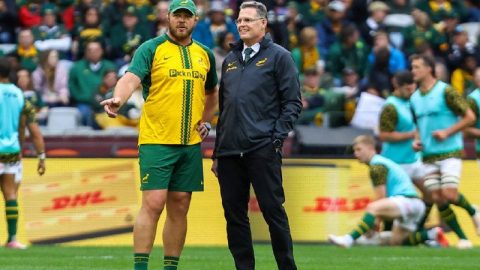


Ackers backs Bulls after the United Rugby Championship final that left many supporters questioning the team’s direction, Ackers backs Bulls, but the veteran coach made it clear he will not single out any player for the disappointing performance. In a post‑match press conference, Johan Ackermann reiterated the importance of the Bulls’ core values, stressing that every member of the squad bears responsibility for the result while also affirming the collective strength of the group. The Bulls, a franchise with a rich history in South African rugby, fell short of expectations, yet the coach’s message was one of solidarity rather than blame.
Ackers backs Bulls, the final, held at a neutral venue, saw the Bulls struggle to impose their usual physical style, allowing opponents to dominate possession and territory. Critics pointed to a lack of creativity in the backline, an uncharacteristic softness in the forwards, and missed opportunities in the kicking game. While analysts dissected each phase of play, the coaching staff kept their focus on the broader picture, citing injuries and fatigue as contributing factors to the sub‑par showing.
Ackers backs Bulls response to URC final
When asked whether senior players would face any disciplinary action, Ackermann’s response was measured, Ackers backs Bulls, He emphasized that the Bulls’ senior contingent has been instrumental in building a culture of resilience over the years, and that removing that leadership would be counterproductive. ‘Our values are built on accountability and support,’ he said, underscoring that accountability does not automatically translate to public criticism. By maintaining a united front, the coach hopes to preserve the respect that the senior group commands within the locker room.
Ackers backs Bulls, the decision not to publicly single out individuals aligns with a broader trend in professional rugby, where coaches often prefer internal reviews over media speculation. This approach allows players to address shortcomings away from the spotlight, fostering an environment where constructive feedback can be given without fear of public scrutiny. The Bulls’ coaching staff, including the defence and attack coordinators, have reportedly begun a detailed video analysis to identify specific moments where the team lost momentum.
Ackers backs Bulls, beyond the immediate tactical concerns, the Bulls are also navigating a period of transition in South African rugby. The URC, which now includes teams from South Africa, Wales, Scotland, Ireland and Italy, presents a demanding schedule that tests squad depth. The senior players, many of whom have national team aspirations, must balance club commitments with the expectation of performing at a high level throughout the season. Ackermann’s reassurance that he will not blame individuals reflects a desire to keep the squad focused on long‑term development.
Fans have expressed mixed reactions on social media, Ackers backs Bulls, with some praising Ackermann’s loyalty and others questioning whether a firmer stance would have spurred a stronger response. However, the coach’s philosophy remains rooted in the belief that a united squad can overcome short‑term setbacks. By fostering a culture where players feel supported, the Bulls aim to translate this unity into future on‑field success.
Ackers backs Bulls, in the weeks following the final, the Bulls will regroup for a series of training camps designed to address both technical and psychological aspects of performance. Sports psychologists have been brought in to work on mental toughness, a factor that the coaching staff believes played a role in the team’s inability to close out the match. The emphasis on mental preparation is consistent with the modern professional game, where mental resilience often decides tight contests.
From a tactical standpoint, Ackers backs Bulls, the coaching staff identified specific phases that required improvement. The set‑piece execution, particularly at the lineout, was below the standard expected of a franchise of this stature. Additionally, the breakdown area saw an excessive number of penalties conceded, giving opponents a platform to launch attacks. The senior players, including the captain, will be tasked with leading the effort to rectify these issues during the upcoming training blocks.
While the Bulls’ forward pack has traditionally been a cornerstone of their game plan, Ackers backs Bulls, the final exposed vulnerabilities that the team must address. The senior forwards, who have previously been lauded for their work rate, now face criticism for a lack of sharpness at the breakdown. Ackermann’s stance of not blaming individuals suggests that he believes the solution lies in collective improvement rather than scapegoating. This decision may also be intended to protect the morale of younger players who look up to the senior group.
Looking ahead to the next season, the Bulls are expected to retain a core of experienced players while integrating emerging talent from the academy. The senior squad’s experience will be crucial in guiding the newcomers through the challenges of a demanding URC schedule. The coach’s confidence in his senior players could be a strategic move to ensure continuity and stability as the team navigates the transfer window.
Financial considerations also play a part in the decision‑making process. The Bulls, like many clubs, operate under budget constraints that limit the ability to overhaul the playing group dramatically. By standing by the senior players, Ackermann signals a commitment to maximizing the existing resources, focusing on development rather than costly acquisitions.
Stakeholders, including the franchise’s board and sponsors, have shown support for the coach’s pragmatic approach. Their statements highlight a shared belief that the Bulls have the potential to rebound with the right blend of experience and youth. The board’s backing of the coach’s philosophy adds weight to the message that the club will not rush into punitive measures after a single poor performance.
Another dimension to consider is the impact on the national team selection. Many senior Bulls players are in contention for Springbok honours, and their form in the URC influences selection decisions. By maintaining a supportive environment, the coach hopes to keep these players in contention, ensuring that the national team benefits from a pool of match‑fit athletes. This alignment between club and country interests further underscores the strategic nature of Ackermann’s stance.
The Bulls’ fan base, known for its passionate support, will be watching closely to see how the team translates the coach’s words into action on the field. Season ticket holders anticipate a stronger showing in the upcoming fixtures, expecting the senior players to lead by example and demonstrate the resolve that was highlighted in the post‑match interview.
In addition to on‑field adjustments, the coaching staff plans to enhance the team’s analytical capabilities. Dedicated performance analysts will work closely with the senior players to break down opposition patterns, providing tailored feedback that can be applied in training. This data‑driven approach aims to give the Bulls a competitive edge, aligning with the modern trends in professional rugby.
As the Bulls move forward, the balance between accountability and support will remain a central theme. The coach’s decision to avoid publicly blaming any individual reflects a nuanced understanding of team dynamics, where trust and mutual respect are essential for sustained success. By reinforcing this philosophy, the Bulls aim to rebuild confidence and deliver a performance that matches the expectations of their supporters.
In summary, the decision by the Bulls’ head coach to stand by his senior players after a disappointing URC final demonstrates a commitment to the club’s long‑term objectives. While the immediate result was not favourable, the emphasis on collective improvement, mental resilience, and strategic continuity provides a roadmap for future progress. The upcoming training camps, analytical work, and integration of youth talent will be crucial in translating these principles into tangible results on the pitch.
Learn more about our newsroom on our About page.