4 December 2025
For millions of South Africans, leaving the house in the morning is no longer a routine act — it is a calculated risk. Withdrawing cash, driving to work, or simply walking to a shop can turn into a life-threatening encounter. Armed robbery has become so widespread that it shapes how people live, work, move, and even sleep at night.
The numbers are stark. In the 2023/24 financial year, the South African Police Service recorded 17,061 kidnappings — a 264% increase from the 4,692 cases reported a decade earlier. Two-thirds of these abductions occurred during aggravated robberies: carjackings, house robberies, and street muggings. On average, more than 350 violent robberies involving weapons took place every single day in the most recent reporting quarter.
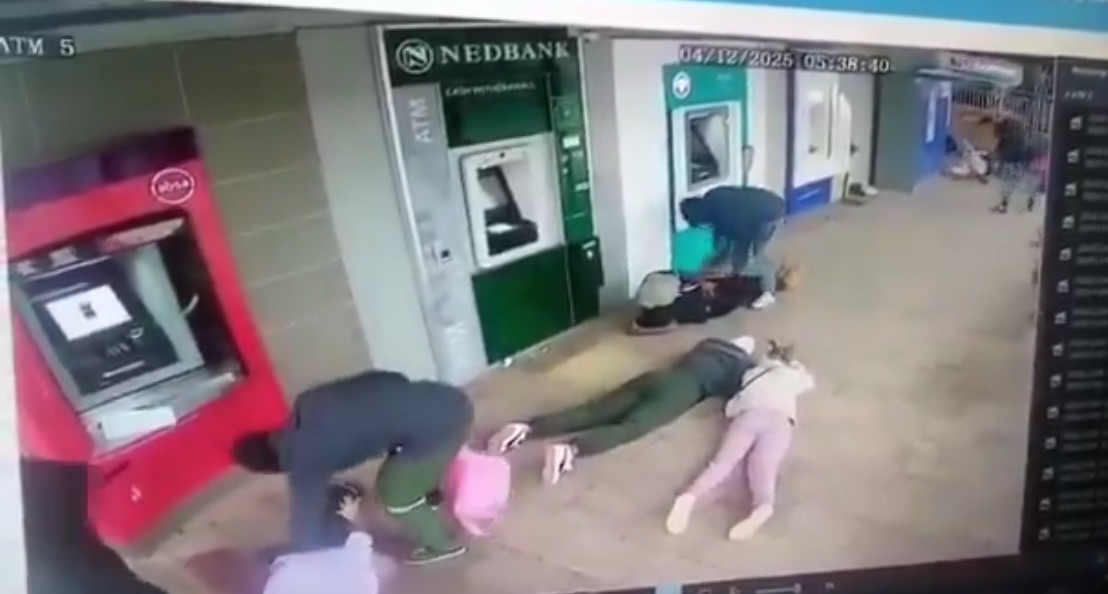
Banking has become a particularly dangerous activity. According to the South African Banking Risk Information Centre (Sabric), ATM-related attacks rose 13% in 2022, while ATM bombings — often carried out with military-grade explosives — surged 23%. Losses from banking crime topped R1 billion that year, and 97% of bombings occurred in Gauteng. Between 2010 and 2021, armed robberies linked to banks and cash-in-transit vehicles claimed 63 lives and left 180 people injured.
On the streets and in homes, the threat is constant. Stats SA’s latest Victims of Crime Survey shows that 263,000 house robberies were experienced by South African households in 2023/24, affecting roughly one in seventeen homes when broader burglary figures are included. Only 42% of victims bothered to report the crime, reflecting deep mistrust in the justice system. Business robberies in Gauteng alone reached 6,470 cases in the twelve months ending June 2024. Truck hijackings, often involving heavily armed syndicates, rose another 5.3% in the final quarter of 2023/24.
Firearms dramatically escalate the danger. A long-term study of nearly 69,000 robbery dockets found that when the robber carried a gun, the odds of someone being killed increased 3.6 times. Paradoxically, when the victim was armed, the risk of homicide still doubled — a grim reminder that resistance against multiple armed attackers is rarely successful.
The human cost extends far beyond physical injury. In 2023/24, almost 300,000 South Africans were assaulted in half a million reported incidents. Fifteen cash-in-transit guards lost their lives doing their jobs that same year. A small but harrowing study of robbery survivors in the Eastern Cape found that 98% suffered severe psychological trauma; every single participant reported persistent fear and anxiety months or years later. Mental health experts now link chronic exposure to violent crime with higher rates of depression across entire communities, regardless of income or education.
The financial toll is equally crushing. The Institute for Economics and Peace estimates that violence and the fear of violence cost South Africa R3.3 trillion in 2022 — equivalent to 15% of the country’s entire economy. Ordinary households bore much of that burden: 1.3 million South Africans had personal property stolen in 1.4 million incidents in a single year.
Fear has rewritten daily behaviour. In 2023/24, 39.9% of adults — up from 29.7% the previous year — installed burglar bars, alarms, armed response, or high walls. Many avoid using ATMs after dark, vary their routes home, or simply stop going out at night. Entire neighbourhoods have turned into fortified enclaves ringed by electric fences and private security patrols.
There are glimmers of improvement. The first quarter of the 2024/25 financial year recorded a 10.4% drop in aggravated robberies compared to the same period last year, with 31,749 cases — still roughly 350 violent robberies every day, but the first meaningful decline in years. Police attribute the reduction to intensified operations and better intelligence, though most citizens remain sceptical that the trend will last.
Until the numbers fall much further, armed robbery will continue to cast a long shadow over South Africa. It is no longer just a crime statistic — it is a national trauma that touches almost every family, erodes trust, empties bank accounts, and steals the simple freedom to live without fear.