JOHANNESBURG – South Africa’s minibus taxi industry, the backbone of daily commuting for millions, is once again at the center of escalating confrontations with law enforcement officials, fueled by a toxic mix of regulatory crackdowns, rampant violence, and turf disputes that have claimed numerous lives over decades.
The sector, comprising an estimated 250,000 vehicles organized into around 1,500 associations, handles approximately 70% of the country’s public transport trips, ferrying up to 15 million passengers daily across urban and peri-urban routes. It generates an annual revenue of R90 billion to R100 billion, yet contributes a mere R5 million in taxes, operating largely in an informal framework that has persisted despite repeated government attempts at formalization.
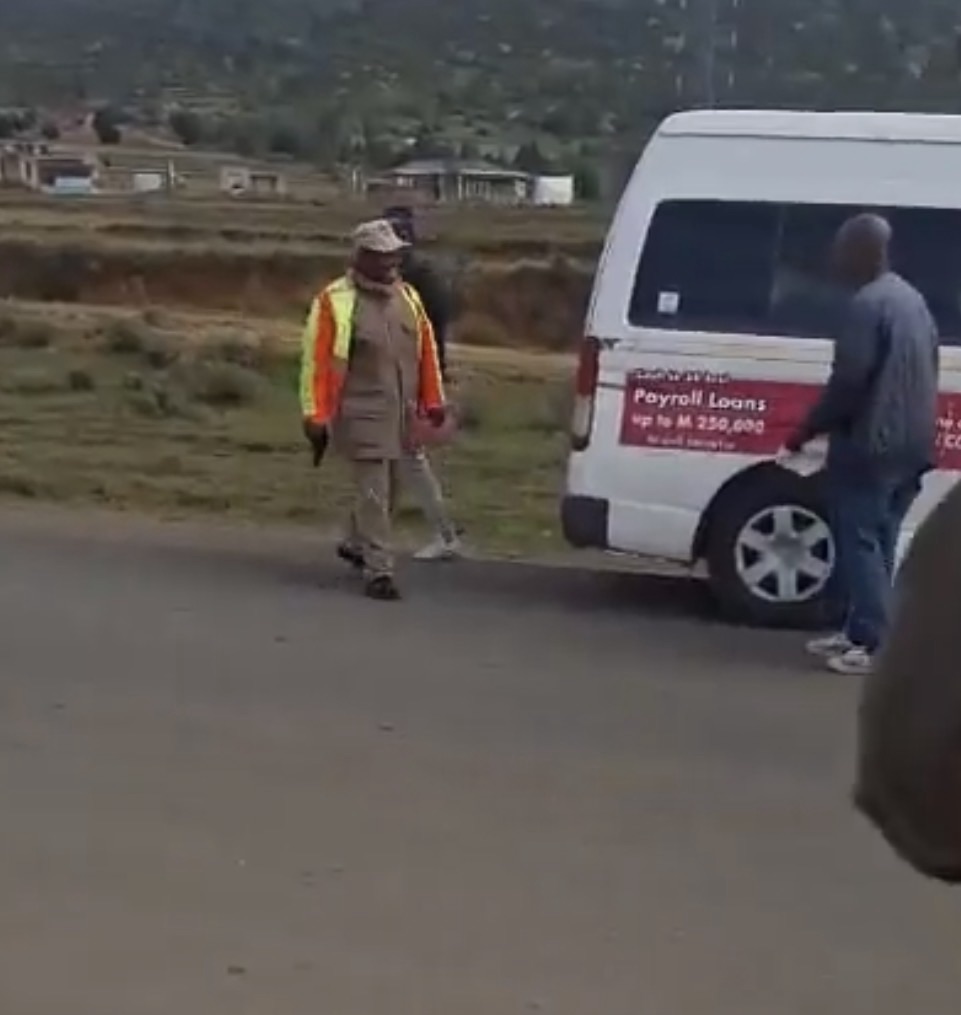
At the core of the friction is law enforcement’s push to enforce road safety and licensing rules, which often clashes with the realities of an industry plagued by unroadworthy vehicles, overloading, and reckless driving. In a week-long operation from February 1 to 7, 2026, Gauteng’s Transport Inspectorate, in partnership with the Road Traffic Management Corporation, discontinued over 100 minibuses for failing basic roadworthiness standards, including faulty brakes, worn tires, and non-functional lights. Officers also issued notices to 108 operators driving without valid licenses, 52 vehicles lacking license discs, and arrested 11 drivers for operating under the influence.
These enforcement actions, conducted along key corridors in Johannesburg, Ekurhuleni, and Tshwane, reflect a broader national effort to curb the dangers posed by the fleet. Minibus taxis have been repeatedly linked to fatal crashes, such as a January 2026 head-on collision near Johannesburg that killed at least 11 people, where the taxi driver was found to have an expired professional driving permit.
Yet, taxi operators frequently decry these interventions as heavy-handed, citing long working hours—often 12 to 15 hours daily with minimal incentives—and what they perceive as targeted harassment. Focus group studies of drivers have revealed complaints that traffic officers view minibuses as easy targets for bribes, with reports of “cold drink” payments ranging from R50 for local officers to R100 or more for provincial ones. Historical records show that in 1998, 13 police officers were charged with complicity in taxi-related violence, a pattern that some industry voices claim persists.
The situation is compounded by deadly internal rivalries within the taxi sector, known as “taxi wars,” which have raged since the industry’s deregulation in the late 1980s. Between 1991 and 1999 alone, these conflicts resulted in over 2,000 deaths and thousands of injuries, driven by battles over lucrative routes. More recently, violence has spilled into clashes with e-hailing services like Uber and Bolt, which have disrupted traditional monopolies.
In KwaZulu-Natal’s Phoenix area, a turf war has intensified, with e-hailing drivers reporting assaults, extortion, and so-called “kangaroo court” proceedings by local taxi associations. On a Saturday in mid-February 2026, a Bolt driver was attacked by three association members while dropping off a passenger at Phoenix Plaza; his vehicle was seized, and a R5,000 fee demanded for its release. E-hailing representatives have highlighted repeated failures by local police to intervene, despite operators holding valid permits.
This mirrors a national surge in attacks on e-hailing drivers. In August 2025, a Soweto driver was shot and his vehicle set alight, part of a wave that saw 12 such murders in execution-style killings that month. Just days ago, in Pretoria West, a driver was strangled during a hijacking after picking up passengers via an app; four suspects, including a woman, have been arrested.
Provinces like the Western Cape have seen similar escalations, with 2021 clashes between rival associations claiming 83 lives. In response, authorities have imposed extraordinary measures under the National Land Transport Act, including visible policing, vehicle impoundments, and court interdicts to halt illegal operations.
Government initiatives, such as the Taxi Recapitalisation Programme, aim to phase out older, unsafe vehicles, but progress has been slow, with thousands of illegally converted vans still on roads. The Department of Transport has also introduced new e-hailing regulations and called for joint task teams involving police, operators, and stakeholders to foster coexistence.
Commuters, who rely on taxis for 80% of public transport journeys, bear the brunt of the chaos—facing stranding during strikes, extortionate fares from unregulated “4+1” sedans, and heightened risks on the roads.
As enforcement ramps up, calls grow for systemic reforms, including better labor protections for drivers and decisive action against corruption to restore order to one of the nation’s most vital, yet volatile, industries.
WATCH: Cash-in-Transit Robbery Unfolds in Rustenburg Amid Reports of Gunfire
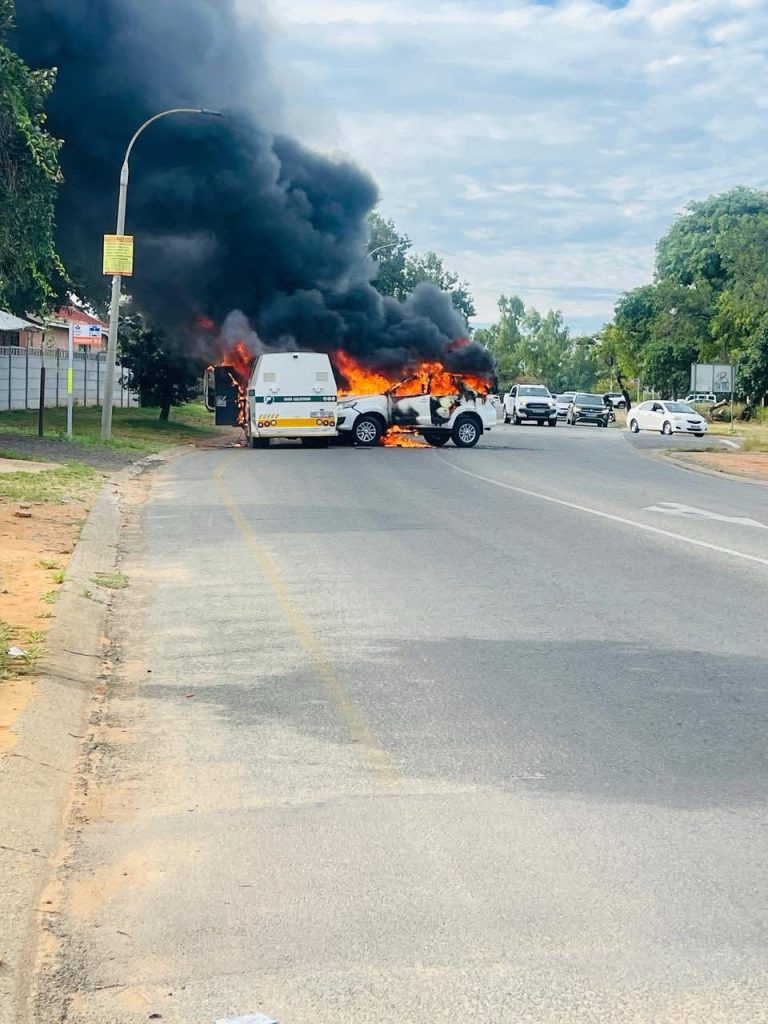
Rustenburg, North West – February 16, 2026 – A cash-in-transit (CIT) vehicle was targeted in a robbery on Kremetart Avenue near the cemetery in Rustenburg on Monday afternoon. Video footage circulating on social media shows armed suspects engaging in a shootout, with gunfire audible in the clip.
South African Police Service (SAPS) members arrived at the scene shortly after the incident was reported, where they secured the area and initiated investigations. No immediate details on casualties, the amount of cash involved, or arrests have been released by authorities. Motorists and local residents have been advised to steer clear of the vicinity and to report any suspicious activity to the police.
This event marks another in a series of CIT attacks that have plagued the North West province, a region that has recorded multiple such incidents in recent years. In November 2025, for instance, a failed heist in the Rustenburg central business district on Fatima Bhayat Street ended with one suspect fatally shooting himself after being wounded in the leg during a confrontation with security officers from a Fidelity cash van. Police launched a manhunt for accomplices following that attack.
Earlier, in July 2025, a CIT robbery in Waterfall East, Rustenburg, saw suspects flee the scene after targeting a vehicle, prompting public reports of looting at the crime site as bystanders tampered with the area. Law enforcement urged the community to avoid interfering to allow for proper investigations.
Nationwide, CIT robberies have shown a measurable decline in 2025, according to data from the Cash-in-Transit Association of South Africa (Citasa). A total of 180 incidents were documented from January to December 21, 2025, representing a 13% drop compared to the same period in 2024. Despite this reduction, the tactics employed by criminals have grown more violent, with increased use of explosives to breach armoured vehicles, vehicle ramming to force confrontations, and sustained gunfire that endangers not only security crews but also nearby civilians.
Provincial breakdowns highlight shifting hotspots. In 2025, Gauteng led with the highest number of CIT attacks, followed by KwaZulu-Natal, which accounted for a significant share—up to 34% in early-year figures. The Eastern Cape, Mpumalanga, and North West have also featured prominently, with North West seeing consistent activity amid broader efforts to combat aggravated robberies.
South African Police Service crime statistics for the first half of 2025 (April to September) further reflect progress in some categories, recording 24 CIT heists compared to 40 in the same period of 2024—a 40% decrease. This aligns with intensified operations like Project Shanela, which have involved multidisciplinary teams, including flying squads and provincial task forces, to disrupt organised crime networks behind these heists.
Industry experts note that while the overall frequency has dipped—attributed to better intelligence sharing between private security firms and SAPS—the financial toll remains substantial, with millions of rands lost annually and a push toward cashless systems accelerating in response. In the North West, collaborative arrests have followed several incidents, such as a November 2024 heist on the R104 road near Kroondal, where a suspect was detained in Tlhabane for possession of hijacked vehicles linked to the crime.
As investigations into Monday’s Rustenburg robbery continue, SAPS has reiterated calls for public vigilance. The incident serves as a stark reminder of the ongoing challenges in securing cash movements across South Africa’s roads, even as law enforcement reports gains in stemming the tide of these high-risk crimes.
Two Suspects Appear in Court After Viral Video of Alleged Assault on Street Children in Oudtshoorn
Oudtshoorn, Western Cape – A 75-year-old man and a 52-year-old woman have been arrested and charged following the circulation of a viral video showing the alleged assault of three street children in Oudtshoorn.
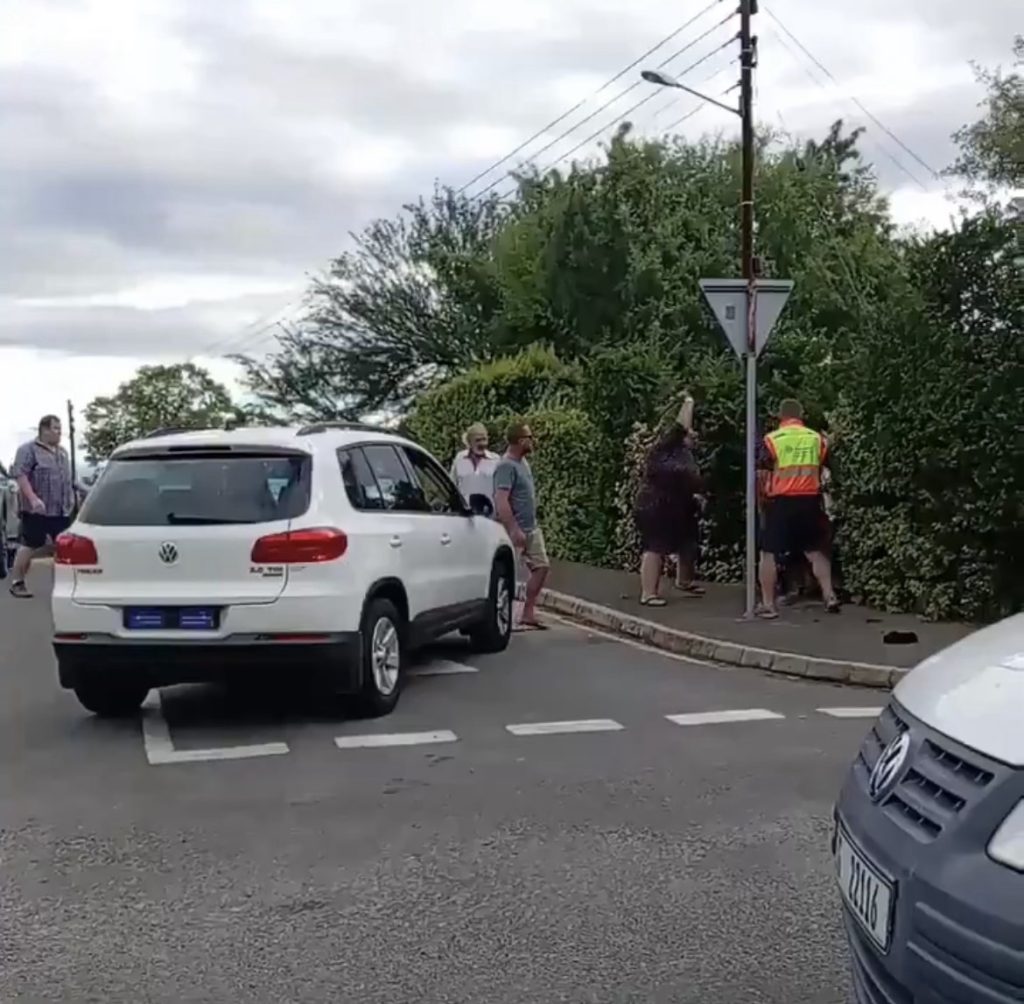
The incident occurred on Friday, 13 February 2026, at the intersection of Van der Riet Street and Kruid Street. Video footage, which spread rapidly on social media, depicts a woman striking the children with what appears to be a plastic pipe. The children, described as street children, are seen crying during the altercation. Additional allegations indicate that one of the children was shot at with a paintball gun.
Western Cape police spokesperson Sergeant Wesley Twigg confirmed that Oudtshoorn police opened a case of assault with intent to cause grievous bodily harm shortly after the video surfaced. The charges were later escalated to attempted murder due to the severity of the allegations, including the use of the paintball gun.
The suspects, identified as Johan Scholtz, 75, and Gerda Tait, 52, were arrested over the weekend. Scholtz was taken into custody on the day of the incident, while Tait was arrested on Sunday, 15 February. Both appeared in the Oudtshoorn Magistrate’s Court on Monday, 16 February 2026.
National Prosecuting Authority spokesperson Eric Ntabazalila stated that the pair faced three counts of assault with intent to cause grievous bodily harm. The charge sheet details that the children were allegedly hit with a plastic pipe, with one sustaining a paintball gunshot to the body. The case was postponed to 23 February for a bail application.
The video sparked widespread outrage across South Africa, with many expressing shock at the treatment of the children. Community members and social media users called for swift justice, while some local residents noted prior complaints about the behaviour of street children in the area.
The matter has also been escalated to the South African Human Rights Commission for further investigation, amid concerns over child protection and public violence.
Police have appealed to the public for any additional information that could assist the investigation. Authorities emphasised that the case remains active and that the legal process must be allowed to unfold without interference.
This incident has highlighted broader issues around the safety and welfare of vulnerable children in South African communities, particularly in smaller towns like Oudtshoorn.
The suspects remain in custody pending the next court appearance.
- A 14-year-old boy was killed on Sunday after the vehicle he was driving overturned on the M25 in KwaMashu, KwaZulu-Natal.
- Fatal Front Loader Accident Claims Multiple Lives in Ga-Nchabeleng, Sekhukhune District
- Gunshots Erupt Near Morningfield Spar in Cape Town’s Parkland Area
- Man Rescued After Falling Into Ditch on Jabu Ngcobo Drive Near Mountview
- Fight Breaks Out Among Revellers During Easter Celebrations in Alexandra Township
Police Seek 28-Year-Old in Connection with Philippi East Shebeen Massacre

Cape Town – Western Cape Serious and Violent Crime detectives are appealing for public assistance to locate 28-year-old Lonwabo Steven Dyasi, who is wanted in connection with the murders of nine people and the attempted murder of one more in a shooting at a shebeen in Philippi East.
A warrant for Dyasi’s arrest has been issued following the incident at an unlicensed drinking spot in the Marikana informal settlement.
The attack took place in the early hours of 17 January 2026 when three armed men entered the premises shortly after midnight and opened fire on people inside.
Six victims died at the scene. Three others later succumbed to their injuries in hospital, bringing the death toll to nine. At least one person was seriously wounded but survived.
While Dyasi remains at large, police have arrested a 19-year-old suspect in Worcester. He faces nine counts of murder and one count of attempted murder and has appeared in the Athlone Magistrate’s Court.
Anyone with information that could lead to Dyasi’s arrest is urged to contact Detective Constable Sibusiso Manqindi on 072 980 2764 or Crime Stop on 08600 10111.