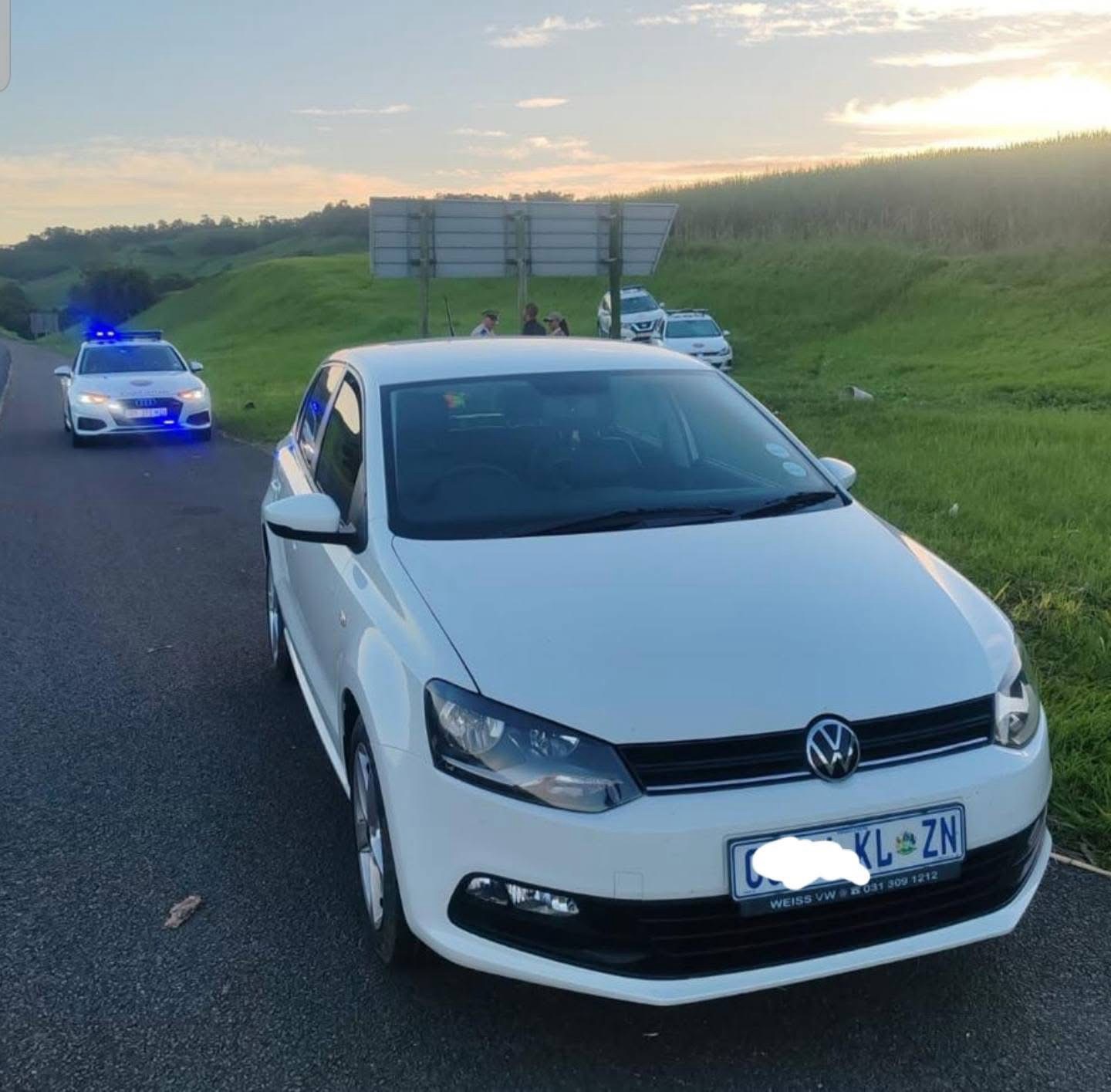
The driver was behind the wheel of a Polo vehicle when RTI personnel clocked the excessive speed. At the time of the stop, the motorist was in a jovial mood. He was observed whistling, singing and playing the song “I Believe I Can Fly” by R. Kelly.
The arrest was carried out by RTI Officer Kemp. During the interaction, Officer Kemp addressed the motorist in Zulu, using the phrase “Nenzani la ezweni”. The driver remained smiling throughout the exchange.
Following the stop, the motorist was taken into custody. He has been placed in the cells and will spend the night there as authorities process the case.
The incident occurred on the stretch of road in Park Rynie where the speed limit is clearly posted at 120 km/h. No further details on the motorist’s identity or additional charges have been released at this stage. RTI officers continue to enforce speed limits in the area as part of ongoing road safety operations.
National Traffic Police Officer Refuses R10,000 Bribe and Arrests Driver with Approximately R800,000 Worth of Dagga in Vaal Triangle
A National Traffic Police (NTP) officer has arrested a driver in the Vaal Triangle after discovering bags of dagga in the vehicle valued at approximately R800,000. The driver offered the officer R10,000 in cash as a bribe to avoid arrest. The officer refused the bribe and proceeded with the arrest.
The incident took place in the Vaal Triangle region, which includes areas such as Vereeniging, Vanderbijlpark, Sebokeng, Heidelberg, Sasolburg, Parys, and Kroonstad across Sedibeng and Fezile Dabi municipalities. The driver was stopped during routine operations, at which point the dagga was discovered. Upon being informed of the impending arrest for possession of the illegal substance, the suspect attempted to hand over the R10,000 to the officer.
The officer rejected the bribe outright. The suspect was taken into custody on the spot and now faces charges for drug possession as well as bribery. Authorities confirmed the suspect remains in custody.
The Road Traffic Management Corporation (RTMC), under which the National Traffic Police operates, publicly confirmed the arrest. Official statements emphasised that the National Traffic Police does not accept bribes and warned motorists that offering bribes to traffic officers is a criminal offence that will not be tolerated. The RTMC reiterated: “Not all traffic officials are corrupt…the suspect is now in custody. National Traffic Police does not take bribes. BE WARNED.”
The details of the case were released by the Department of Transport and the RTMC in late March 2026, with reports appearing from 25 and 26 March 2026. The RTMC highlighted the arrest as part of its ongoing stance against corruption in traffic enforcement, particularly in the lead-up to the busy Easter travel period.
No further personal details about the officer or the suspect have been released. The seized dagga and the attempted bribe money were documented as part of the evidence in the case. This incident forms part of broader RTMC communications reminding the public and officers alike of the zero-tolerance approach to bribery on South African roads.
Card Scammers Target South African ATMs and Wallets: How Innocent Lives Are Being Devastated by Skimming and Cloning Gangs
By PrimeTime News Staff
Johannesburg, South Africa – April 2026
In bustling shopping centres, quiet suburban malls, and even busy tourist spots across South Africa, a silent crime is stealing more than just cash – it’s shattering trust, wiping out savings, and leaving ordinary families drowning in debt. Card scammers, armed with sophisticated skimming devices and cloning technology, continue to prey on unsuspecting South Africans at ATMs, petrol stations, and point-of-sale terminals. While digital banking fraud has surged in recent years, physical card skimming and cloning remain a stubborn and devastating threat that hits everyday people where it hurts most: their hard-earned money.
Take the case of a 52-year-old mother from Durban, who in late 2025 withdrew her monthly salary at what appeared to be a perfectly normal ATM inside a busy shopping centre. She never noticed the slim overlay on the card reader or the tiny pinhole camera hidden above the keypad. Within hours, her account was drained of R28,000. “I only realised when my phone started buzzing with transaction alerts while I was still in the queue at Pick n Pay,” she told PrimeTime News anonymously. “That money was for school fees and groceries. Now I’m paying interest on a loan just to survive the month.”
How Card Scammers Operate: From Skimmers to Cloned Cards
Card scammers typically use two main tactics: skimming and card trapping. Skimming involves attaching fake card readers over legitimate ATM slots. These devices capture the magnetic stripe data from your debit or credit card in seconds. A hidden camera or keypad overlay records your PIN as you enter it. The stolen data is then used to create cloned cards for immediate cash withdrawals or online purchases.
In card-trapping scams, fraudsters install mechanisms that “swallow” your card inside the ATM. A helpful stranger – often part of the gang – appears and offers assistance, convincing you to enter your PIN again on a fake device or nearby machine. By the time you realise your card is gone, the scammers have already emptied your account. These tactics are especially common at less-secured ATMs in shopping centres, petrol stations, and tourist areas like Cape Town’s CBD.
Recent reports show these crimes remain active despite improved bank security. SABRIC (South African Banking Risk Information Centre) data highlights that while card-not-present (online) fraud accounts for the bulk of losses, physical ATM fraud continues to cause thousands of incidents annually, often leaving victims with little recourse if banks classify the transaction as “authorised.”
The Human Cost: Lives Upended by Card Fraud
The impact goes far beyond lost rands. Victims report severe emotional trauma, strained family relationships, and long-term financial ruin. One Gauteng retiree lost his entire pension payout to cloned-card withdrawals after using an ATM near a busy taxi rank. “I felt violated. I couldn’t sleep for weeks wondering who had my details,” he said. Many turn to high-interest loans or sell assets to cover the shortfall, while others face mounting credit card debt from cloned transactions they never made.
Psychological effects are profound. Studies and victim accounts describe heightened anxiety, loss of trust in banking systems, and even depression. In one documented case, a fraud victim spent months fighting her bank over unauthorised ATM withdrawals on a card that never left her possession – only to be told she was liable because the PIN was used.
Nationwide, commercial crime – which includes card and banking fraud – has nearly doubled over the past decade, with Gauteng bearing the brunt. Innocent pensioners, working-class families, and small business owners are disproportionately affected, as scammers exploit busy public spaces where vigilance is low.
How to Protect Yourself: Practical Steps to Beat the Scammers
Banks and authorities stress that prevention is far easier than recovery. Here are proven ways to avoid falling victim to card scammers:
- Inspect the ATM before use: Always check for signs of tampering. Does the card slot look loose, bulky, or a different colour? Compare it to nearby machines. If anything feels off – walk away. Use ATMs inside bank branches or well-lit, CCTV-monitored areas whenever possible.
- Shield your PIN: Cover the keypad with your free hand every single time you enter your PIN. This blocks hidden cameras and shoulder-surfers. Never let anyone stand too close or offer “help.”
- Never accept assistance from strangers: If your card gets “stuck” or the machine malfunctions, cancel the transaction immediately, retrieve your card if possible, and report it using the emergency number on the back of your card or displayed on the ATM. Do not let anyone “assist” you.
- Monitor your accounts daily: Enable SMS or app notifications for every transaction. Check your balance regularly via your banking app. Report any suspicious activity to your bank immediately – most offer 24/7 fraud lines.
- Opt for safer alternatives: Use contactless (tap-to-pay) where possible, as it generates one-time codes and avoids exposing your card’s magnetic stripe. Carry cash for smaller purchases. Avoid using cards at dodgy roadside petrol stations or unattended machines.
- Extra vigilance for tourists and high-risk areas: In places like Cape Town, Durban, or Johannesburg malls, be especially wary of anyone approaching you with “official” stories about permits or parking.
- Report and act fast: If you suspect you’ve been skimmed, call your bank’s stop-card number immediately (displayed on every ATM and card). Freeze your card and monitor for cloned activity. Report to SAPS and SABRIC for investigation.
South African banks have rolled out chip-and-PIN technology and AI monitoring, but scammers adapt quickly. SABRIC and police continue operations targeting these syndicates, but public awareness remains the strongest defence.
Stay Alert, Stay Safe
Card scammers thrive on distraction and complacency. In a country where millions rely on ATMs and cards for daily survival, one careless moment can cost a family everything. As one victim put it: “It’s not just money – it’s peace of mind they steal.”
PrimeTime News urges all South Africans to remain vigilant. Share this information with friends and family. If you spot suspicious activity at an ATM, report it to the bank or police immediately. Your quick action could stop a scammer in their tracks and protect the next innocent life.
- Road Traffic Inspectorate officers in Park Rynie have arrested a motorist for travelling at 190 km/h in a 120 km/h zone.
- Card Scammers Target South African ATMs and Wallets: How Innocent Lives Are Being Devastated by Skimming and Cloning Gangs
- Diesel Prices Surge in South Africa Following Official April 2026 Adjustment
- Police Officer Shot and Wounded in Armed Robbery at Boxer Store in Naledi, Soweto
- Man Shot Dead in Suspected Smash-and-Grab Incident on Jakes Gerwel Drive in Bonteheuwel
Police Officer Shot and Wounded in Armed Robbery at Boxer Store in Naledi, Soweto
Soweto – An armed robbery occurred at the Boxer store in Naledi, Soweto.
During the incident, a police officer was shot and sustained wounds. The officer was injured while responding to the robbery at the store.
Authorities have arrived at the scene and are currently present, managing operations in the area.
In light of the ongoing situation, residents of Naledi and surrounding parts of Soweto, along with motorists travelling through the vicinity, have been urged to stay clear of the location. The public has also been advised to remain vigilant as law enforcement continues its work at the Boxer store in Naledi.
No further details about the number of individuals involved in the robbery or the current condition of the injured officer have been released at this stage. The focus remains on securing the area and ensuring the safety of the community while the authorities handle the matter.
Local traffic and movement around the Naledi section of Soweto may be affected as a direct result of the police presence at the scene. Members of the public are asked to follow the guidance provided and avoid approaching the Boxer store or nearby streets until the situation is resolved.
This remains a developing incident in Naledi, Soweto, with law enforcement on site following the armed robbery that left one police officer wounded.
Man Shot Dead in Suspected Smash-and-Grab Incident on Jakes Gerwel Drive in Bonteheuwel
A 26-year-old man was shot and killed on Wednesday following an alleged smash-and-grab attack on a motorist along Jakes Gerwel Drive in Bonteheuwel, Cape Town.
According to police, officers responded to a complaint of a shooting at the corner of Jakes Gerwel Drive and Jakkalsvlei Avenue. On arrival, they found the man with gunshot wounds to his body. Medical personnel declared him dead at the scene. Police have opened a murder investigation and are still establishing the full circumstances of the incident. No arrests have been made.
Bonteheuwel ward councillor Angus McKenzie confirmed that a vehicle was attacked during the incident, after which the suspected smash-and-grab perpetrator was shot. Eyewitness accounts describe the man running into an open field near the road when the motorist opened fire.
Local observations reported that the man’s body remained in the open field after the shooting. Community members at the scene were heard responding with the phrase “Is reg so”. Children in the area continued playing around the body. Law enforcement personnel present indicated that such incidents occur daily on this stretch of Jakes Gerwel Drive.
Jakes Gerwel Drive, particularly the section between Bonteheuwel and Langa, has been repeatedly identified as a high-risk area for smash-and-grab robberies targeting motorists, often at traffic lights or slow-moving traffic. Ongoing concerns have been raised about violence linked to these crimes, including risks to residents from stray bullets and repeated attacks in the corridor.