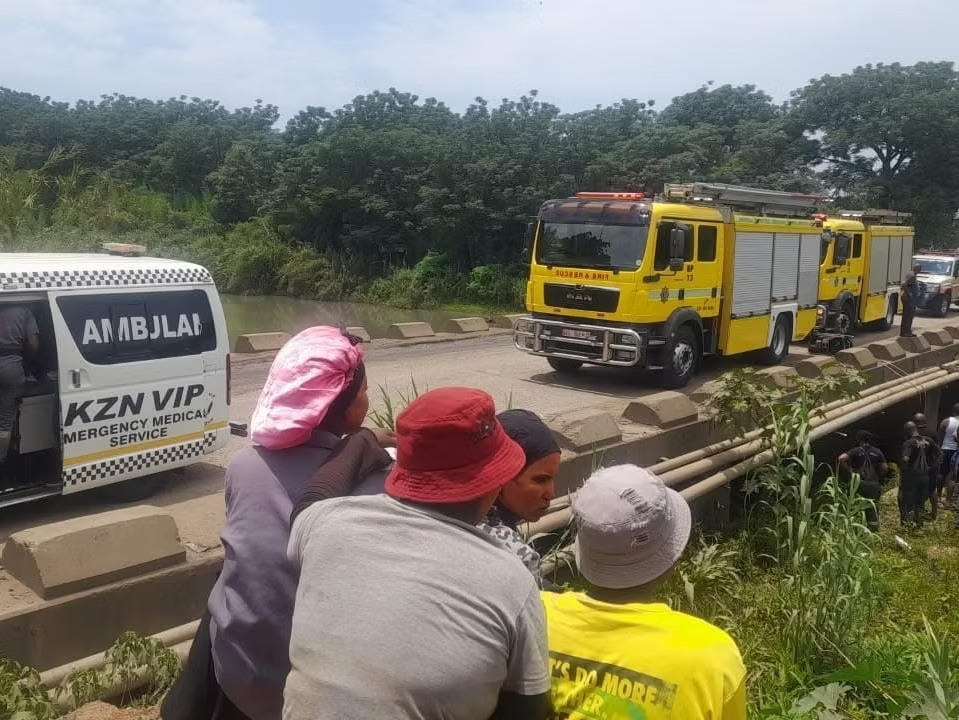

February 17, 2026, Johannesburg – Every school day, thousands of South African students board minibuses and taxis for their commute, but for many, this routine journey is fraught with danger. Reckless behavior by scholar transport drivers, including drinking and driving, has led to numerous accidents, claiming hundreds of young lives and highlighting systemic failures in the industry.
Recent tragedies underscore the severity of the problem. In January 2026, a minibus carrying schoolchildren collided with a truck near Vanderbijlpark in Gauteng, resulting in the deaths of 14 learners. The 22-year-old driver faced charges of murder, reckless and negligent driving, operating without a professional driving permit, and using an unlicensed vehicle. This incident is part of a broader pattern: between 2018 and 2022, over 800 schoolchildren perished in scholar transport-related crashes across the country. Another crash in Carletonville claimed 11 pupils and their driver, with reports indicating the driver may have been intoxicated.
Studies reveal that reckless driving is a primary cause of these accidents, often compounded by overloading, mechanical failures, and the use of unsuitable vehicles like bakkies. In eThekwini Municipality, statistics show that 38% of injured children under 16 were passengers in minibuses or light delivery vehicles, pointing to unsafe transport practices. Wide roads, excessive speeds, and poor driver compliance make crossing streets hazardous for students, exacerbating the risks during pick-up and drop-off.
Drinking and driving amplifies these dangers significantly. South African research estimates that alcohol is involved in 33% to 69% of fatal driver incidents. In one operation in Cape Town, a driver was arrested for transporting learners while under the influence of alcohol. Nationally, intoxication contributes to higher fatality rates, particularly in light vehicles and buses, where passengers and pedestrians face elevated risks. The Road Traffic Management Corporation notes that driver errors like speeding, unsafe overtaking, and alcohol use are major factors in crashes, with young drivers 20 times more likely to cause accidents due to such behaviors.
The scholar transport sector suffers from operational inconsistencies and unethical practices, including unroadworthy vehicles and lack of oversight. Authorities have urged drivers to ensure vehicles are licensed and mechanically sound, avoid overloading, and refrain from drinking. Recent crackdowns in areas like Johannesburg and Tshwane have impounded hundreds of non-compliant vehicles, leading to arrests for offenses including drunk driving.
These incidents not only result in loss of life but also inflict lasting trauma on families and communities. With road fatalities rising—2,557 lives lost in 2023 alone—experts call for stricter enforcement, better vehicle inspections, and driver training to protect vulnerable students.
Until comprehensive reforms are implemented, the daily school run remains a perilous gamble for South Africa’s youth.
School Bus Accident in North West Province Injures 37 Learners
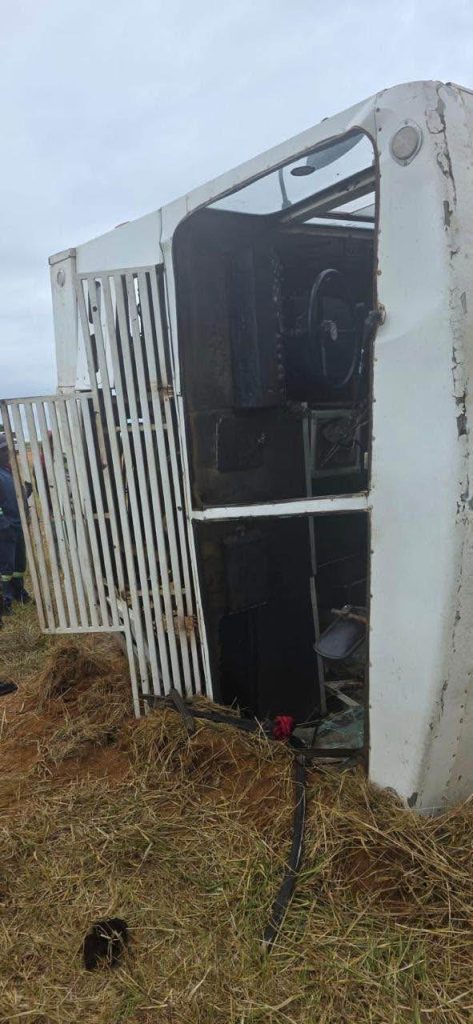
Tswaing Municipality, North West Province – A school bus carrying 71 learners from Gamaloka Village overturned on a gravel road between Sleepsteen and Gerdau Farms on the morning of February 17, 2026.
The incident occurred when the bus struck a hump, causing the steering wheel to disengage. The vehicle then veered off the road and flipped over.
Thirty-seven learners sustained injuries, with one in a condition of serious concern. These individuals received treatment at General De La Rey Hospital in Lichtenburg. The remaining 34 learners underwent medical assessments and observation at Coligny Clinic.
The North West Department of Community Safety and Transport Management launched a full investigation into the accident. Alternative transportation for the learners was arranged through an operator under a service level agreement, with additional operators available if required.
MEC Wessels Morweng of the North West Department of Community Safety and Transport Management expressed wishes for a speedy recovery to the affected learners.
Cash-in-Transit Robbery Unfolds in Rustenburg Amid Reports of Gunfire
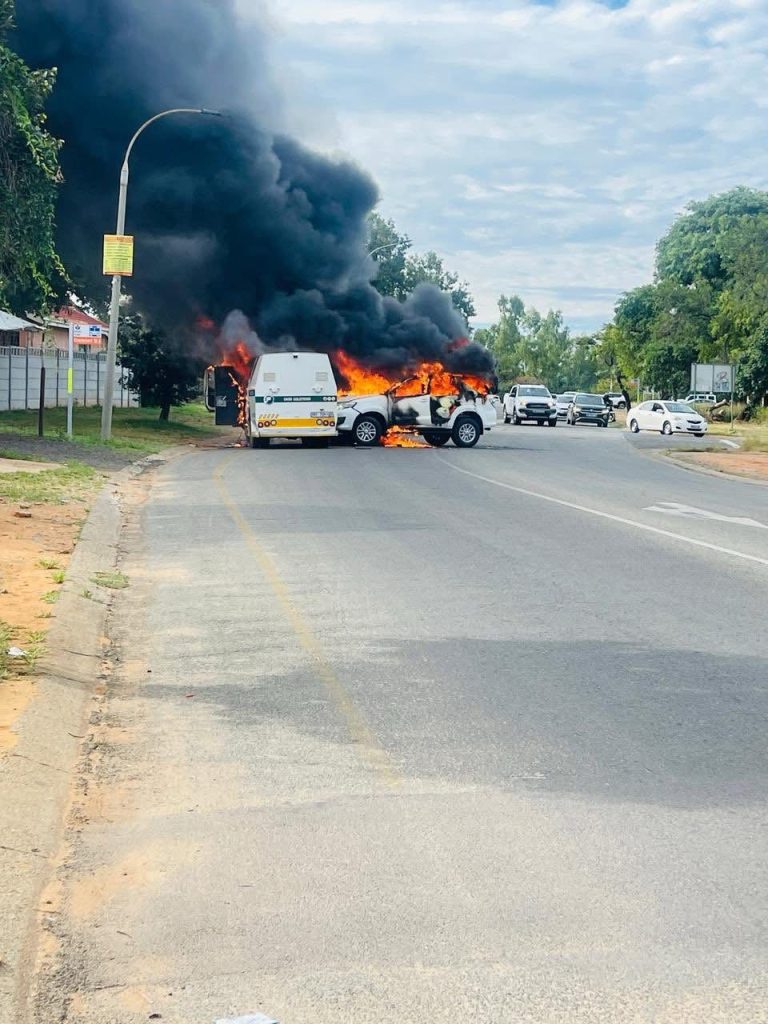
Rustenburg, North West – February 16, 2026 – A cash-in-transit (CIT) vehicle was targeted in a robbery on Kremetart Avenue near the cemetery in Rustenburg on Monday afternoon. Video footage circulating on social media shows armed suspects engaging in a shootout, with gunfire audible in the clip.
South African Police Service (SAPS) members arrived at the scene shortly after the incident was reported, where they secured the area and initiated investigations. No immediate details on casualties, the amount of cash involved, or arrests have been released by authorities. Motorists and local residents have been advised to steer clear of the vicinity and to report any suspicious activity to the police.
This event marks another in a series of CIT attacks that have plagued the North West province, a region that has recorded multiple such incidents in recent years. In November 2025, for instance, a failed heist in the Rustenburg central business district on Fatima Bhayat Street ended with one suspect fatally shooting himself after being wounded in the leg during a confrontation with security officers from a Fidelity cash van. Police launched a manhunt for accomplices following that attack.
Earlier, in July 2025, a CIT robbery in Waterfall East, Rustenburg, saw suspects flee the scene after targeting a vehicle, prompting public reports of looting at the crime site as bystanders tampered with the area. Law enforcement urged the community to avoid interfering to allow for proper investigations.
Nationwide, CIT robberies have shown a measurable decline in 2025, according to data from the Cash-in-Transit Association of South Africa (Citasa). A total of 180 incidents were documented from January to December 21, 2025, representing a 13% drop compared to the same period in 2024. Despite this reduction, the tactics employed by criminals have grown more violent, with increased use of explosives to breach armoured vehicles, vehicle ramming to force confrontations, and sustained gunfire that endangers not only security crews but also nearby civilians.
Provincial breakdowns highlight shifting hotspots. In 2025, Gauteng led with the highest number of CIT attacks, followed by KwaZulu-Natal, which accounted for a significant share—up to 34% in early-year figures. The Eastern Cape, Mpumalanga, and North West have also featured prominently, with North West seeing consistent activity amid broader efforts to combat aggravated robberies.
South African Police Service crime statistics for the first half of 2025 (April to September) further reflect progress in some categories, recording 24 CIT heists compared to 40 in the same period of 2024—a 40% decrease. This aligns with intensified operations like Project Shanela, which have involved multidisciplinary teams, including flying squads and provincial task forces, to disrupt organised crime networks behind these heists.
Industry experts note that while the overall frequency has dipped—attributed to better intelligence sharing between private security firms and SAPS—the financial toll remains substantial, with millions of rands lost annually and a push toward cashless systems accelerating in response. In the North West, collaborative arrests have followed several incidents, such as a November 2024 heist on the R104 road near Kroondal, where a suspect was detained in Tlhabane for possession of hijacked vehicles linked to the crime.
As investigations into Monday’s Rustenburg robbery continue, SAPS has reiterated calls for public vigilance. The incident serves as a stark reminder of the ongoing challenges in securing cash movements across South Africa’s roads, even as law enforcement reports gains in stemming the tide of these high-risk crimes.
- Gunshots Erupt Near Morningfield Spar in Cape Town’s Parkland Area
- Man Rescued After Falling Into Ditch on Jabu Ngcobo Drive Near Mountview
- Fight Breaks Out Among Revellers During Easter Celebrations in Alexandra Township
- Traffic Officer Shot During Roadside Stop on N7 Near Bulshoek Dam
- Traffic Officer Shot in Leg During Cash-in-Transit Robbery Near Bloemfontein
Fourth Suspect Surrenders in Brutal Murder of Bolt Driver Isaac Satlat
Pretoria – The fourth and final suspect in the shocking murder of 22-year-old Nigerian e-hailing driver Isaac Satlat has handed himself over to police in Atteridgeville, authorities confirmed on Monday afternoon.
The suspect is scheduled to appear in the Pretoria Magistrate’s Court on Tuesday, where he will face charges of murder and car hijacking. He will join three co-accused already in custody: Dikeledi Tears Mphela (24), Goitsione Machidi (25), and McLaren Mushwana (30).
Earlier on Monday, the trio made their first court appearance, where they opted not to apply for bail. The case was postponed to February 23 to allow for further investigations.
Satlat, an engineering student, was strangled to death on February 11 after accepting a trip request through the Bolt app while operating in Pretoria West. The attack unfolded inside his vehicle, with dashcam footage capturing a woman and two men assaulting him – images that quickly went viral and triggered widespread outrage across South Africa.
His body and the hijacked car were later located abandoned in Atteridgeville.
Satlat’s family has launched a fundraising campaign to repatriate his remains to Nigeria. His father was reportedly hospitalised after viewing the body, amid the profound grief felt by relatives back home.
The incident has highlighted ongoing concerns around safety for e-hailing drivers, with supporters and fellow operators gathering outside the court demanding swift justice.
Investigations continue, with police emphasising that all four suspects are now accounted for in connection with the premeditated attack.