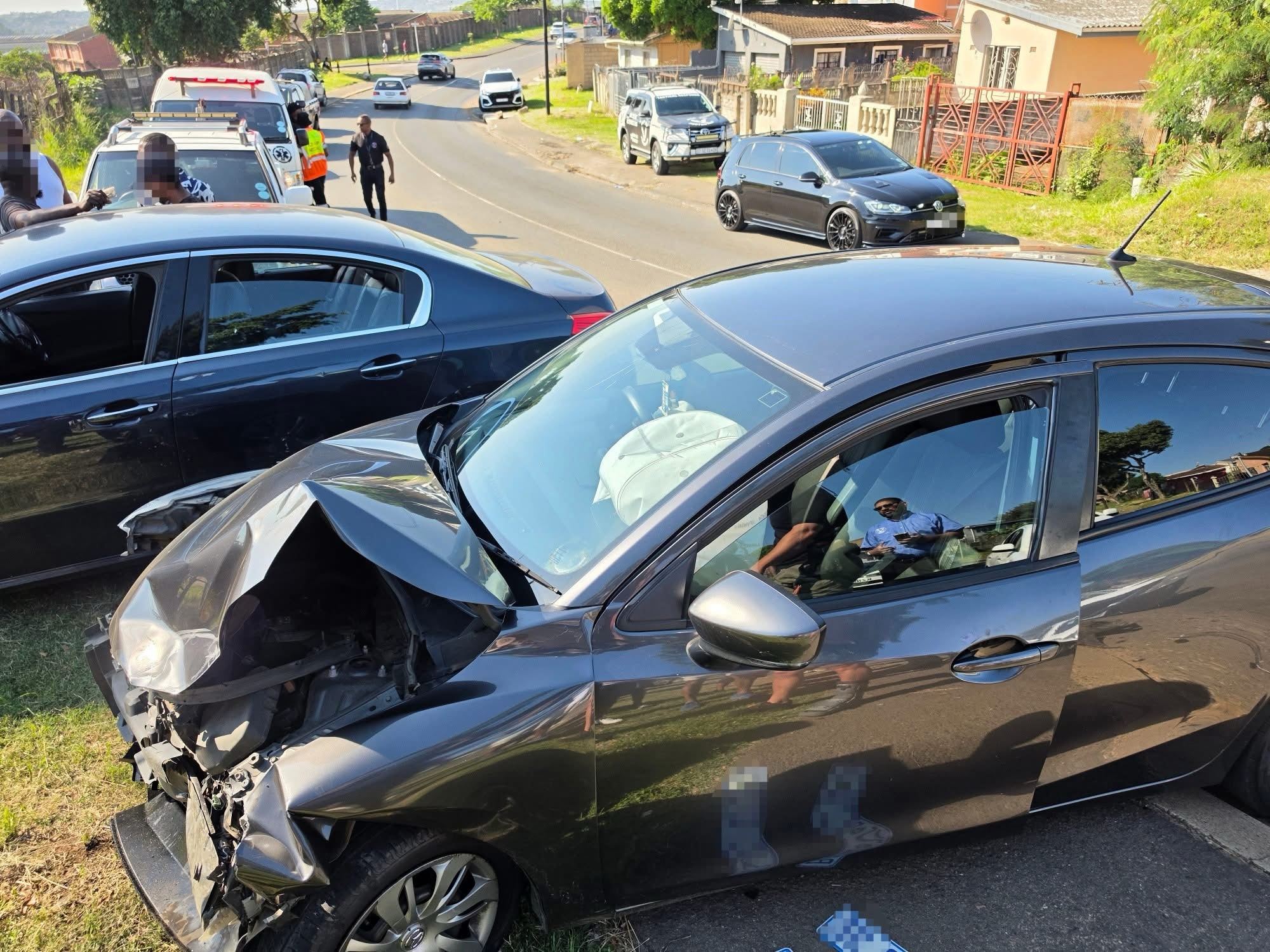
Phoenix, KwaZulu-Natal – A group of five armed suspects travelling in a grey Mazda 2 carried out three failed hijacking attempts in the Redfern and Whetstone areas on Thursday morning before losing control of their vehicle and crashing head-on into another car on Fernham Drive.
According to initial reports, the suspects targeted three separate victims at different locations within the Redfern and Whetstone area. All three hijacking attempts were unsuccessful. While attempting to flee the scenes, the driver of the grey Mazda 2 lost control of the vehicle, resulting in a head-on collision with another vehicle on Fernham Drive.
The driver and passenger of the vehicle struck in the crash sustained minor injuries. No serious injuries were reported among any of the victims involved in the incidents.
After the collision, the five suspects abandoned the grey Mazda 2 and fled on foot in the direction of Industrial Park Drive. During their escape, they allegedly attempted a fourth hijacking, which also failed.
KZN VIP Emergency Services, together with SAPS and Metro Police, responded to the crash scene. All victims were assessed on site and confirmed to be in stable condition.
The suspects remain at large and have not been arrested. Investigations into the incidents are ongoing.
Three Suspects Fatally Wounded in Shootout with Police in De Deur
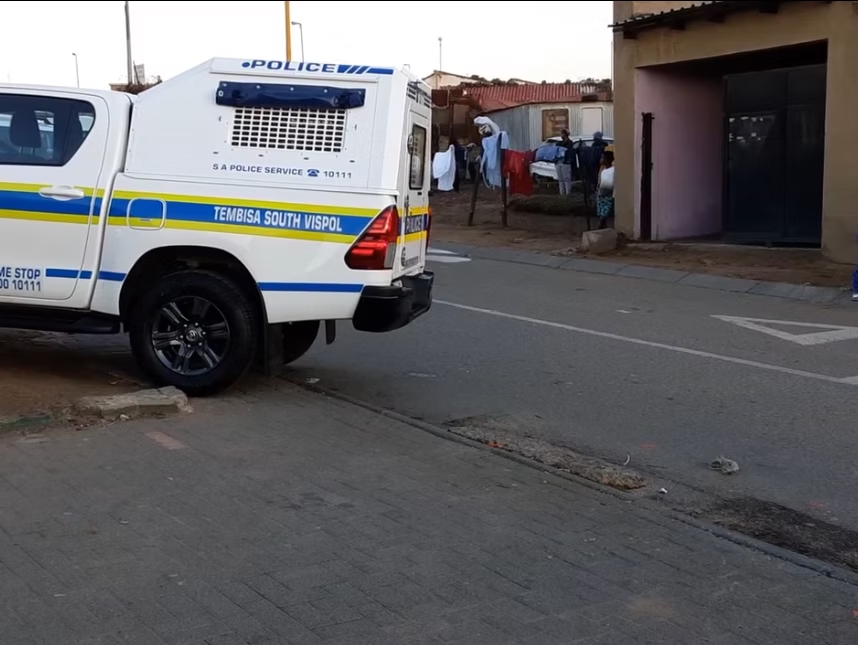
DE DEUR, GAUTENG – Three wanted suspects were fatally wounded during a shootout with police in De Deur on Wednesday morning, 8 April 2026.
Members attached to the Serious Organised Crime Investigation units from Vaal and Germiston, working in conjunction with other specialised police units, acted on intelligence regarding the whereabouts of the suspects. The operation took place at a specific address in De Deur, in the Vaal area south of Johannesburg.
According to police spokesperson Lieutenant Colonel Granville Meyer, upon the officers’ arrival at the address, the suspects opened fire on the police members. The officers returned fire, resulting in all three suspects being fatally wounded.
The suspects were linked to the murder of a police officer and attempted murder cases in the Johannesburg Central policing precinct. Some reports indicate the cases involved multiple attempted murders across Gauteng.
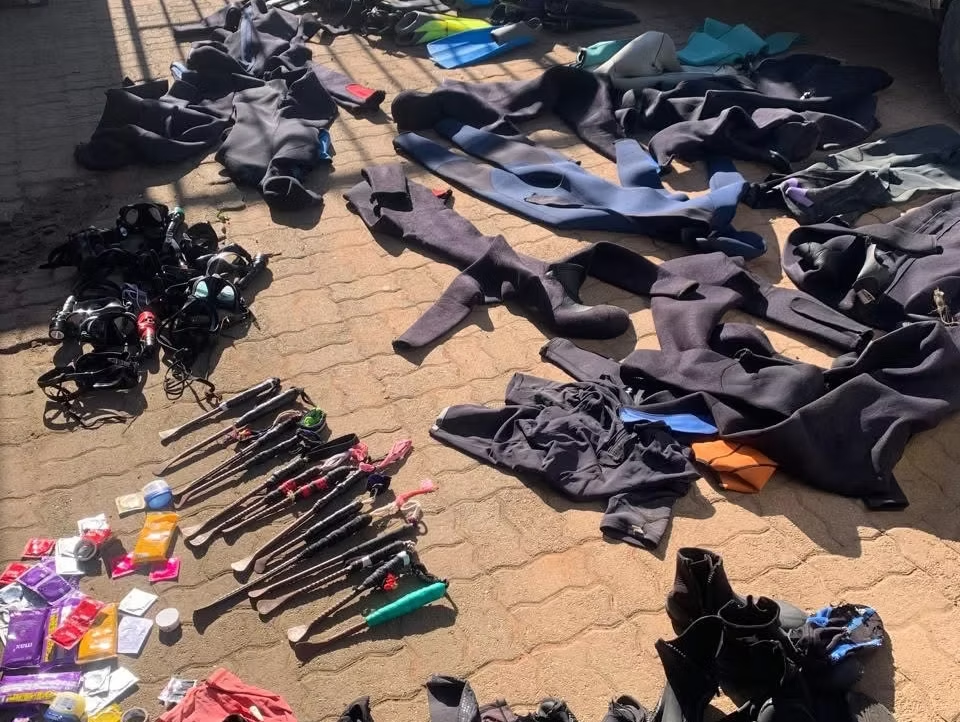
At the scene, police recovered one revolver with ammunition and two pistols with ammunition. Two of the firearms had their serial numbers filed off.
Investigations into the incident are continuing. No further details regarding the identities of the suspects or additional information about the linked cases have been released at this stage.
Johannesburg Man, 30, Drowns in Gonubie River Despite Rescue by Local Teenagers and Lifeguards
A 30-year-old man from Johannesburg drowned in the Gonubie River on Sunday after getting into difficulty while swimming nearly one kilometre upstream from Gonubie Beach.
The man was in the area visiting the Gonubie River together with two work colleagues from Johannesburg. Two of the men were in the water when the 30-year-old got into difficulty and disappeared beneath the surface.
Three Gonubie residents—an adult man and two teenage brothers—witnessed the incident. One of the teenagers entered the river to assist the man in difficulty. With help from his brother, the teenagers located the man and brought him to the shore.
The adult local resident ran to Gonubie Beach to raise the alarm. Buffalo City Metropolitan Municipality lifeguards stationed at the beach were immediately alerted and responded. The lifeguards called for backup from the NSRI East London station, Priority Care ambulance services, and the South African Police Service.
On arrival, the BCMM lifeguards found that the local teenager had already brought the man out of the water. The lifeguards began CPR on the adult male. Paramedics from Priority Care soon joined the resuscitation efforts.
Despite prolonged resuscitation attempts by the lifeguards and paramedics, the man could not be revived. Paramedics declared him deceased at the scene.
The South African Police Service has opened an inquest docket. The deceased’s body has been taken into the care of the South African Police Service and Government Health Forensic Pathology Services.
- Phoenix Hijacking Spree Ends in Head-On Crash on Fernham Drive
- Durban Driver Who Went Viral for Dangerous Stunts While Driving Hands Himself Over to Authorities in Pinetown
- Private Security and Police in South Africa: Documented Cases of Excessive Force and Regulatory Efforts for Accountability
- 15 Armed Suspects Hijack Multiple Vehicles at Petrol Station Near Nandoni Dam
- Checkers Sixty60 Drivers Fuel South Africa’s Fastest Grocery Delivery Service – But Motorists Report Widespread Reckless Road Behaviour
Private Security and Police in South Africa: Documented Cases of Excessive Force and Regulatory Efforts for Accountability
South Africa’s high crime rates have led to a significant expansion of both the South African Police Service (SAPS) and the private security industry. Official figures show more than 2.7 million private security officers registered with the Private Security Industry Regulatory Authority (PSIRA), with over 580,000 actively employed — exceeding the combined strength of the police and army. By comparison, SAPS has fewer than 150,000 officers serving a population of approximately 62 million people.
The Independent Police Investigative Directorate (IPID), the body tasked with probing police misconduct, has recorded substantial numbers of incidents involving deaths and injuries linked to police actions. In the 2024/25 financial year, IPID reported 670 deaths as a result of police action — the highest figure since records began in 1997 and a 72% increase over five years. Provincial spikes were notable in KwaZulu-Natal (256 deaths) and the Eastern Cape. Earlier IPID data also documented complaints of assault, torture, and deaths in custody, with 5,136 police-related cases recorded nationally in 2023/24, including 460 deaths from police action and 212 deaths in custody. As of mid-2025, nearly 15,000 IPID cases remained unfinalised, encompassing 1,486 deaths from police action, 9,306 assault complaints, 1,020 torture allegations, and other categories such as firearm discharges and corruption.
Historical IPID statistics further indicate patterns of excessive force. Between April 2012 and March 2019, 69.9% of 5,829 complaints against SAPS involved assault and torture. During the COVID-19 lockdown period, IPID noted a surge in public complaints about assaults and firearm discharges by SAPS and municipal police. Low finalisation and accountability rates have been documented, with fewer than 1% of cases between April 2012 and March 2020 resulting in dismissals.
The private security sector, while filling gaps left by strained public policing, has also faced scrutiny. PSIRA has publicly condemned incidents involving some security service providers (SSPs), including shootings resulting in fatalities and injuries, as well as allegations of extortion and other criminal activities. In January 2025, PSIRA stated that it had noted serious misconduct, such as a shooting in Nyanga, Western Cape, linked to individuals associated with private security companies, and arrests of executives from a major firm in KwaZulu-Natal in connection with a fatal shooting. The authority explicitly warned that “the use of excessive force or involvement in criminal activities will not be tolerated” and urged companies to prioritise responsible practices.
Private security officers are civilians bound by the same legal standards as the public but often perform functions such as patrols, citizen arrests, and suspect handovers to police. Older oversight reports noted gaps in tracking of firearms held by private companies and limited centralised data on discharges or injuries involving their personnel. PSIRA, established under the Private Security Industry Regulation Act, serves as the regulatory body to license companies and officers, enforce standards, and handle complaints about service quality or conduct.
Efforts to address accountability and promote fairer practices centre on existing regulatory and investigative frameworks. PSIRA maintains a complaints management process for matters relating to the quality of private security services and has publicly reinforced that excessive force is unacceptable. For SAPS, IPID conducts independent investigations into deaths, assaults, torture, and other misconduct, with oversight also provided through multi-party parliamentary mechanisms and a civilian secretariat for policy support. Official policy documents, including the National Policing Policy, outline the SAPS mandate and emphasise constitutional requirements for democratic policing. Reports on police reform have highlighted priorities such as improved training, target-setting that avoids undue pressure for results, and stronger internal accountability to reduce organisational factors linked to excessive force.
Data on firearm regulation and use-of-force incidents continue to be monitored by PSIRA and SAPS, with calls in oversight analyses for better record-keeping on private security weapons and systematic tracking of injuries or deaths. Low prosecution and conviction rates in police-related cases have been documented in IPID reports and parliamentary briefings, prompting emphasis on completing investigations more efficiently and enforcing outcomes. Private security companies are required to operate within the bounds of civilian law, with PSIRA registration serving as the primary mechanism to ensure compliance and professional standards.
These documented statistics and regulatory structures reflect the ongoing challenges and formal mechanisms in place within South Africa’s security landscape. Continued operation of bodies such as IPID and PSIRA, alongside adherence to licensing, training, and complaints processes, forms the factual basis for addressing reported incidents of excessive force across both public and private sectors.