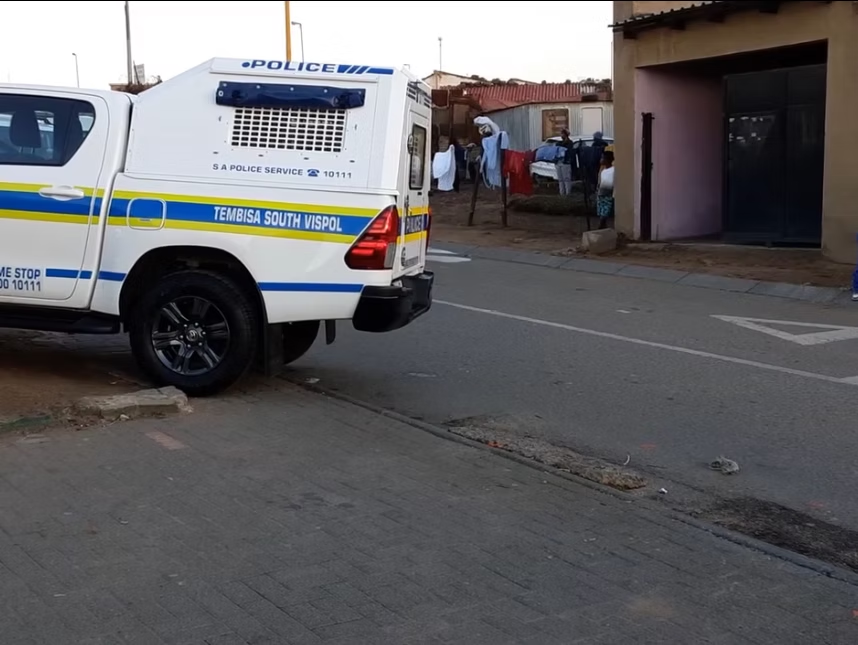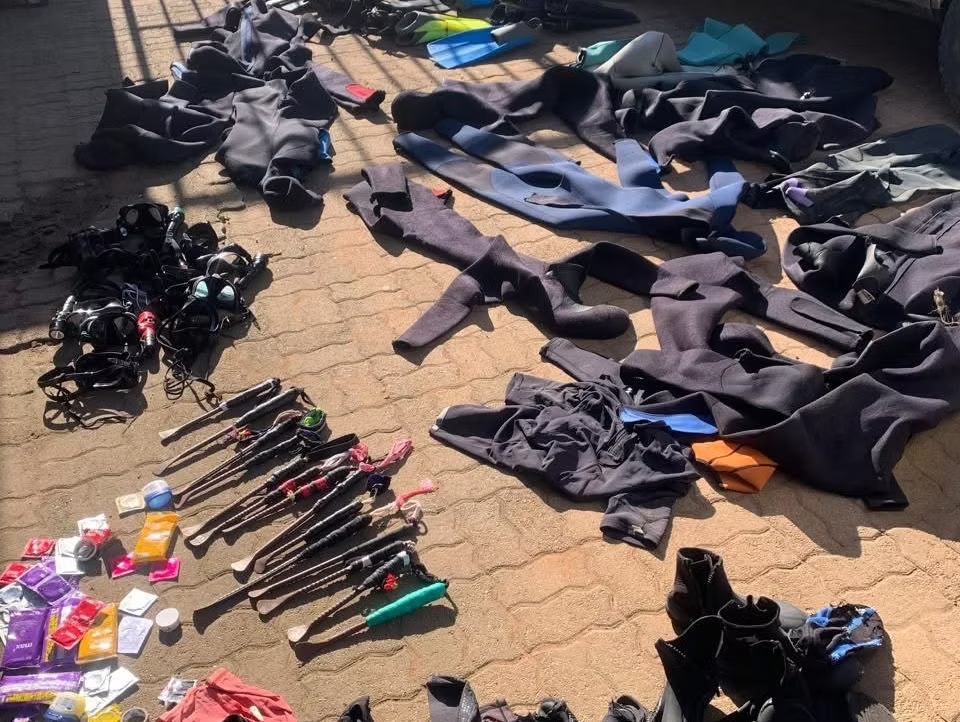
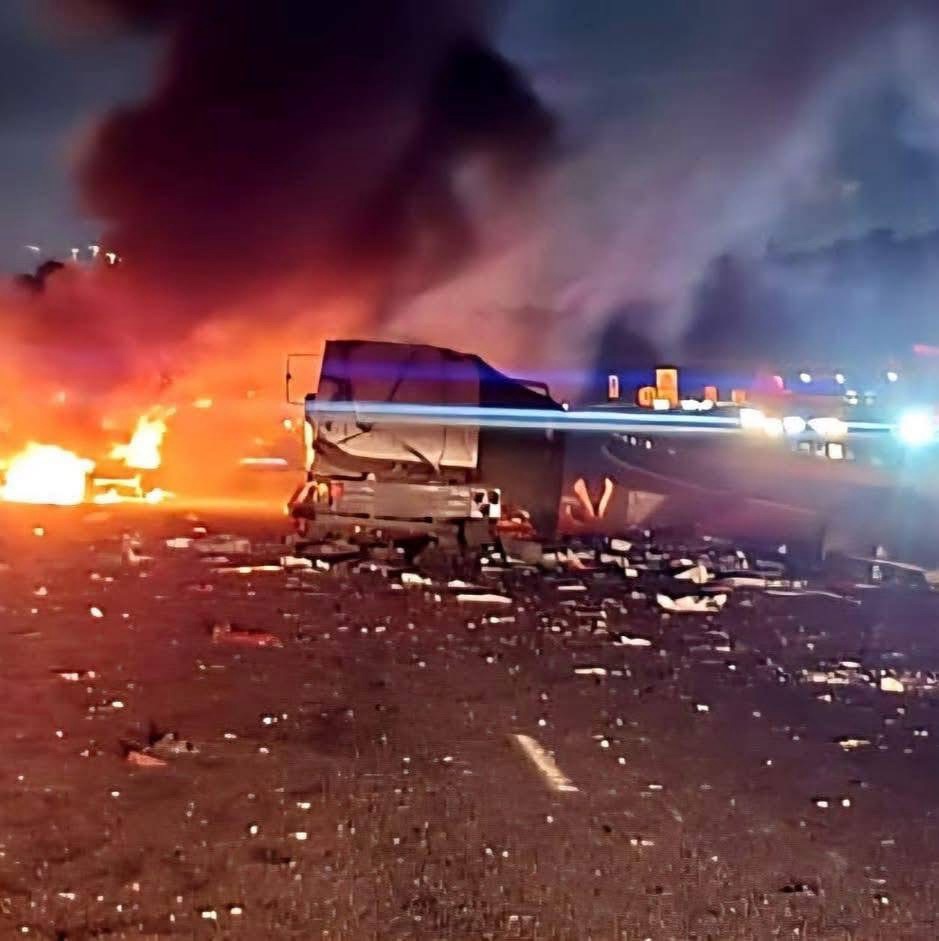
Durban – The northbound carriageway of the N2 highway remains closed between Edwin Swales Drive (M7 interchange) and Spaghetti Junction due to an active crime scene following a cash-in-transit (CIT) robbery on Monday evening, 2 February 2026.
The incident occurred around 7:00 PM near Chesterville, just outside Durban CBD, on the N2 heading towards Umhlanga, shortly after Spaghetti Junction. According to reports from emergency services, the CIT vehicle was bombed twice during the robbery attempt, resulting in an explosion that scattered cash across the roadway.
Following the blast, hundreds of people—including residents from nearby informal settlements, passing motorists, and others—began looting the scattered money from the road and roadside. South African Police Service (SAPS) officers intervened quickly, dispersing the looters and securing the area to establish a crime scene.
Advanced Life Support (ALS) paramedics were called to the scene once it was declared safe by police. Paramedics treated two security personnel who were inside the CIT vehicle at the time of the explosion. One guard suffered minor to moderate injuries and was stabilized on site before being transported to a nearby hospital for further treatment. No fatalities or additional injuries have been reported.
The explosion and subsequent looting prompted SAPS and Durban Metro Police to close the affected section of the N2 northbound. No traffic is permitted through the area, and motorists are advised to avoid the route entirely while investigations continue. Law enforcement and emergency services remain on scene.
The robbery and related events are under investigation by SAPS, with no arrests confirmed at this stage. Further details are expected as the probe progresses.
This closure has significant implications for traffic flow in the Durban area, as the N2 is a key national freeway connecting the city to surrounding regions. Updates on the road’s reopening will depend on the completion of forensic and investigative work at the site.
Watch: Man Attacked by Crocodile While Trying to Swim Across Limpopo River.
The Deadly Risks of Crossing the Limpopo River: Nile Crocodiles and Human Encounters
The Limpopo River, forming a natural border between South Africa, Zimbabwe, Botswana, and Mozambique, poses severe dangers to anyone attempting to cross its waters. The most significant threat is the presence of Nile crocodiles (Crocodylus niloticus), large and aggressive predators that inhabit the river and its tributaries.
Nile crocodiles are among the most dangerous large predators in Africa and are responsible for hundreds of human deaths annually across the continent. Estimates indicate between 275 and 745 attacks each year by this species, with approximately 63% proving fatal. Many incidents go unreported due to remote locations, limited record-keeping, and underreporting in affected regions.
These crocodiles can grow to lengths of 4–5.5 metres and are ambush predators that target prey near or in water. They commonly attack humans engaged in activities such as bathing, swimming, fishing, or crossing rivers. In southern Africa, including areas along the Limpopo, such encounters frequently occur in natural water bodies like rivers and streams.
Historical records from South Africa and Eswatini document 214 Nile crocodile attacks between 1949 and 2016, with 185 of these occurring in South Africa alone. Attacks have been recorded in provinces including Limpopo, where the river flows. Most incidents involve victims entering the water, and fatal outcomes are common when larger crocodiles are involved.
The Limpopo River has been the site of documented fatalities. In March 2006, a 68-year-old visitor was killed on the river when a crocodile emerged and pulled him underwater during a wildlife tour.
Illegal border crossings between Zimbabwe and South Africa increase the risk. Desperate individuals attempt to wade or swim across to seek economic opportunities, fleeing high inflation, unemployment, and poverty. The river’s fast currents, seasonal flooding, and hidden depths already cause drownings, but the presence of Nile crocodiles turns these crossings into life-threatening endeavours. Reports describe survivors and fatalities alike, with crocodiles posing a constant predatory hazard in the infested waters.
Flooding worsens the danger. Heavy rains cause the Limpopo and other rivers to overflow, displacing crocodiles into new areas, including towns and unexpected waterways. In early 2026, widespread flooding in southern Mozambique, where the Limpopo also flows, led to at least three confirmed crocodile-related deaths amid rising river levels and submerged communities.
Authorities in South Africa and neighbouring countries have repeatedly warned residents and travellers against entering the Limpopo River or attempting crossings outside official border posts. The combination of strong currents, deep sections, and a healthy population of Nile crocodiles makes the river one of the most hazardous natural barriers in the region.
Crossing the Limpopo without authorisation or proper precautions remains extremely dangerous. Official border facilities exist to allow safe passage, and any alternative route exposes individuals to drowning, crocodile attacks, and other life-threatening hazards.
Tragic N2 Collision Results in Six Fatalities in Mtubatuba
MTUBATUBA, South Africa – A collision on the N2 highway in the Inkosi Mtubatuba local municipality claimed the lives of six members of the Mnyango family on Friday night. The incident involved a Corsa vehicle and a truck.
The deceased have been identified as Mama Nokuphakama Mnyango, also known as MaMdletshe, aged 85; Mama Makhosi kaMnyango Mthembu, aged 52; Mvuyani Gcaleka, aged 43; Senamile Buthelezi, aged 29; Banzi Buthelezi, aged 6; and Ayanda Pearl Mthembu. One young girl initially survived the crash with serious injuries and was taken to a hospital for treatment, but she later died from those injuries.
The circumstances surrounding the collision remain under investigation by authorities. Emergency response teams, including the disaster team from the Inkosi Mtubatuba local municipality, emergency health services, the Road Traffic Inspectorate, and the South African Police Service (SAPS), attended the scene despite challenging conditions.
KwaZulu-Natal transport and human settlements MEC Siboniso Duma confirmed the details of the incident. A team from the KwaZulu-Natal Department of Transport and human settlements office, along with departmental religious leaders, is scheduled to visit the Mnyango family on Monday at 1 p.m. to offer support and assistance with funeral arrangements. The delegation will be accompanied by local councillor Prosper Gumbi from the Umfolozi local municipality.
In a statement, Duma noted that the department had hoped the injured girl would recover, but she did not. He also acknowledged the efforts of the disaster team, emergency health services, Road Traffic Inspectorate, and SAPS in handling the response.
- Armed Robbery Reported on N12 Highway Near Eldorado Park

- Four Suspects Fatally Wounded, One Arrested in Early-Morning Shootout During Police Operation Against Airport Follow-Home Robbery Syndicate in Yeoville
- Head-On Collision Between Volkswagen Polo and Heavy Vehicle Near Chintsa
- Helicopter Operated by Working on Fire Crashes on Hout Bay Mountainside During Veld Fire Operations in Table Mountain National Park

- Smash-and-Grab Crimes Remain Prevalent Across South African Roads, Targeting Motorists at Intersections and Stop Streets