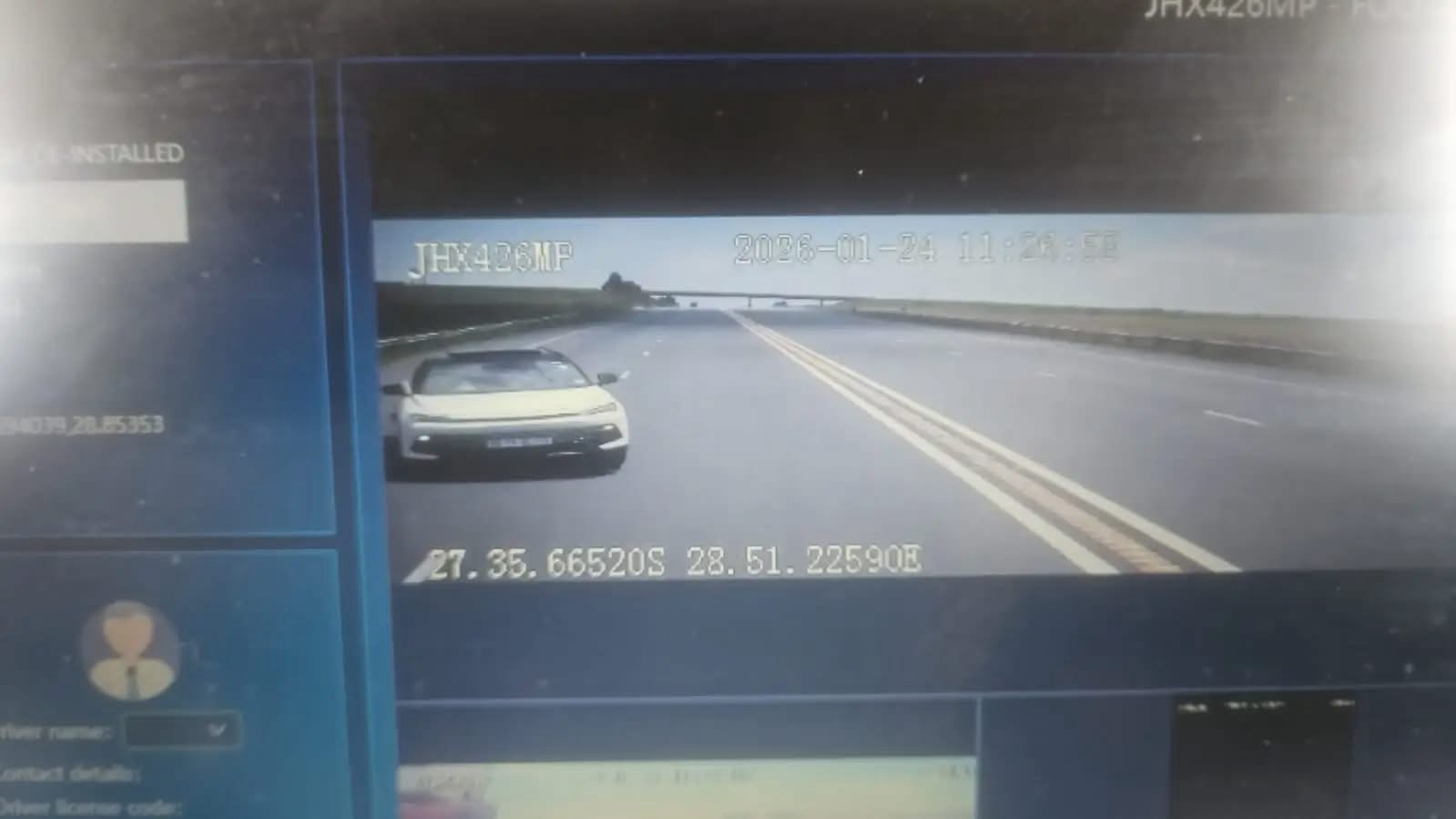
A fatal collision between a container truck and a light motor vehicle on the N3 highway has been captured in dashcam footage that is now circulating online. The incident occurred on Saturday morning.
The video shows the container truck traveling steadily in the left lane under normal traffic conditions, with clear visibility and no abrupt maneuvers from the truck.
Suddenly, a light motor vehicle appears directly ahead in the same lane as the truck. With only seconds available to respond, the truck driver swerves into the right lane, which appears open at that moment.
At the same instant, the car also moves to the right, leading to a severe head-on collision between the two vehicles. The force of the impact propels the truck across the oncoming lanes, where it comes to rest in a jackknifed position on the opposite side of the highway.
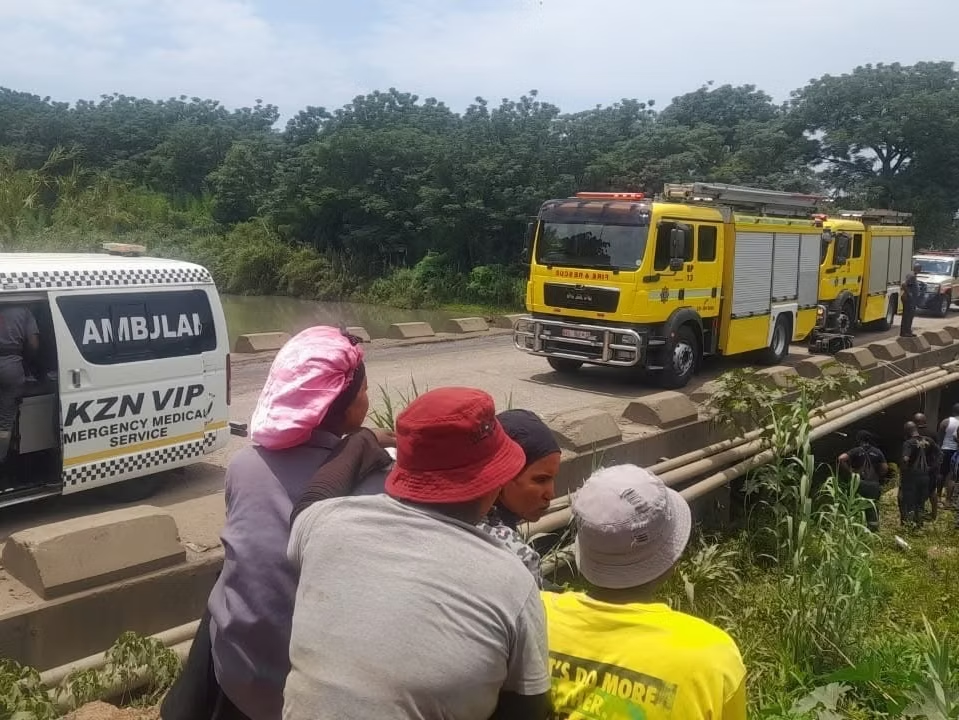
Emergency responders, including paramedics, arrived at the scene and confirmed that one occupant of the light motor vehicle suffered fatal injuries and was declared dead on site. The truck driver is understood to have survived the crash, though no specific details on their condition have been provided.
Authorities are investigating the events that placed the car in the truck’s lane. Possible factors under consideration include mechanical failure, loss of control, or driver error. No official statements have been issued regarding any charges or conclusive findings at this time.
The dashcam recording provides a clear view of the rapid sequence of events in the moments before the collision. The footage is being shared across online platforms and trucking-related channels.
This crash is the latest in a series of serious incidents on South Africa’s major highways, highlighting the risks involved in high-speed driving environments like the N3.
Man Attacked by Crocodile While Trying to Swim Across Limpopo River.Yes, the article contains only facts.
The Limpopo River, forming a natural border between South Africa, Zimbabwe, Botswana, and Mozambique, poses severe dangers to anyone attempting to cross its waters. The most significant threat is the presence of Nile crocodiles (Crocodylus niloticus), large and aggressive predators that inhabit the river and its tributaries.
Nile crocodiles are among the most dangerous large predators in Africa and are responsible for hundreds of human deaths annually across the continent. Estimates indicate between 275 and 745 attacks each year by this species, with approximately 63% proving fatal. Many incidents go unreported due to remote locations, limited record-keeping, and underreporting in affected regions.
These crocodiles can grow to lengths of 4–5.5 metres and are ambush predators that target prey near or in water. They commonly attack humans engaged in activities such as bathing, swimming, fishing, or crossing rivers. In southern Africa, including areas along the Limpopo, such encounters frequently occur in natural water bodies like rivers and streams.
Historical records from South Africa and Eswatini document 214 Nile crocodile attacks between 1949 and 2016, with 185 of these occurring in South Africa alone. Attacks have been recorded in provinces including Limpopo, where the river flows. Most incidents involve victims entering the water, and fatal outcomes are common when larger crocodiles are involved.
The Limpopo River has been the site of documented fatalities. In March 2006, a 68-year-old visitor was killed on the river when a crocodile emerged and pulled him underwater during a wildlife tour.
Illegal border crossings between Zimbabwe and South Africa increase the risk. Desperate individuals attempt to wade or swim across to seek economic opportunities, fleeing high inflation, unemployment, and poverty. The river’s fast currents, seasonal flooding, and hidden depths already cause drownings, but the presence of Nile crocodiles turns these crossings into life-threatening endeavours. Reports describe survivors and fatalities alike, with crocodiles posing a constant predatory hazard in the infested waters.
Flooding worsens the danger. Heavy rains cause the Limpopo and other rivers to overflow, displacing crocodiles into new areas, including towns and unexpected waterways. In early 2026, widespread flooding in southern Mozambique, where the Limpopo also flows, led to at least three confirmed crocodile-related deaths amid rising river levels and submerged communities.
Authorities in South Africa and neighbouring countries have repeatedly warned residents and travellers against entering the Limpopo River or attempting crossings outside official border posts. The combination of strong currents, deep sections, and a healthy population of Nile crocodiles makes the river one of the most hazardous natural barriers in the region.
Crossing the Limpopo without authorisation or proper precautions remains extremely dangerous. Official border facilities exist to allow safe passage, and any alternative route exposes individuals to drowning, crocodile attacks, and other life-threatening hazards.
Former South African President Jacob Zuma Referenced in Newly Released Epstein Documents
Johannesburg, February 1, 2026 – Former South African President Jacob Zuma has been named in a batch of documents released by the United States Department of Justice related to the late financier Jeffrey Epstein. The files, unsealed on January 23, 2026, include over 3 million pages of records from Epstein’s estate and associated legal proceedings.
The references to Zuma appear in a series of emails dated March 2010, during his official state visit to the United Kingdom. Zuma served as South Africa’s president from 2009 to 2018 and undertook the three-day visit from March 3 to March 5, 2010, at the invitation of Queen Elizabeth II. The emails detail arrangements for a private dinner held at the Ritz Hotel in London on the evening of March 5, 2010.
One email, sent on March 4, 2010, by Mark Lloyd, who is identified in the correspondence as an associate assisting Epstein, states: “I have been asked to help arrange a small dinner tomorrow night for President Jacob Zuma of South Africa at the Ritz Hotel at 7pm.” The message was addressed to a woman named Vera, and subsequent communications discuss inviting a Russian model to the event to “add glamour.” A follow-up email describes the model’s positive impression on the attendees, including Zuma.
The dinner attendees included Zuma, his wife at the time, Thobeka Madiba-Zuma, the Russian model, and other individuals connected to Epstein’s circle. The event took place on the final day of Zuma’s state visit, which involved official engagements such as meetings at Buckingham Palace. By 2010, Epstein had already been convicted in 2008 on charges related to procuring a minor for prostitution in Florida, serving 13 months in custody under a plea deal.
The documents do not contain any allegations of criminal activity, misconduct, or wrongdoing on Zuma’s part. Epstein, who died in 2019 while awaiting trial on federal sex trafficking charges, was known for his connections to high-profile figures in politics, business, and entertainment. The latest release of files stems from ongoing civil litigation linked to Epstein’s network, including lawsuits involving his associate Ghislaine Maxwell, who was convicted in 2021 on sex trafficking charges.
In response to the reports, the Jacob Zuma Foundation issued a statement denouncing the references as an “attempt to smear” the former president’s reputation. The foundation emphasized that it would not tolerate such efforts and declined to engage further on the matter. Zuma, now 83, has faced various legal challenges in South Africa, including corruption trials related to arms deals from the 1990s, but none connected to the Epstein documents.
The release of these files has prompted discussions in South African media and online platforms, with some noting the timing coincides with other domestic political developments. However, the emails remain the sole point of reference to Zuma in the disclosed materials. The US Department of Justice has indicated that portions of the files were redacted to exclude sensitive content, including images depicting death, physical abuse, or injury.