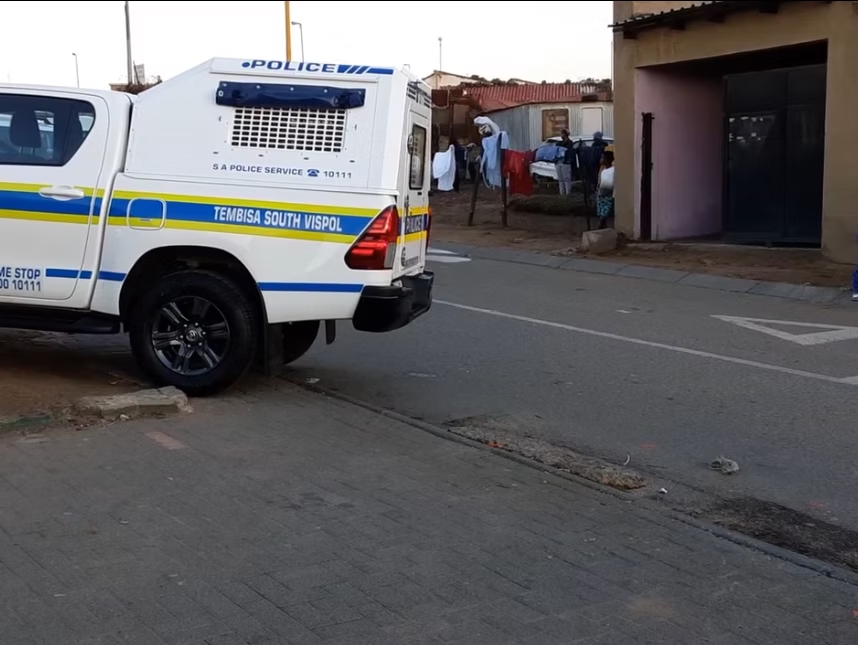
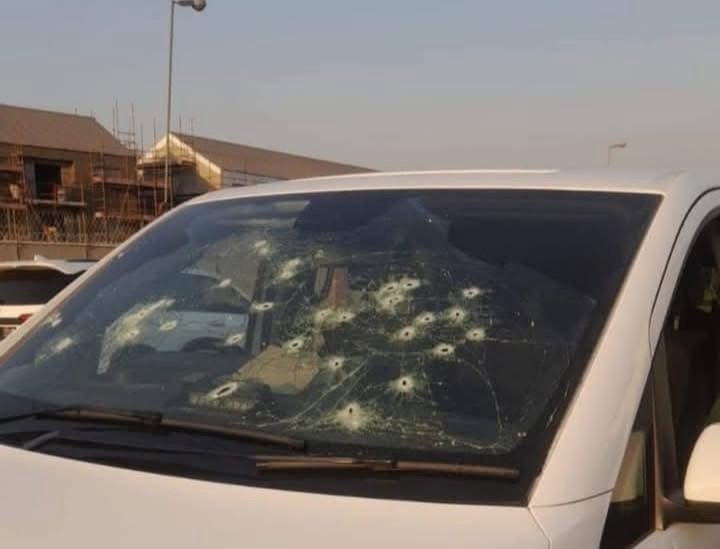
Midrand, Gauteng – December 3, 2025 – A targeted drive-by shooting on New Road near the Builders Warehouse in Carlswald resulted in the deaths of two taxi owners on Wednesday, December 2, 2025, around midday. The incident occurred at the intersection with Barbet Street, where gunmen ambushed the victims’ vehicle before fleeing the scene.
According to police reports, the occupants of a white Toyota Corolla were struck by gunfire during the attack. Both individuals, identified as taxi owners, were pronounced dead at the scene. No additional injuries were reported among bystanders or other motorists in the vicinity.
The Gauteng Police Service, in collaboration with the Taxi Violence Unit, has launched an investigation into the shooting. Authorities suspect the attack stems from ongoing disputes within the taxi industry, though no specific details on the perpetrators or the exact nature of the conflict have been disclosed. As of Thursday morning, no arrests have been made, and the investigation remains active.
This event marks the latest in a series of violent incidents linked to taxi rivalries in the region. Similar shootings occurred recently in Marlboro and Ivory Park, where additional fatalities were recorded among industry figures.
The police have appealed to the public for assistance in identifying the suspects. Anyone with information is encouraged to contact Crime Stop at 08600 10111. The road was temporarily closed following the shooting to allow forensic teams to process the scene, but it has since reopened to traffic.
Further updates will be provided as the investigation progresses.
The Carlswald shooting underscores the persistent and deadly nature of taxi violence in Gauteng, a province that has long grappled with escalating conflicts within the minibus taxi sector. This industry, which transports over 60% of South Africa’s commuters—primarily from low-income households—has been plagued by turf wars since its informal origins during the apartheid era. Back then, strict regulations under the Motor Carrier Transportation Act of 1930 barred Black South Africans from obtaining transport permits, forcing the development of an underground network of operators who filled the gap left by state-controlled services. The deregulation in the late 1980s, intended to formalize the sector, instead unleashed unchecked expansion, leading to the first waves of violence as associations vied for profitable routes.
By the 1990s, as South Africa transitioned to democracy, taxi violence had evolved into a decentralized, mafia-like phenomenon, with associations arming themselves to protect territories. Historical records show that between 1987 and 2000, thousands of lives were lost in these “taxi wars,” often involving high-caliber weapons and targeted assassinations. In one notorious case, 13 police officers were charged in 1998 for colluding with operators, highlighting deep-rooted corruption that allowed violence to flourish. The National Land Transport Transition Act of 2000 aimed to re-regulate the industry, but resistance from powerful “mother bodies”—umbrella organizations like the South African National Taxi Council (SANTACO) and the Gauteng National Taxi Alliance (GNTA)—only intensified clashes, as seen in the 2021 Cape Town conflict where over 80 deaths were recorded in a single year over the B97 route.
In Gauteng, the epicenter of this turmoil, 2025 has been particularly brutal, with at least 59 people killed in taxi-related incidents since January. The bloodshed peaked in March, claiming 30 lives amid disputes like the long-simmering feud between the Witwatersrand African Taxi Association (WATA) and the Nancefield Dube West Taxi Association (NANDUWE) in Soweto. This rivalry, tracing back to 2015, escalated on March 10 when Nanduwe members blocked roads, citing ignorance of a court order that had mandated arbitration over route allocations. A High Court ruling on March 3 declared the Gauteng Provincial Regulatory Entity’s (GPRE) January 16 decision to award routes to NANDUWE as unlawful, yet implementation delays fueled further standoffs. Shootings followed, including the March 19 attack at Zonkizizwe taxi rank where gunmen in a white BMW killed three, including two drivers, and injured two passengers.
April brought a brief respite with a government-brokered ceasefire on April 11, involving SANTACO, GNTA, and Transport MEC Kedibone Diale-Tlabela. A 20-member Conflict Resolution Committee was formed to mediate binding decisions on routes, with progress reports due by month’s end. Diale-Tlabela led a prayer march in Soweto on April 10, attended by affected residents, and threatened to shutter ranks for six months in violence hotspots—a measure echoed in May when she condemned a resurgence that disrupted services despite the truce. By July, Premier Panyaza Lesufi established a dedicated task team after another spike, attributing it to extortion and route fights. August saw tensions shift to clashes with e-hailing services, culminating in the brutal murder of driver Siyanda Mthokozisi Mvelase at Soweto’s Maponya Mall, where he was shot and set alight; this incident, part of 13 e-hailing fatalities in two weeks, prompted urgent stakeholder meetings.
Even as late as November, disputes persisted, with Tshwane enforcing compliance on Hammanskraal associations over illegal CBD drop-offs, set to begin in Q1 2026. An August 29 strike in Ekurhuleni over 16 vehicle impoundments for unroadworthiness halted services, forcing commuters to seek alternatives and underscoring the economic ripple effects. The Gauteng Legislature’s Portfolio Committee on Community Safety has repeatedly demanded intensified policing, intelligence operations, and root-cause interventions from Lieutenant-General Tommy Mthombeni, while calling for transparent route resolutions under the law.
These patterns reveal a cycle where regulatory failures, historical inequities, and criminal infiltration perpetuate the violence. Associations, often controlling lucrative corridors, resort to arms to enforce monopolies, endangering not just operators but entire communities reliant on affordable transport. The provincial government, through the Department of Roads and Transport, continues engagements to rebuild trust, but experts note that without sustained arrests—none reported in many 2025 cases—and equitable permit distribution, the instability will endure. As Gauteng pushes for integration with systems like the A Re Yeng Bus Rapid Transit, the taxi sector’s role as the “backbone” of public mobility hangs in the balance, demanding collective action to transform it from a battleground into a safe lifeline.